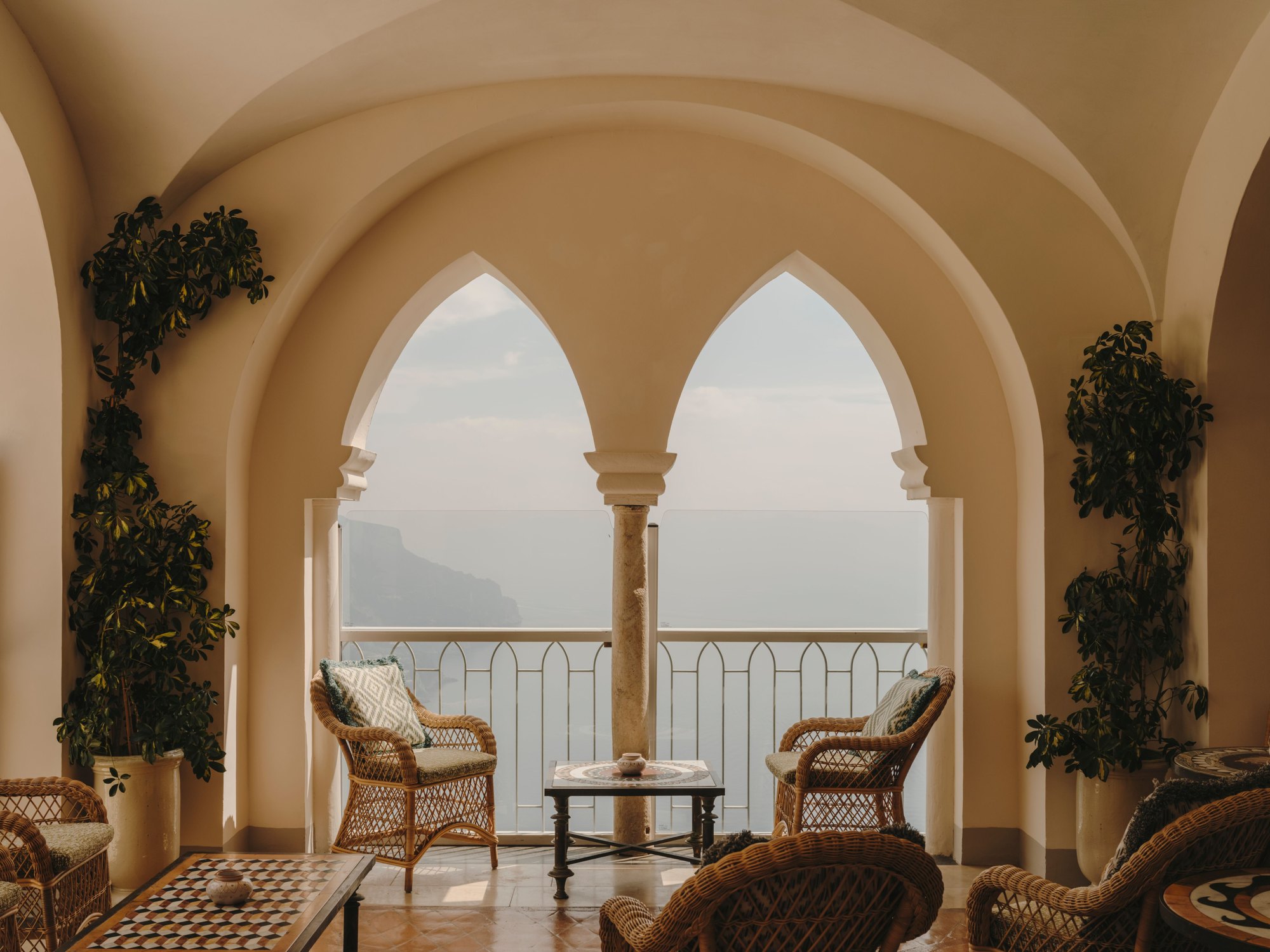
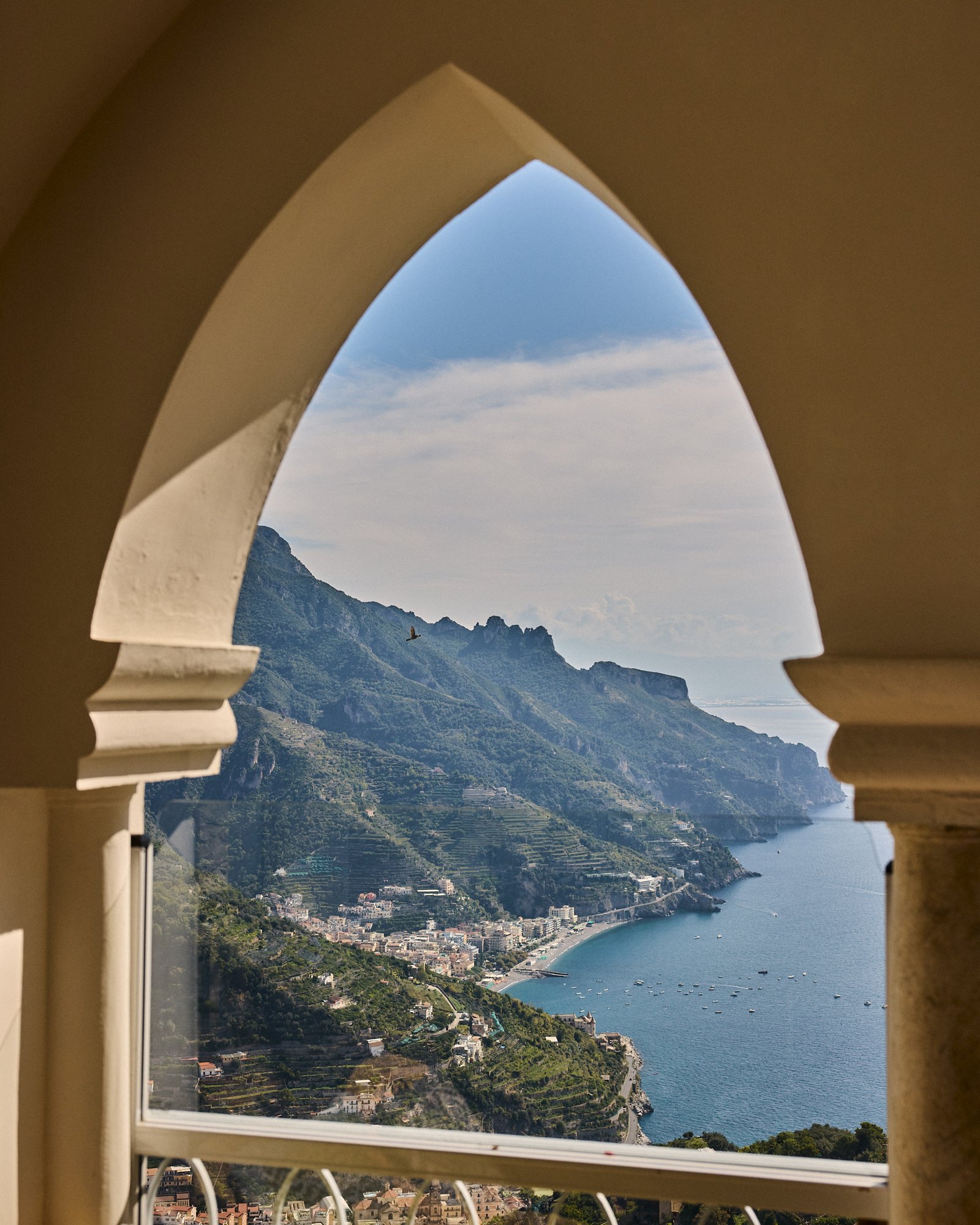
The first encounter with beauty happens by chance. You walk through rooms along a route that would, in itself, deserve time to linger: terracotta surfaces, colonnades, mosaics, majolica, ironwork and furnishings; materials and forms from different periods, yet all reflecting the same aesthetic sensibility. You pause over one detail, then another, unaware of what lies beyond. Then, suddenly, an opening: the sea fills an immense part of your view; the coast falls away through hills, gardens and terraces to the houses of Minori, gathered around a small inlet. From Ravello’s highest point, it takes a few moments to put the proportions back together: the familiar Amalfi Coast acquires an unreal arrangement, as though the mountains, houses and sea, seen from that height, had found a configuration never known before. You feel certain that this is the image that will impress itself most forcefully on your memory. A premature conviction, as the following hours will reveal, when fresh details begin to enrich that first impression until it becomes difficult to distinguish the initial wonder from everything that has helped sustain it.
At Caruso, A Belmond Hotel, Amalfi Coast — in the ancient Palazzo d’Afflitto, dating from the eleventh century, where Pantaleone Caruso and his wife Emilia opened the Pensione Belvedere in 1893 — a curious impulse takes hold: to look away from the vastness of the sea and linger instead over the beauty of the rooms from which it is admired. Naturally, your eyes inevitably return to the coast, almost as though obliged to account for every distraction. Yet with each new detail, that loyalty wavers again.
Campania at the table
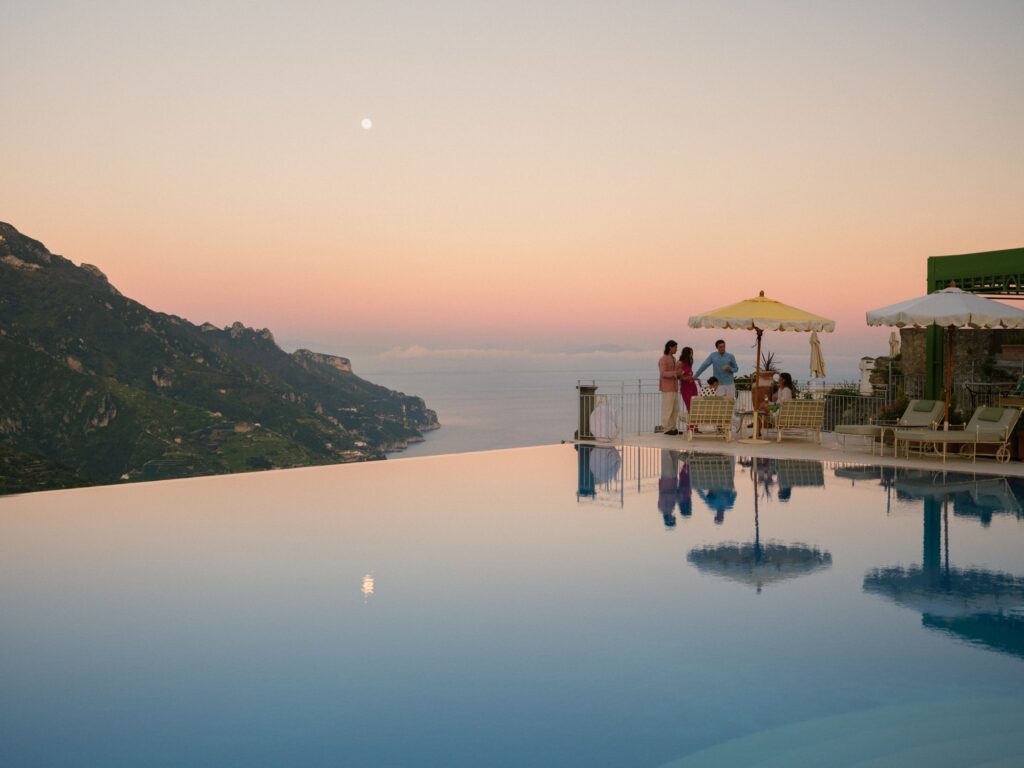
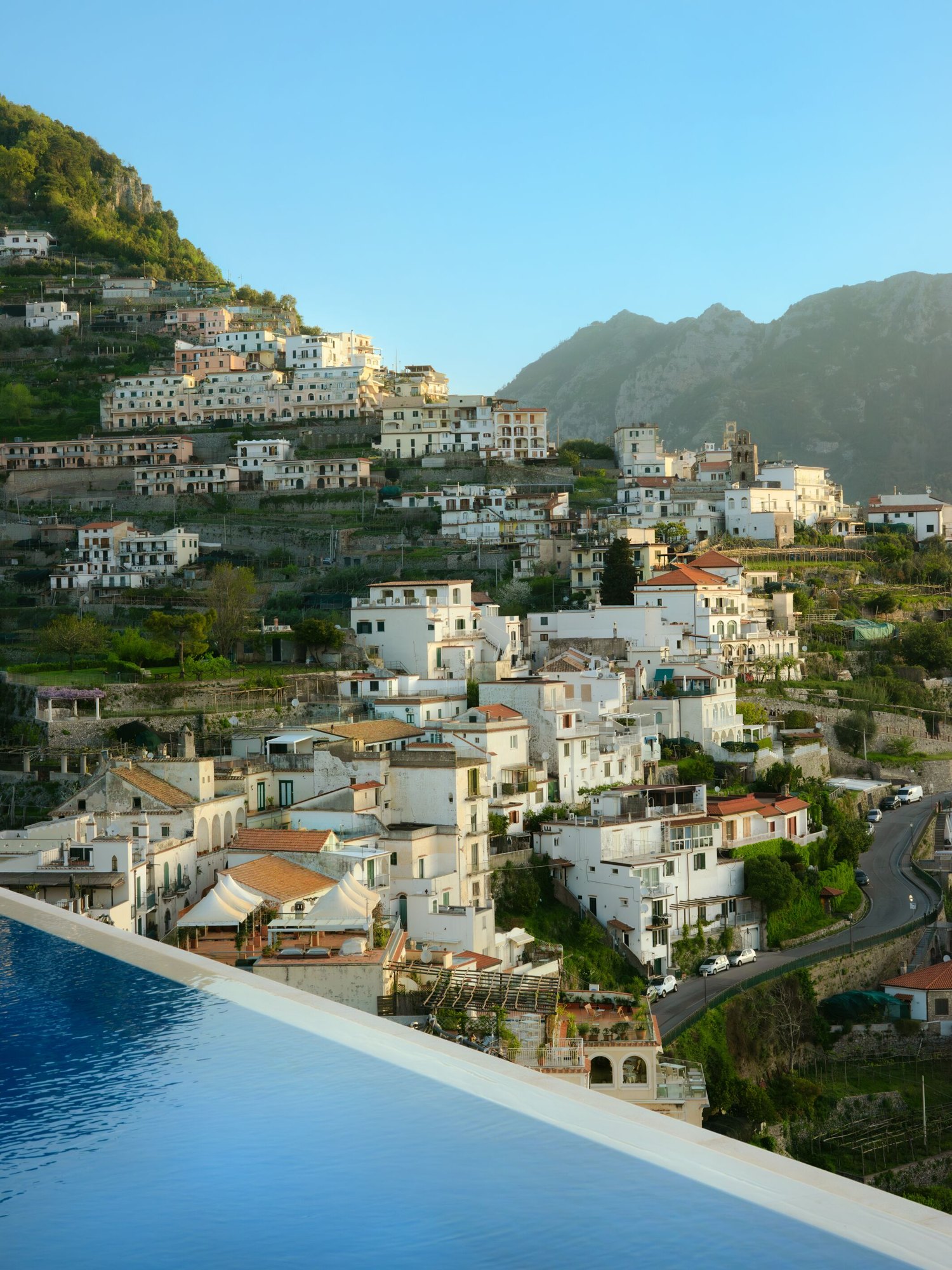
The first lunch takes place a few steps from the infinity pool, where the blue water meets the outline of the Monti Lattari: swimming above mountains is possible, then. At Club La Piscina, the Mediterranean cooking has an unmistakably Campanian accent: Amalfi sfusato lemons, Menaica anchovies, Corbarino tomatoes, dairy produce from Tramonti and, of course, the local catch. A tartare of tuna, Annurca apple and fig molasses brings two different expressions of sweetness — one fresh and slightly tart, the other dense and concentrated — alongside the fish’s natural salinity. But what wins over both eyes and palate is a collection of small artichokes preserved in oil, proudly displayed in a large glass jar: dozens of hearts arranged with geometric precision, their flavour both surprising and familiar.
On the way back to the rooms, beauty reveals another face, proud and untamed. Paths follow the terraces, winding through pergolas, neatly clipped hedges, trees and flowers; the vegetation seems to have belonged here forever, exuberant and obstinate in its search for light, indifferent to the geometry intended to discipline it.
Dinner is at Caruso Grill: Campanian flavours, generous preparations and dishes placed at the centre of the table on green, yellow and orange ceramics.
It begins with a still Asprinio d’Aversa DOP, Vite Maritata from I Borboni, with pronounced, incisive acidity. Its name recalls the ancient alberata aversana, in which vines married to trees rise as high as twenty metres, requiring a harvest carried out using scalilli, long ladders made specifically to reach the grapes. The opening tastes reveal a Campania of home cooking and the sea: red prawn carpaccio with samphire, extra virgin olive oil and Amalfi sfusato lemon; roasted peppers, peeled and sautéed with black olives, capers and extra virgin olive oil, their yielding sweet flesh punctuated by sudden flashes of saltiness. In the glass, Vigna Grotta Piana from Ettore Sammarco, Ravello Costa d’Amalfi DOC: Falanghina, Biancolella and Ginestrella grown on terraces interrupting the mountains’ descent towards the sea, with a delicate hint of vanilla on the nose. Then come small, tender Controne beans with Cetara tuna preserved in oil and fresh herbs. Such intimate flavours demand particular care, and it is evident here. The wine journey lingers on the coast with Marisa Cuomo’s Ravello Costa d’Amalfi DOC. A sumptuous fish soup arrives: langoustines, prawns, mussels, clams, octopus and rockfish emerge from a thick tomato broth steeped in their juices. Its splendidly exuberant aroma already foretells the tasting: a profusion of flavours, the Campanian pleasure in abundance. Finally, a lavish composition of summer fruit: cherries, apricots and watermelon, ripe sweetness and lively acidity.
In the morning, the sea shines with an almost insolent brightness, contemplated over breakfast among pastries, bread from local bakeries and Campanian specialities. Shortly afterwards, beneath the arches of a loggia overlooking the coast, easels and watercolours await. Painting such a landscape is a singular exercise: as colour dissolves in water, you realise how much of its beauty had still escaped you.
The brushes are set aside for the conviviality of Caruso Grill. Pizzas arrive from the wood-fired oven to be shared, with well-risen rims and an excellent balance between softness and crispness. One is topped with golden, fragrant zucchine alla scapece on a velvety cream: a simplicity that is anything but ordinary. Equally successful in its essential character is a salad of fresh spinach, Blu di Bufala cheese, Giffoni hazelnuts and raspberry, where the dairy element rightly courts the fruit’s acidity and the hazelnut’s toasted notes. A seafood cuoppo follows, with squid and red prawns: evenly golden, with a thin, brittle coating and tender flesh, fried as it should be and, happily, is. Finally, delizia al limone, an emblem of Amalfi pastry-making: beneath the white covering, sponge cake is soaked in sweet cream; yet the first taste dispels any longing for the citrus fruit’s lively acidity.
The afternoon brings a walk around Ravello, through narrow streets, old palaces and squares over which pines spread their crowns with a certain vanity. Back at Caruso, the light begins to change wonderfully: it is time for dinner at Il Pantaleone.
Antiqua cucina nova
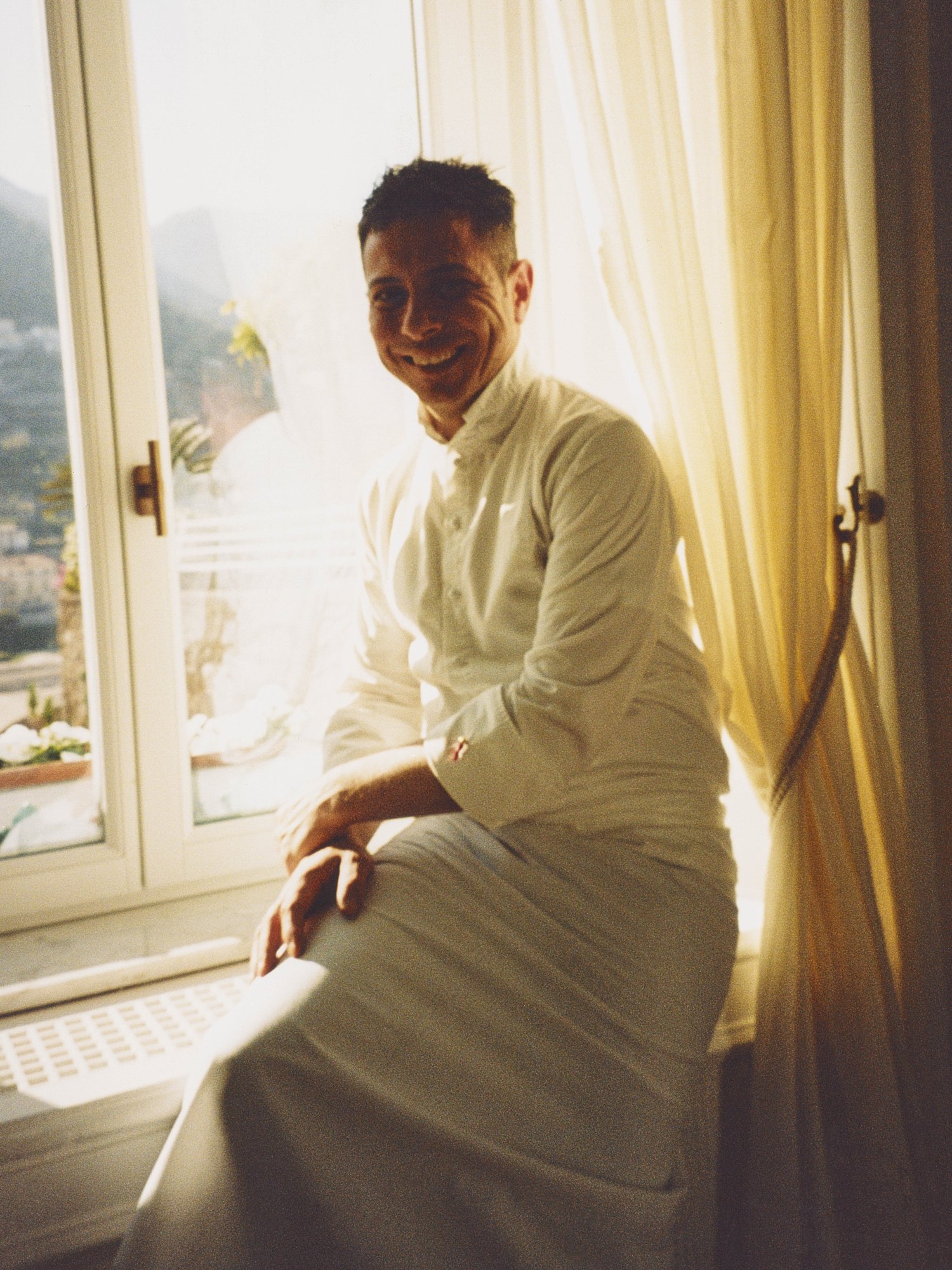
Having explored distant culinary traditions, executive chef Armando Aristarco has chosen to delve into those of his own land. With the sea beyond the terrace, mountains behind him and such a wealth of flavours, he found it more interesting to explore what already exists and discover what it can still express. This is the idea of antiqua cucina nova, as the chef calls it: returning to the origins of Campanian recipes, studying their ingredients and methods, and reinterpreting cooking techniques, shapes and textures through contemporary methods without betraying their original flavour. For dinner, Aristarco assembles a sequence of dishes drawn from the four tasting menus, keen to show the variety of his cooking within a single experience. On the table, alongside small chased silver spoons, textured paper bears the names of old-style lists of dishes, inspired by those with which Pantaleone Caruso presented his food more than a century ago. Very few words, almost exclusively the principal ingredients, with no account of the methods and no display of technical virtuosity: the palate, says the chef, must discover the rest.
The first glass is Ferrari Perlé Bianco Riserva 2014, Trento DOC, made entirely from Chardonnay: still lively bubbles, with more mature hints of hazelnut. The kitchen’s welcome is a successful exercise in culinary cosmology, four elements expressed through four preparations. Water is evoked by an extremely thin charcoal waffle holding prawn tartare, accompanied by buffalo mozzarella snow and mayonnaise. Fire is a small smoked pepper inspired by Neapolitan papaccella ’mbuttunata: beef tartare inside, edible ash outside recalling embers. Earth speaks through a delightfully balanced tartlet filled with mushroom ragù, egg foam and dehydrated mushrooms. Finally, air: on a small spoon rests the invisible yet fragrant essence of a lemon and a tiny sweet to recalibrate the palate.
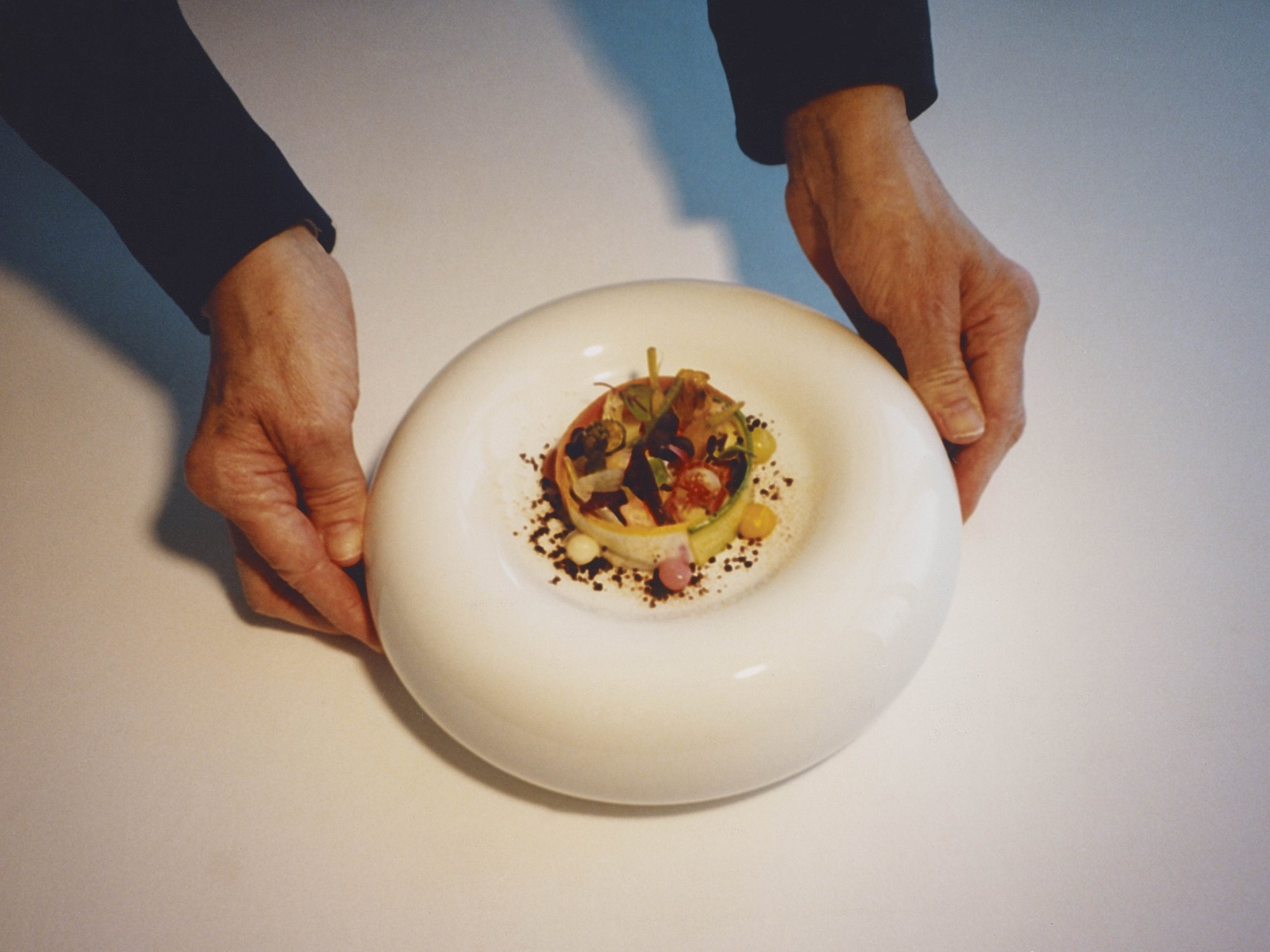
The first dish is Campo fiorito: cooked and raw vegetables and fruit from the slopes of Vesuvius to the plains of Cilento. More than thirty elements compose it, including leaves, roots, small vegetables and preserves in oil, vinegar or sweet-and-sour dressings. In a very small space come crunch, yielding flesh and sudden points of acidity, with little creams made from the less-used parts of the same vegetables. The old wisdom of household larders resurfaces, when none of the harvest was wasted and a season’s flavours could be enjoyed long after it had ended.
With La Scolca’s Gavi dei Gavi, made from Cortese grapes, comes a distinctive parmigiana: a whole small aubergine, glossy red with fine green streaks, accompanied by yellow and red cherry tomatoes and tiny drops of sauce. It was devised by Aristarco’s sous-chef Alfonso Sorrentino, drawing on an old Neapolitan kitchen practice. Aubergines were fried, allowed to cool, floured, dipped in egg and fried again before spending a long time in the oven, producing a yielding texture to be eaten with a spoon. Sorrentino returns to that softness through an entirely different preparation: the aubergine is fried, hollowed out and stuffed with its own flesh, mozzarella, tomato and basil. Beneath the slightly crisp surface, the filling dissolves into voluptuous creaminess. Once again, the shape changes, but the flavour belongs unmistakably to memory.
Memory on the plate
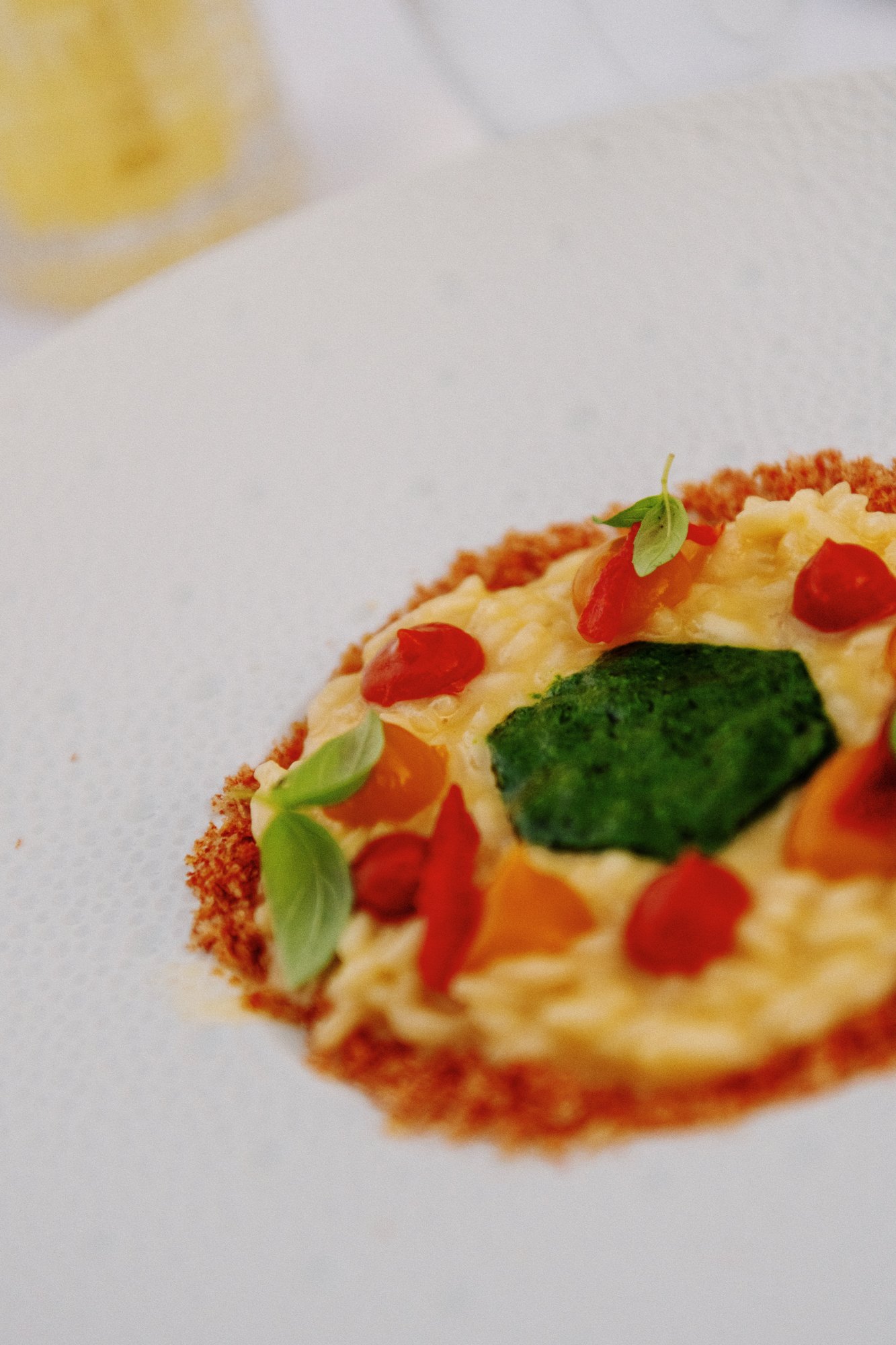
With Luciano Sandrone’s Barolo Le Vigne 2014 — twelve years that have softened the Nebbiolo without diminishing its tension — comes the risotto. First, however, the uncooked rice, Hera nei Campi, is shown in a package bearing a sentence that seems to encapsulate Aristarco’s culinary thinking: «What has truly been loved always finds a night in which to exist again». Its story is indeed one of rebirth: thanks to agronomists Giampaolo Raimondi and Emilio Di Stasio, working with the University of Naples Federico II, rice cultivation returned to the Sele Plain in 2023 after an absence of around two centuries. The large, aromatic grains invite touch, leaving no floury trace on the fingers. On the plate, the homely memory of tomato rice resurfaces. Cooked in tomato water and finished with buffalo butter, the risotto holds basil cream at its centre, small dots of yellow and red cherry tomato coulis and a crown of Neapolitan pane cafone flavoured with tomato. The grain is full, firm and clearly defined; the tomato has a disarming clarity. The intelligence of the preparation is met by a much simpler happiness: rediscovering a distant flavour while tasting a new memory.
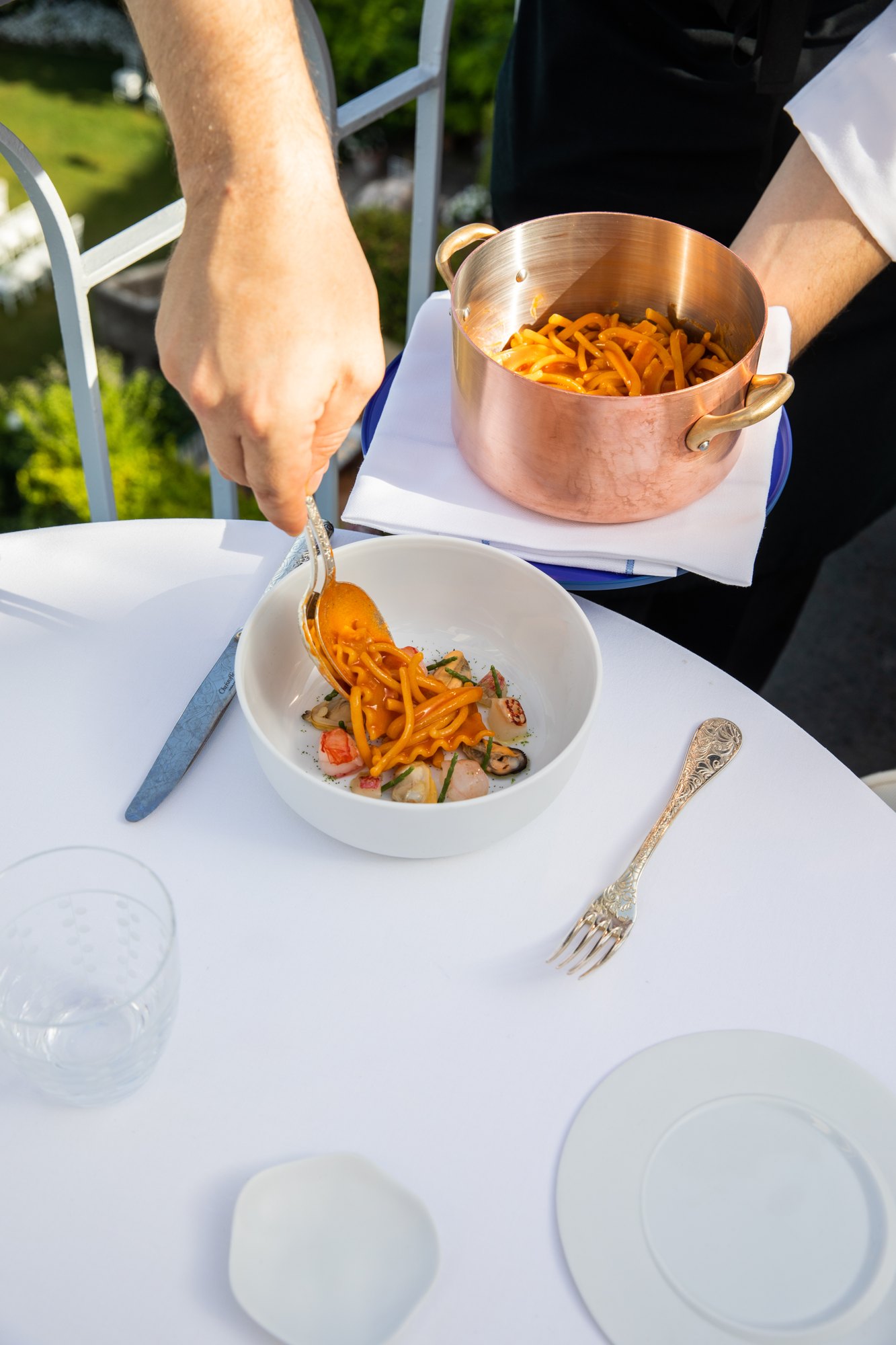
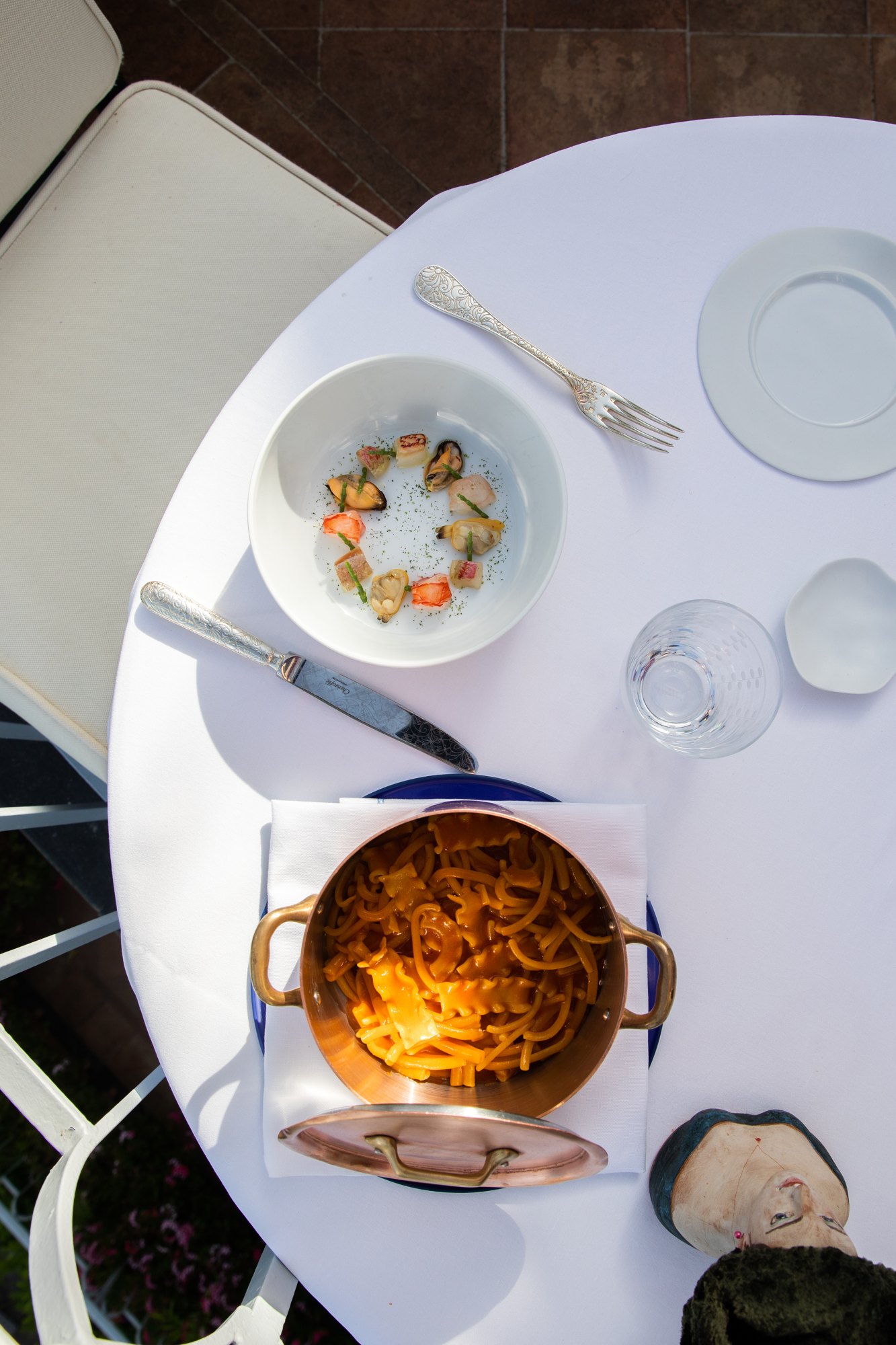
Dinner plunges into the sea with Nu’ Burdell, a name promising a certain exuberance. First comes a composition of small tastes of fish, molluscs and crustaceans, raw and cooked, arranged in circles: the prelude. Then a pot appears at the centre of the table: mixed Vicidomini pasta cooked in rockfish stock and enriched with molluscs and crustaceans. Its immediacy conceals meticulous work: the small rockfish are cleaned individually, stripped of gills and eyes and roasted before going into the stock. It is a kind of reverence for the small catch that has always given depth to soups in coastal kitchens. Alongside it is Marisa Cuomo’s Fiorduva 2024, Costa d’Amalfi DOC, made from Ripoli, Fenile and Ginestra. Served from the pot, the pasta holds the intense flavour of rockfish and the sweetness of crustaceans in its hollows; the different shapes vary the texture and persistence of each mouthful.
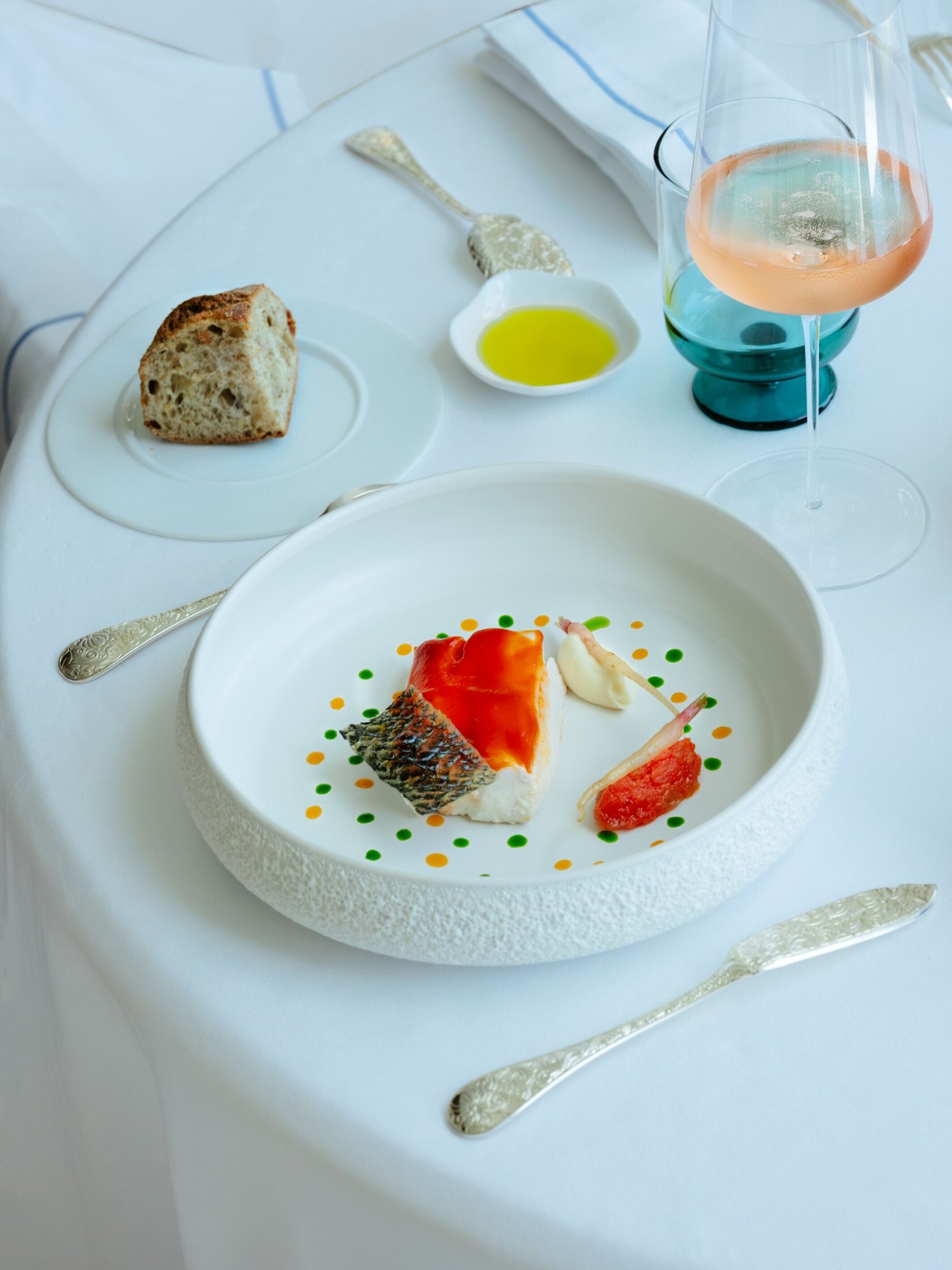
Next comes sea bass in acqua pazza: the fillet, coated in a glossy tomato glaze, rests on parsnip cream, alongside a tomato quenelle and a crisp wafer made from the skin.
Before dessert, a sweet interpretation of caprese: San Marzano tomato becomes jam and basil is dehydrated; an unsuspected little mozzarella is actually a buffalo milk mousse enclosing soft stracciatella. A drizzle of Marco Rizzo’s gently flavoured extra virgin olive oil finishes it, while a hint of vanilla takes the place of salt and pepper.
Finally, La mela: an oven-baked Annurca apple coated in a glossy glaze of the same fruit, with its sorbet and a cinnamon crumble. Beside it, an amber infusion of baked apple tastes of childhood. The flesh yields to the spoon: cooking has concentrated its sugars without extinguishing its lively acidity, which the sorbet seems intent on extending a little longer. Here, once again, is antiqua cucina nova: knowledge of Campanian recipes so intimate that their forms can be overturned while their remembered flavours remain untouched.
Meanwhile, the coast has receded into shadow: the mountains’ dark outlines remain, with tiny lights near and far. You leave suspecting that the eyes, captivated equally by the landscape’s immensity and the enchantment of minute details, must finally come to an agreement with the palate to grasp Caruso’s beauty in its entirety — a beauty that is itself, after all, antiqua and nova.
Sources and images: Text by Stefania Petruzzelli. Photo credits: images from the materials supplied with the article. All image rights are reserved to their respective rights holders.