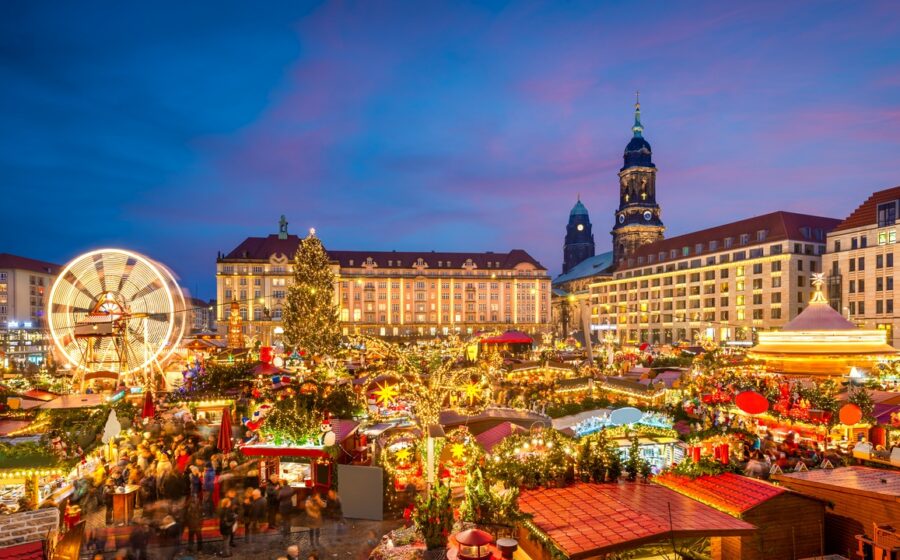
A short walk from Santa Croce, in one of Florence’s most authentic neighbourhoods, Palazzo Firenze offers the privilege of staying at the heart of the historic city without giving up peace and quiet. The Uffizi, Piazza della Signoria and the places that tell the story of Florence’s connection with Michelangelo are all within easy reach, along streets that still retain the atmosphere of the Renaissance city. It is an ideal address for those who want to experience Florence beyond the busiest routes. Nearby, artisan workshops, small squares and neighbourhood cafés set the rhythm of the day, while the market of Sant’Ambrogio reveals the city’s more genuine, everyday face.
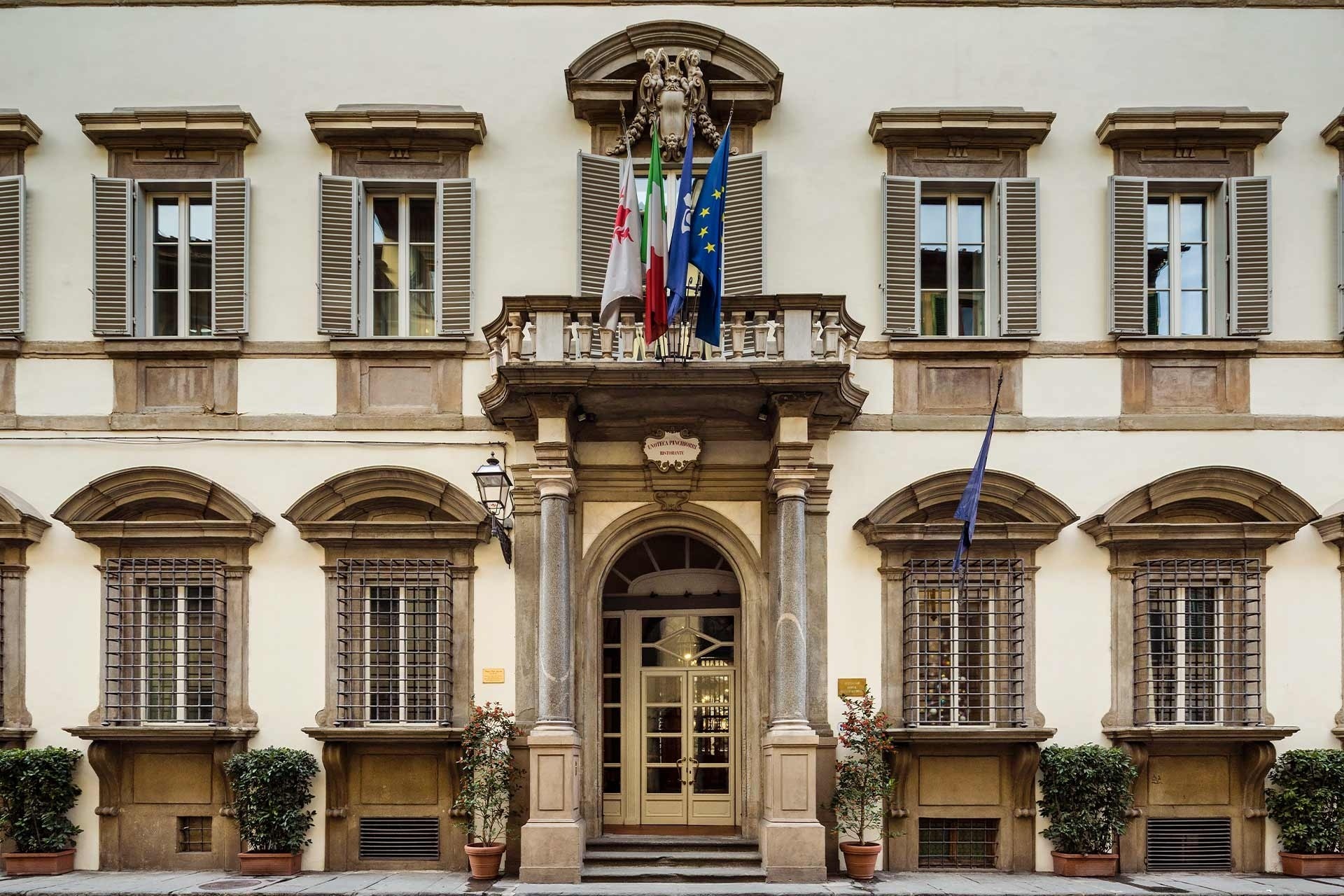
The story of the palazzo
Palazzo Firenze’s roots lie in Palazzo Jacometti Ciofi, an eighteenth-century residence commissioned by Giovanni Maria Baldinucci, papal treasurer and man of letters, who belonged to one of the most influential families in Florence at the time. The palazzo stands on a property previously owned by Giovanni da Verrazzano, the Florentine navigator remembered for his explorations along the coast of North America.
The Baldinucci family coat of arms, still visible in the building, bears the motto In Deo Spes Mea - my hope is in God - and recalls both the residence’s aristocratic origins and the vision of Marquis Giovanni Maria Baldinucci, who wanted to create a home capable of astonishing guests and visitors.
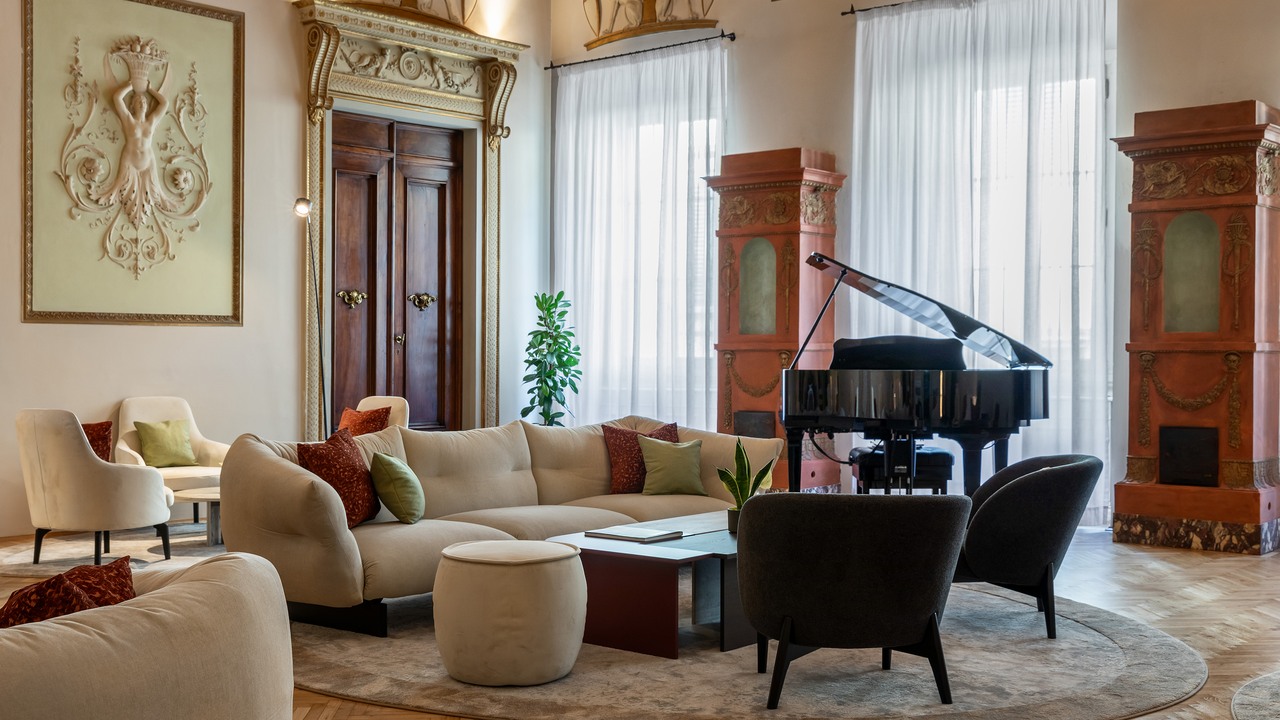
Among its most evocative spaces is the Sala della Musica, the grand salon on the piano nobile, once the centre of the palazzo’s social life. Architecture, art and ingenuity meet here in features of rare elegance, including a structure inspired by Leonardo da Vinci’s studies, preserved within the building. Over the centuries these rooms have welcomed distinguished figures and inspired stories that are now part of the place’s collective memory. Among them is a visit by Alessandro Volta, inventor of the electric battery.
A designer’s reinterpretation
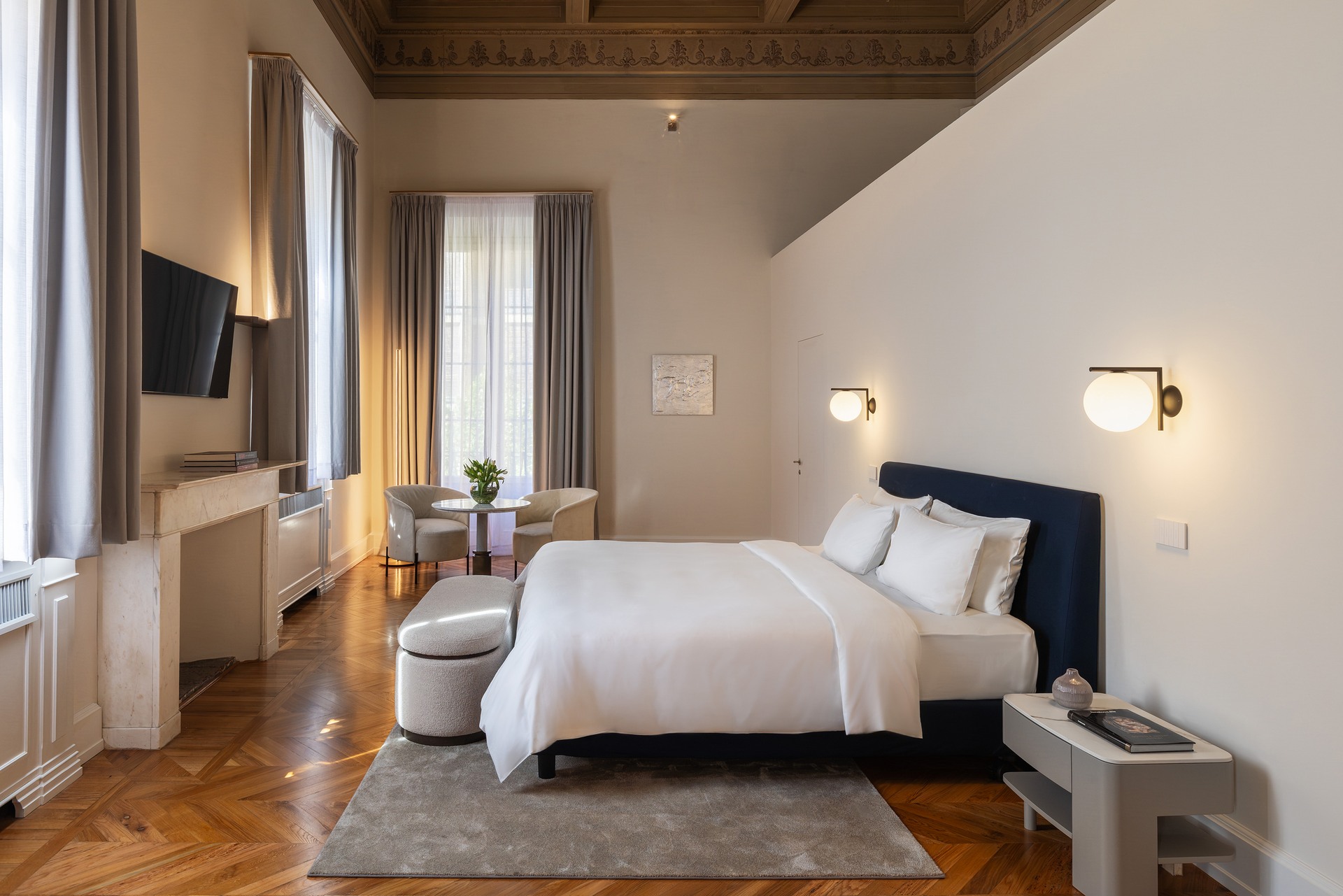
This historic legacy is the starting point for the property’s restyling by Studio Marco Piva, designed to bring fresh vitality to the shared spaces and the twenty-four rooms and suites. The intervention brings past and present into dialogue, preserving the residence’s soul while adapting it to the needs of contemporary hospitality. Its guiding thread is the concept of «beauty by design», conceived to restore the central role of spaces and the way they are experienced. Frescoes, stucco and original finishes coexist with bespoke furniture, new colour palettes and carefully considered lighting. It is a discreet reinterpretation that makes the interiors more welcoming and functional while preserving the palazzo’s identity, inviting guests to notice its nuances, details and atmosphere.
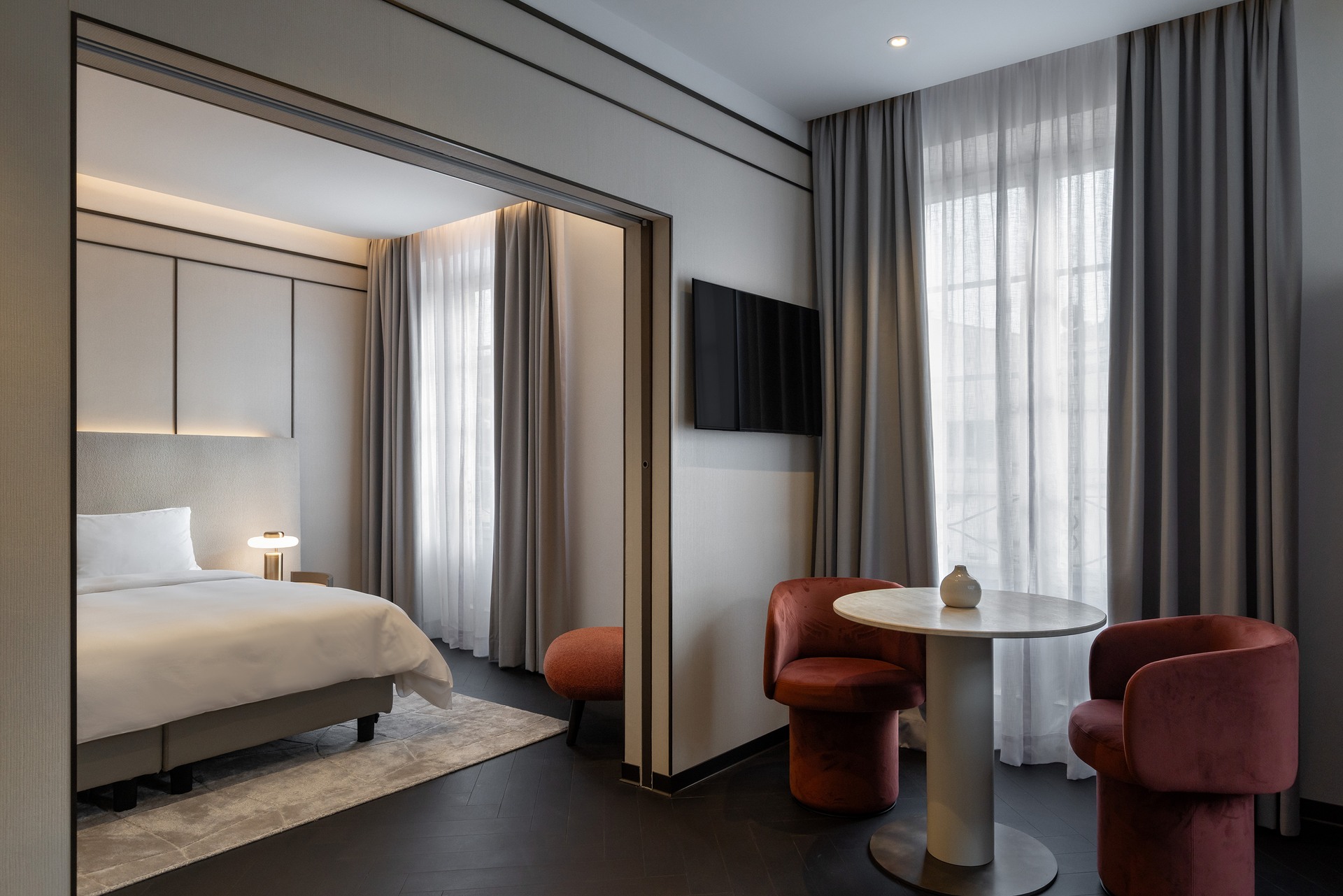
Some of the most distinguished names in Italian design have contributed to the interiors. Rubelli fabrics enter into dialogue with Gessi bathroom fittings and Cassina furniture and seating, creating an elegant, consistent language throughout the residence. Lighting also plays a central role, with Flos designs that bring out volumes, perspectives and architectural details. The Noctambule and Coordinates collections are among the highlights, while the Da Verrazzano Suite features Baxter’s Isamu Stone marble table, an iconic piece that helps define its refined atmosphere.
Suites with character
Within the palazzo, the Signature Suites tell different stories through discreet references to the memory of the place and the people who shaped its past. Each has its own identity, expressed through materials, colours and decorative details that evoke episodes of Florentine history. The 91 m² De Pepi Suite draws on the long mercantile tradition of the family whose name it bears. Warm tones, carefully chosen finishes and tactile references sit among period frescoes and wooden floors, creating an intimate, sophisticated atmosphere.
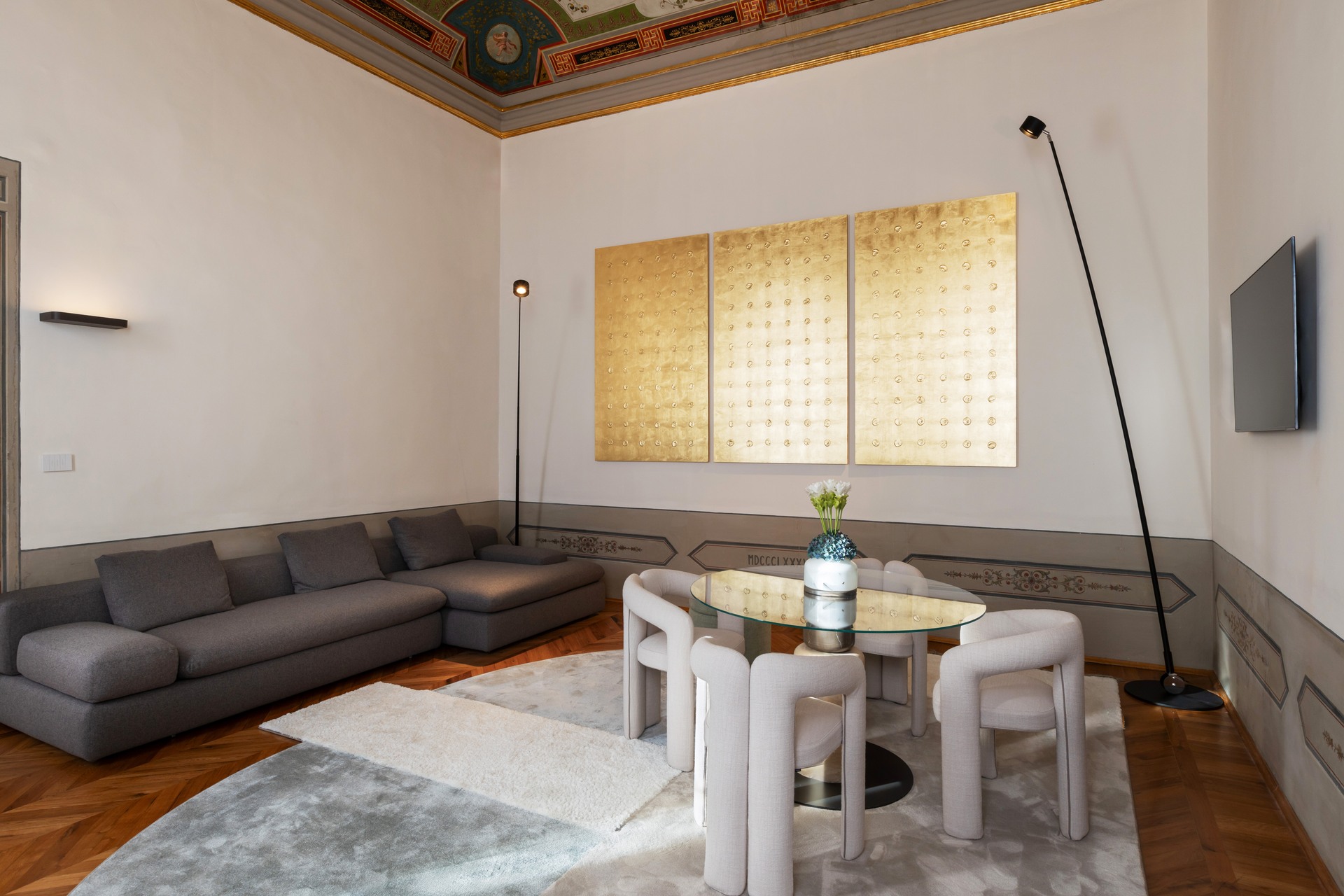
The Da Verrazzano Suite has an entirely different spirit. Across its 168 m², it evokes the celebrated Florentine navigator’s passion for exploration. Spacious frescoed salons, shades recalling land and sea, and the coffered ceiling of the main bedroom give the rooms a distinctive character.
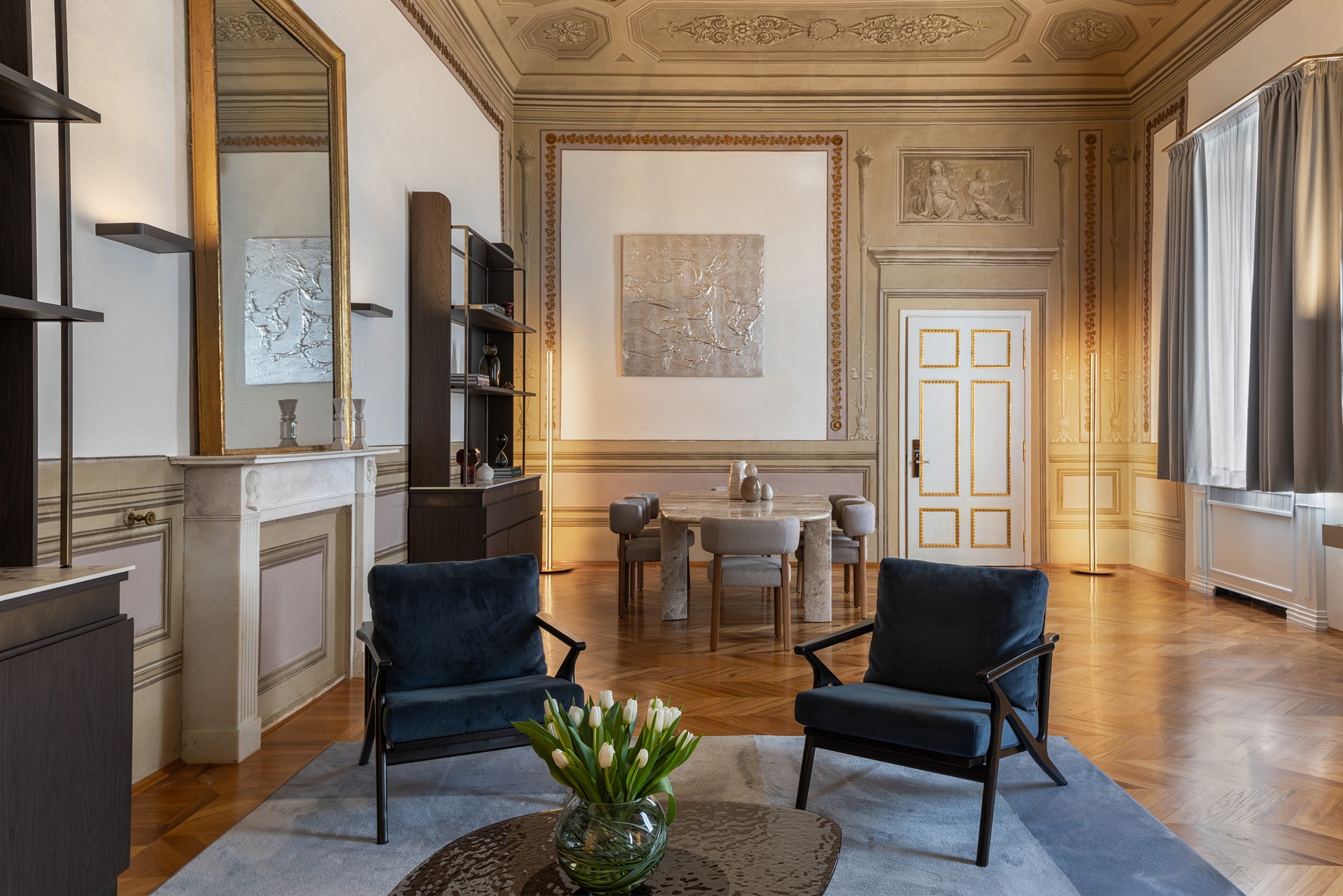
The two suites can be connected to form the Santa Croce Royal Suite, an exclusive 260 m² residence occupying an entire floor of the palazzo, with two bedrooms, dedicated sitting rooms and en-suite bathrooms.
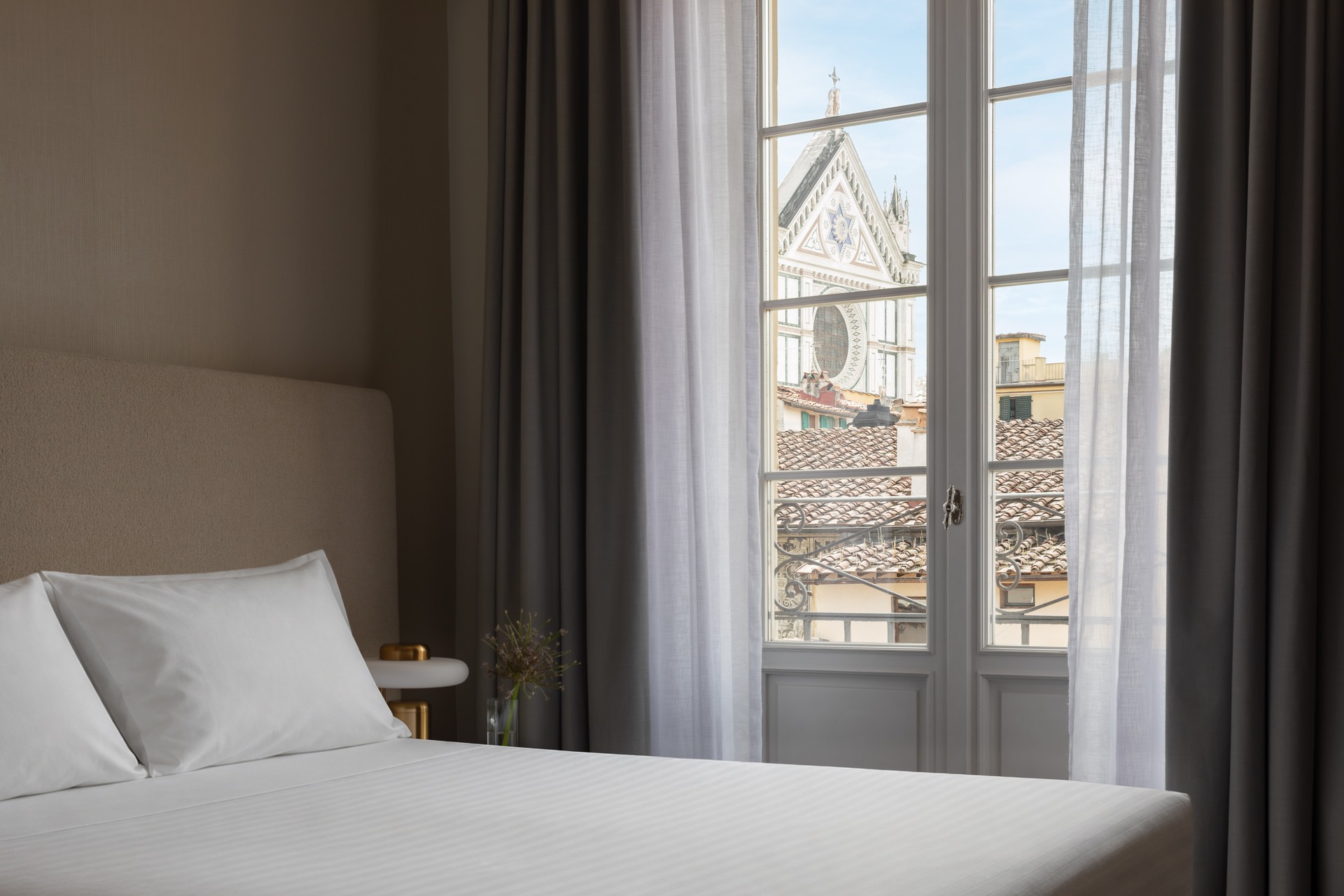
For those seeking a privileged outlook over the city, the Junior Suite Terrace offers a private balcony with views of the Basilica of Santa Croce.
Guelfi e Ghibellini
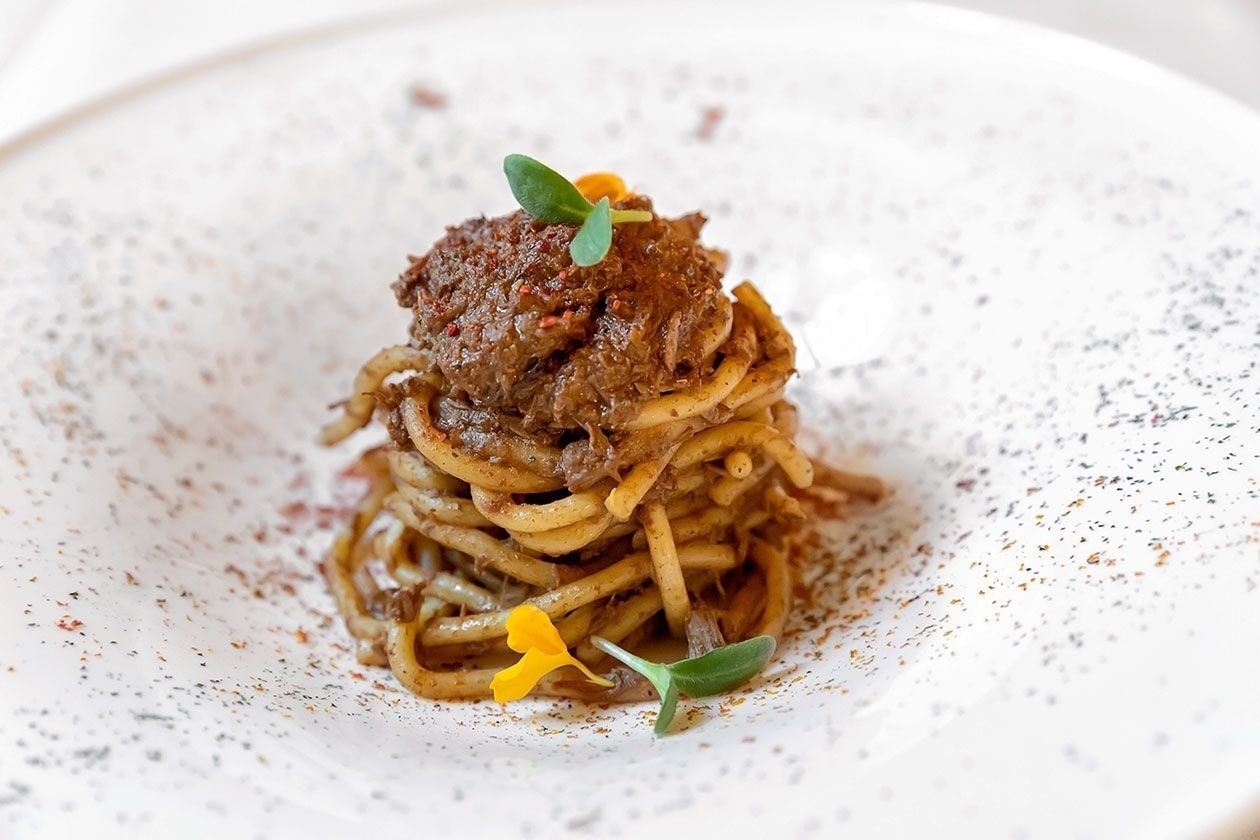
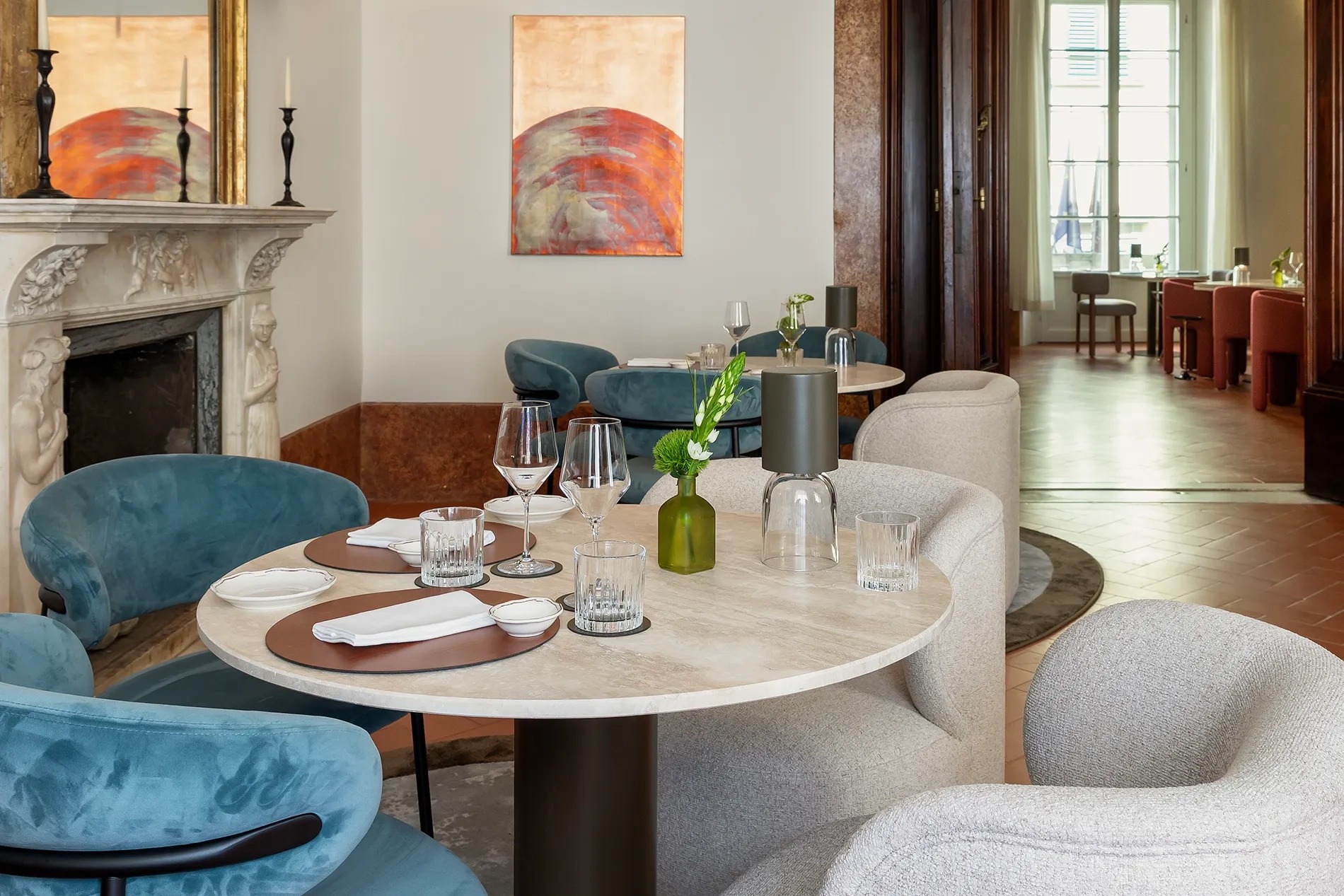
The dining experience also helps tell the story of the palazzo and its relationship with the city. At Guelfi e Ghibellini, set within the elegant first-floor interiors, executive chef Antonino Pepe draws on Tuscan tradition to create a contemporary culinary journey. Local flavours meet Mediterranean influences in a concise, refined menu designed to showcase ingredients and producers. The wine list travels through Tuscany and Italy’s principal wine regions, alongside a selection of Champagne from renowned houses.
Beside the restaurant, the bar provides an intimate, relaxed meeting place, ideal for a break at any time of day. From aperitivo to after-dinner drinks, the offering ranges from classic cocktails to carefully selected wines and spirits, accompanied by a light menu for informal dining.
The hotel joined Baglioni Hotels & Resorts in 2009 as Baglioni Relais Santa Croce. Part of The Palace Company, the hospitality brand has overseen a process of enhancement that preserves the property’s historic character and original identity. Its rebranding in 2024, introducing the name Palazzo Firenze, marked a new stage in its evolution while keeping its ties to the city and the residence’s heritage at the centre. A member of The Leading Hotels of the World, it remains one of the most exclusive addresses in Florentine hospitality.
Sources and images: Text by Isabella Radaelli. Photo credits: Francesca Anichini (©Francesca_Anichini); Francesca Anichini Studio (©Francesca_Anichini_Studio) for the city view; Palazzo Firenze for the facade, lounge bar and culinary image. All image rights are reserved to their respective rights holders.