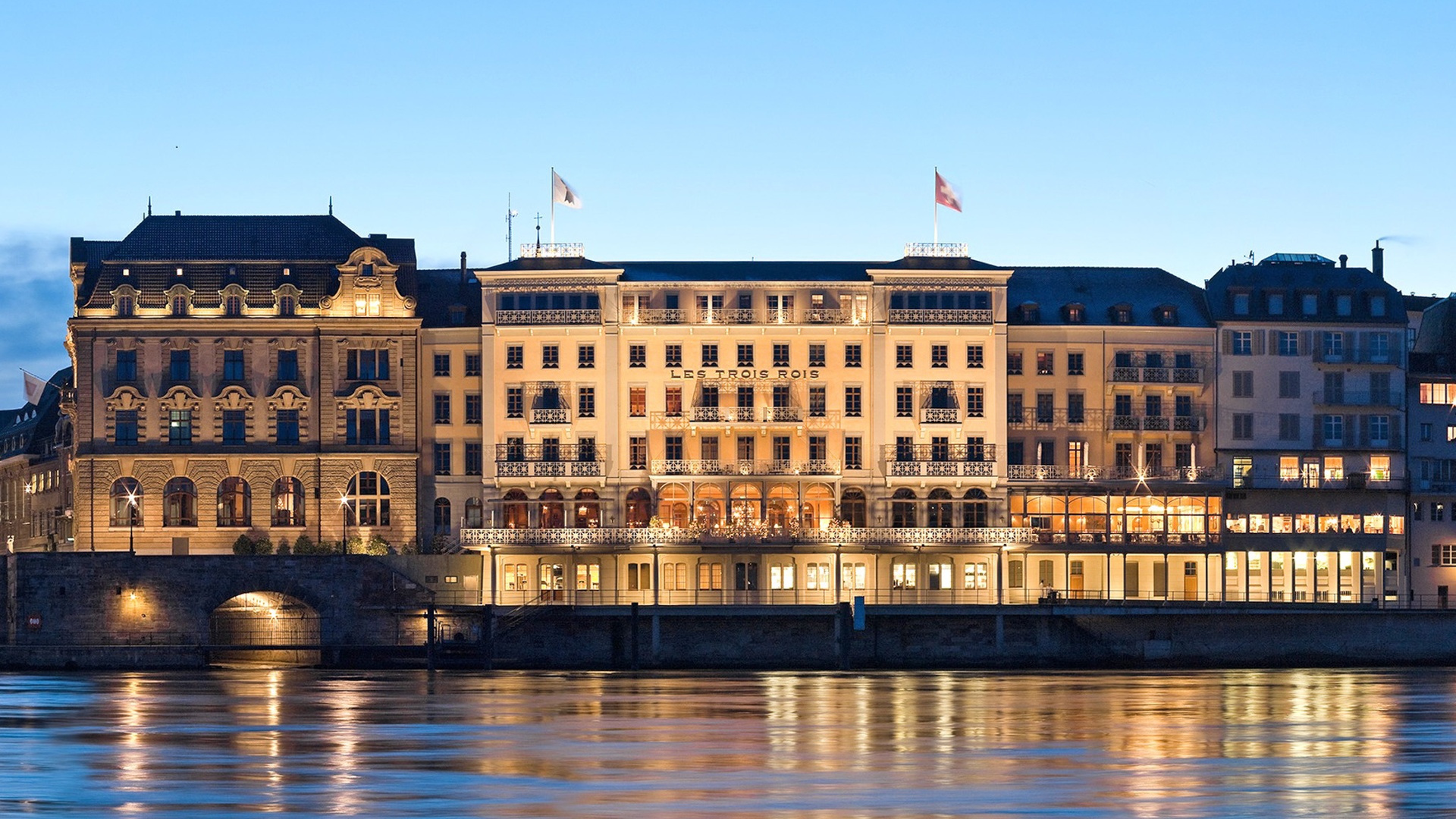
With almost three and a half centuries of history, Grand Hotel Les Trois Rois is one of Europe’s oldest and most prestigious addresses, a place where heritage is not confined to memory but continues to engage with the present through a cultured, precise and surprisingly contemporary approach to hospitality.
Situated on Schifflände, the departure point for boats on the Rhine, its origins date back to 1681, when it was known as Herrenherberge und Gasthof zu den drei Königen, meaning Hostel and Inn of the Three Kings. In 1841, the building was purchased by Johann Jakob Senn, a tailor with a passion for travel, who decided to demolish the original structure and rebuild it in a far more luxurious form, entrusting the design to Basel architect Amadeus Merian. From then on, Les Trois Rois established itself as a true Grand Hotel, a stopping place for statesmen, intellectuals and leading figures in the international arts scene.
Between 2004 and 2006, the hotel was completely modernised and renovated by architect Christian Lang in accordance with historic conservation principles. During the works, the adjacent bank building of 1903, formerly the headquarters of Basler Kantonalbank, was integrated into the hotel complex while preserving the architectural language of the main building. The latest project, entrusted to Herzog & de Meuron, has redefined this former bank building, giving it an identity distinct from the historic palace and transforming it into a sequence of spaces offering new experiences, new atmospheres and a different rhythm of living.
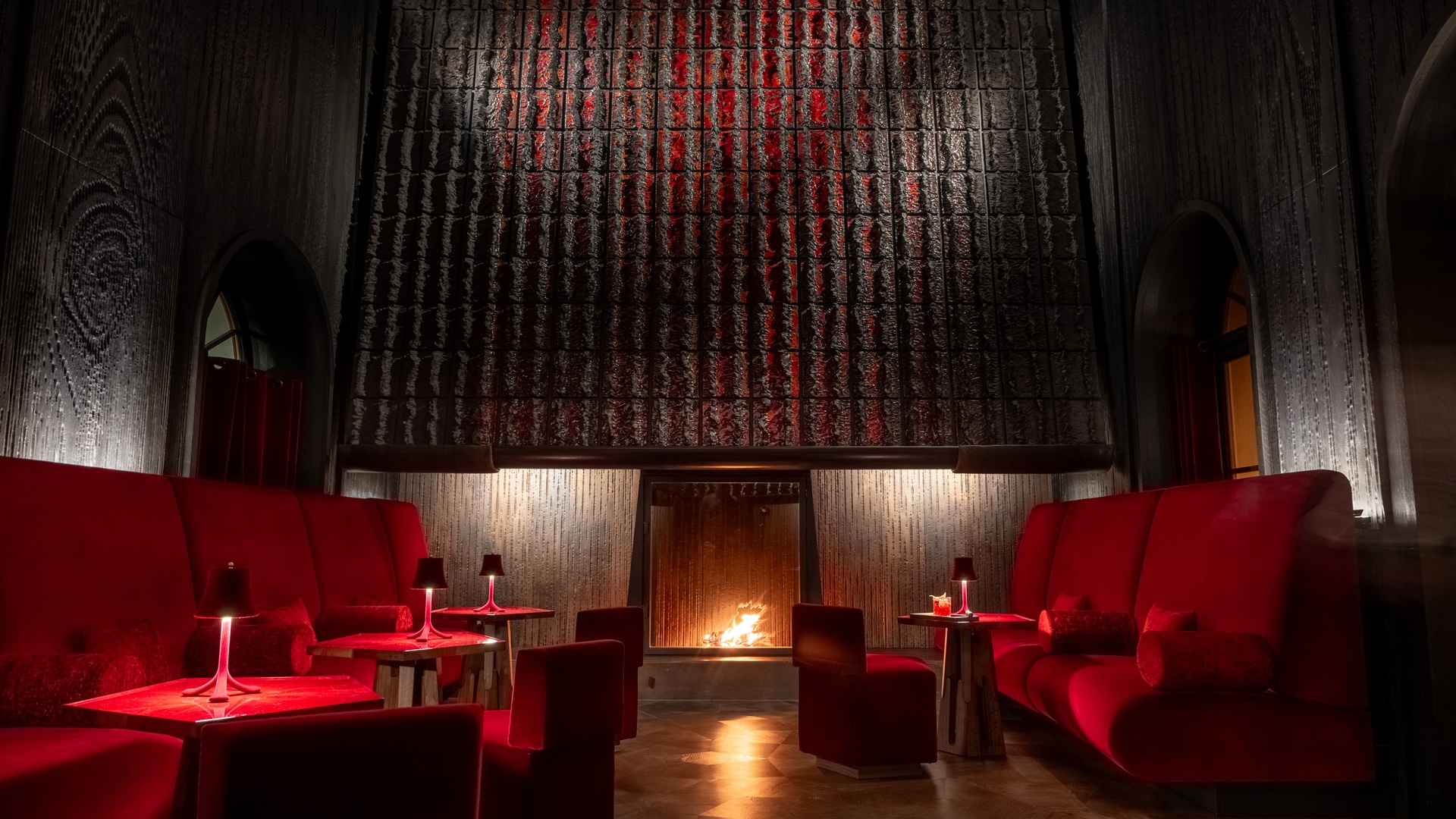
The Council, the cigar lounge
The first element of the Herzog & de Meuron redesign to be completed, The Council is a space conceived for cigar enthusiasts and houses 35 brands from six countries. The 40-square-metre smoking lounge features 570 ceramic tiles on both sides of walls seven metres high, complemented by bespoke oak panelling and bronze plates. The tiles were designed by Jacques Herzog and the H&dM project team in close collaboration with ceramic artist Esther Lattner and Kunstbetrieb, a local company in Münchenstein specialising in the production of artworks. Red velvet sofas frame seven bespoke tables and stools in dark walnut, while the Cappuccetto Rosso lamps, designed by H&dM and produced by Artemide, add a touch of cultured, sophisticated wit. An oak parquet floor, two fireplaces and large windows providing natural light complete the setting. The Council is open daily from noon until midnight to hotel guests and, subject to availability, to restaurant and bar customers.
Suite des Rois
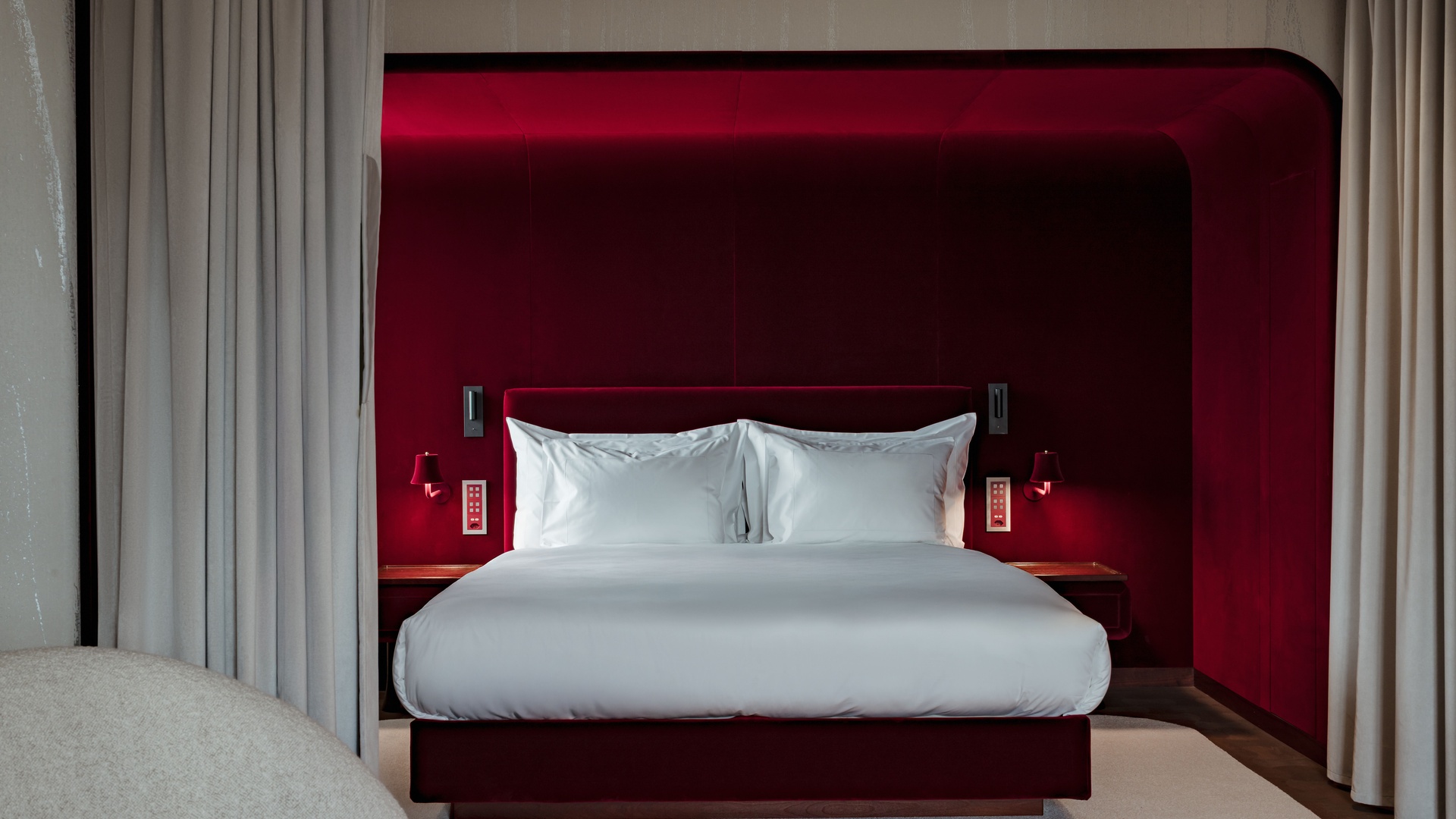
Most of the 101 rooms and suites are located in the main building at Blumenrain 8, while the new suites designed by Herzog & de Meuron occupy the building known as Blumenrain 2, evoking the atmosphere of a French boudoir through an intense use of purple-red.
The Suite des Rois, formerly the Presidential Suite on the top floor where the palace attic once stood, has been relocated to the bel étage, in the bank director’s former private apartment, and now features an elegant balcony overlooking Schifflände. With its sequence of rooms extending along the entire façade around a central space with a vestibule and circular dining room, the suite is conceived as a generous spatial continuum. Furnishings created exclusively for this location, from dividers to curtains, allow the space to be arranged according to each guest’s wishes.
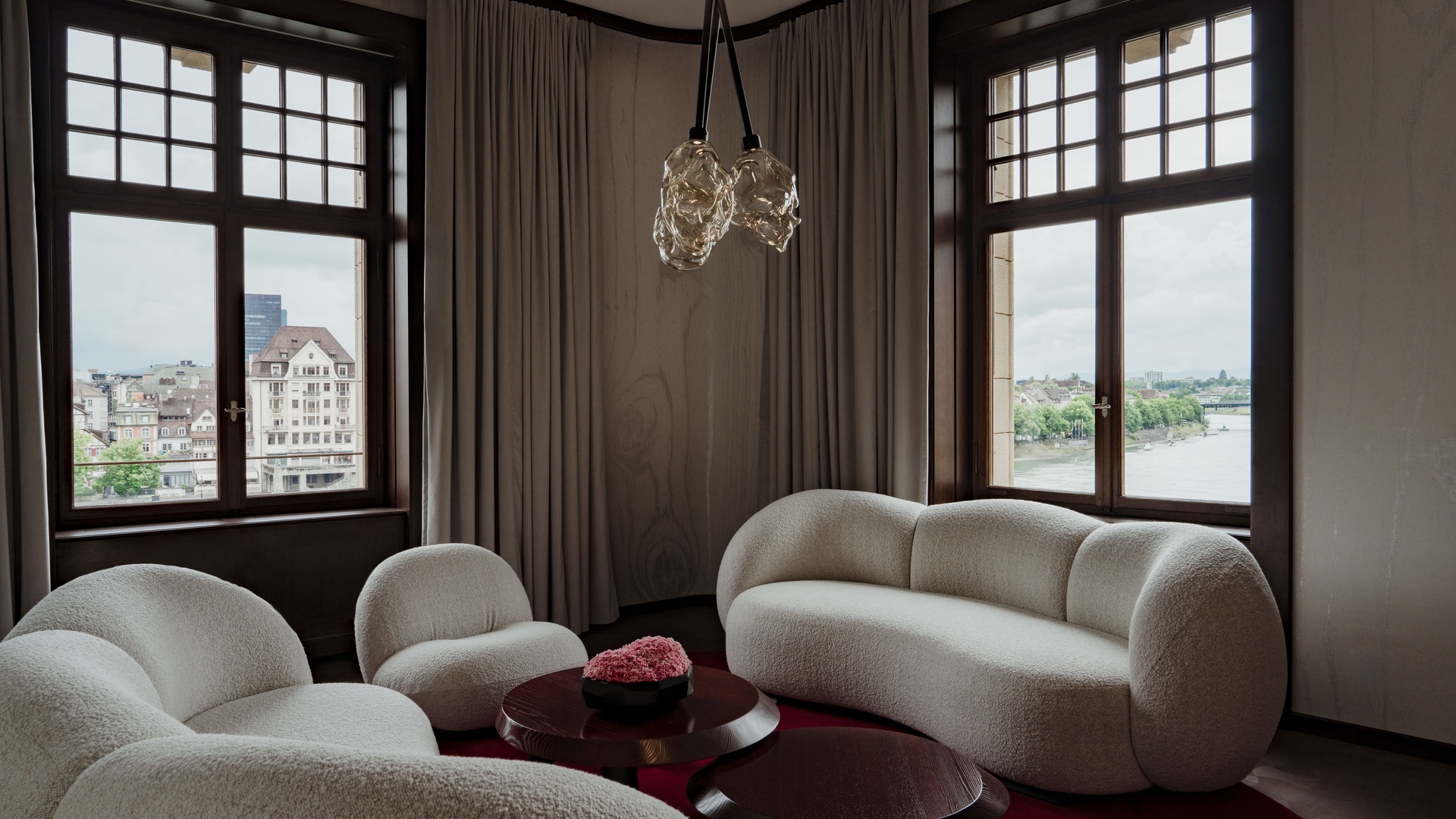
The same fluid style appears in the four junior suites and two rooms, conceived as open-plan spaces divided into areas for rest, self-care and bathing. Every detail, from the joinery and fittings to most of the furniture, has been designed and made to measure. The Exale chandelier, hand-blown in glass by craftsman Matteo Gonet and designed by Jacques Herzog, resembles a jewel suspended above the living area. Red velvet alcoves, mahogany-coloured furniture and glossy white ceilings lend the spaces a playful lightness that sets them apart from the more classical interiors of the main building.
Seijaku Wellbeing
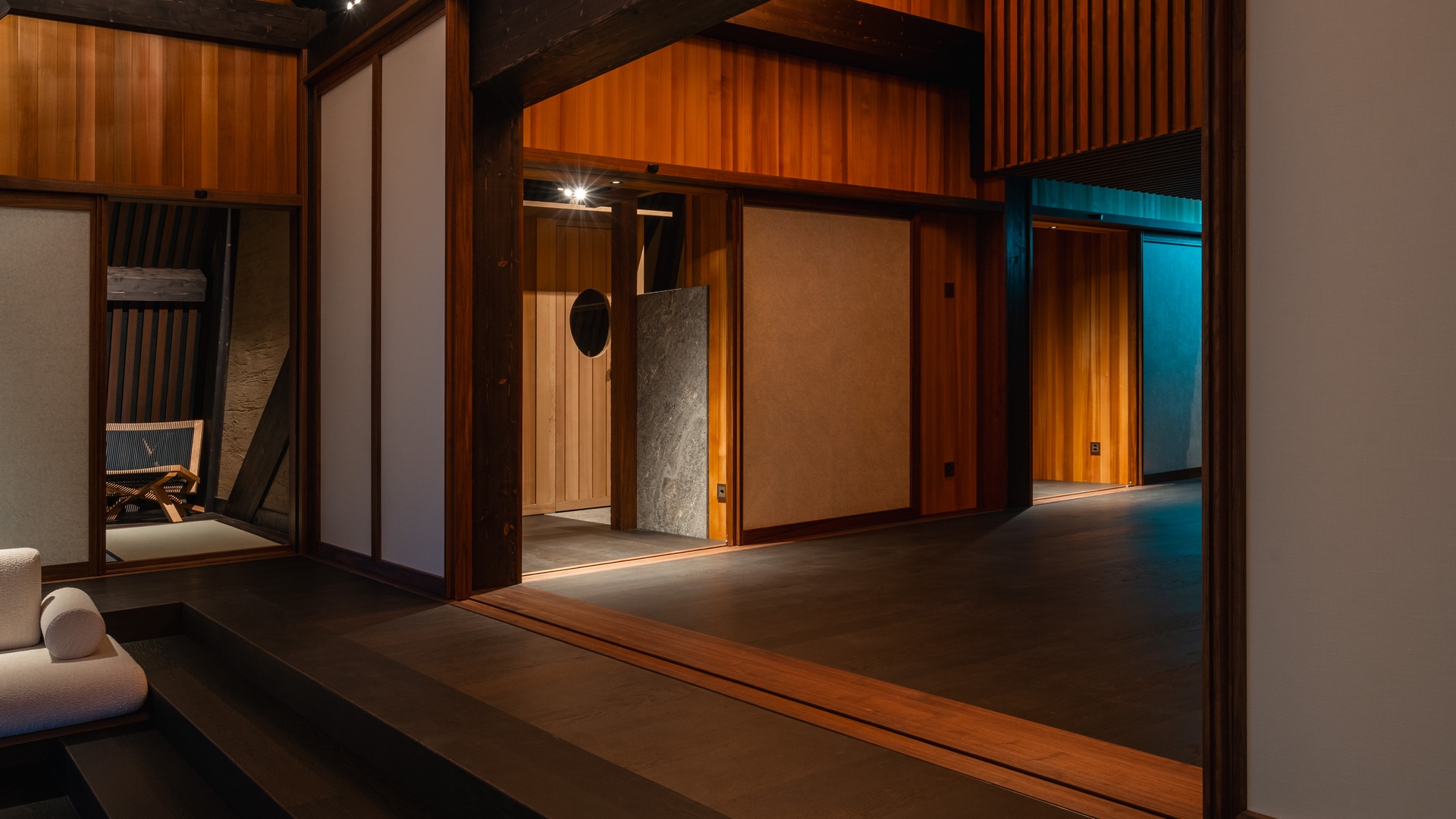
On the building’s top floor, Seijaku, meaning silence in Japanese, is the hotel’s wellbeing area. More than a retreat, it offers an immersion in the Japanese philosophy of mindfulness. Everything revolves around the principles of Yasuragi, Ki and Ichigo-Ichie: harmony, energy and the art of living in the moment.
The space includes massage rooms, a sauna, a steam room, several relaxation areas with a fireplace and a large window overlooking Schifflände. The interplay of massive black oak beams filled with clay and cedar, walnut walls and sliding doors, paper-clad installations and floors of tatami, bare stone or wooden boards recalls the traditional architecture of Japanese onsen. On the terrace, reached by a staircase, the steam bath offers a 360-degree view of the Rhine and Basel’s rooftops.
Banks, art and food
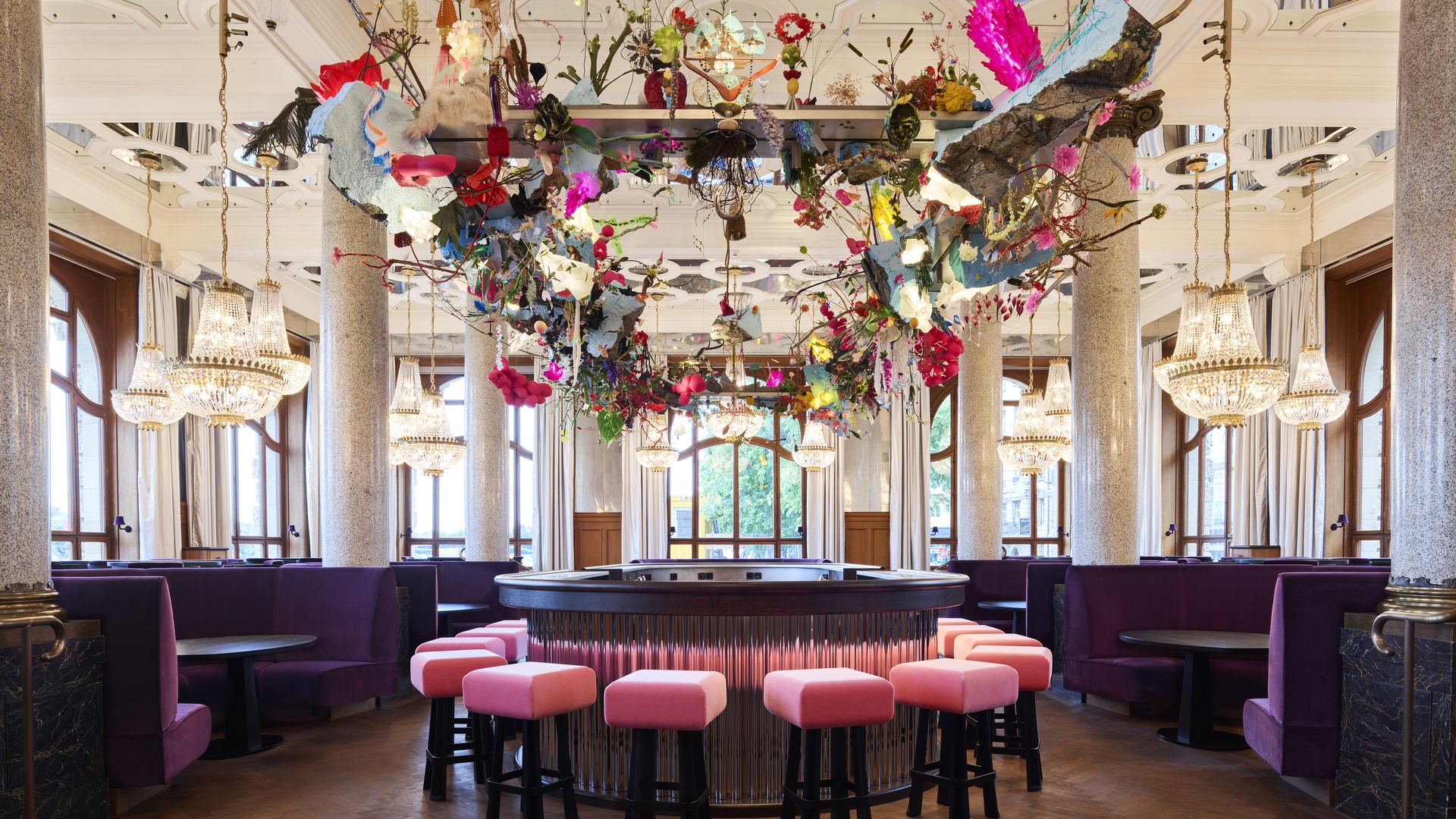
At Banks, guests do not simply come to sit at a table: they share, laugh and surrender to an energy that makes every dish part of a memorable moment. The restaurant dining room revolves around an artwork by Steiner & Lenzlinger, surrounded by a mixture of historic and contemporary chandeliers. A series of mirrors covers the white-plastered ceiling, reflecting the room back on itself and amplifying its atmosphere and depth.
Polished and sanded metal panels cover the walls, multiplying chandeliers and artworks. At the centre, a gleaming chrome steel bar reflects the space once again. Mirrored surfaces, velvet and dark oak create an atmosphere that enters into dialogue with the food: fusion cooking with a significant Asian influence.
Grand Hotel Les Trois Rois also offers other dining addresses: Le Cheval Blanc, the gastronomic restaurant led by chef de cuisine Peter Knogl; La Brasserie, serving Swiss and French specialities in brasserie style; and Le Bar Les Trois Rois, with a broad offering ranging from light lunches to afternoon tea, aperitifs and after-dinner signature cocktails and sparkling wines.
Versatile banqueting rooms
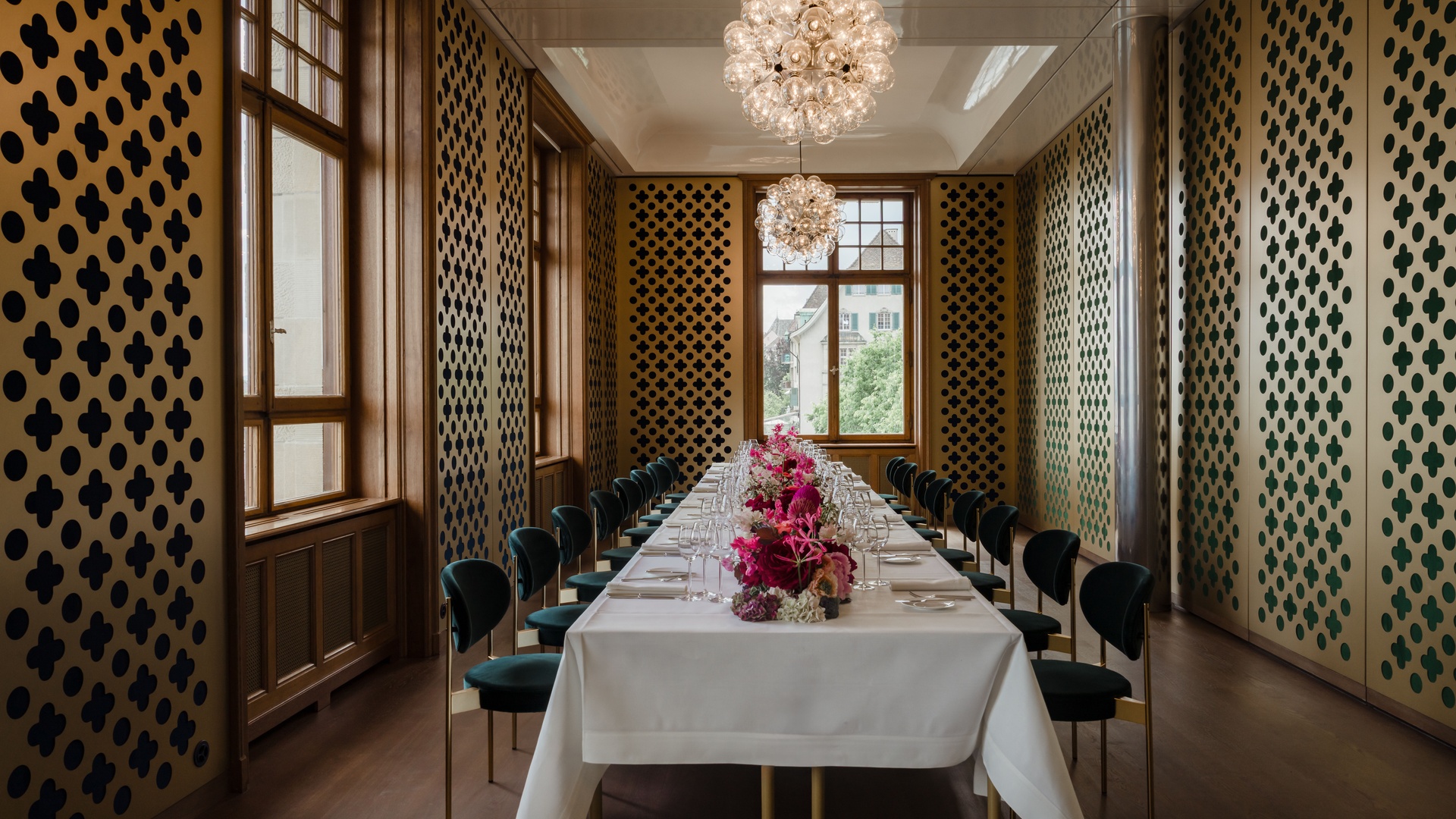
On the first floor, interior walls and ceilings have been removed to create a generous, adaptable space designed for banquets, meetings, presentations and special events. Its configuration can be changed through a system of large sliding brass and velvet panels, inspired by historical motifs, that allow the room to be adjusted as required. Finished in glossy white lacquer, the ceiling creates a reflective surface that enhances light and depth, adding a touch of contemporary elegance.
The hotel is enriched by floral arrangements in a variety of styles and colours, bringing joy and vitality to its spaces. These decorations come from Fleurs des Rois, the flower and accessories shop nearby at Stadthausgasse 7, owned by the hotel itself.
Sources and images: Text by Isabella Radaelli. Photo credits Grand Hotel Les Trois Rois and Herzog & de Meuron, as indicated in the captions. All image rights are reserved by their respective rights holders.