Some people wait for the new year in a brightly lit square, some dream of a festive dinner in the mountains, while others long to leave the European winter behind and find themselves on the other side of the world, where the festive calendar unfolds against the blue of the ocean. In the Seychelles, the transition from 2026 to 2027 can become much more than a holiday in the sun: it is an opportunity to discover an archipelago with a surprising history, where nature shelters unique species, Creole traditions tell of centuries of encounters between cultures and every island reveals a different character.
The Seychelles' 115 islands are more than a succession of picture-postcard beaches. They are also the result of an exceptional geological history, a natural laboratory for biodiversity conservation and a multicultural society in which African, European and Asian influences coexist. For those choosing to spend the end-of-year festivities here, the suggestion is to alternate relaxation with experiences that can surprise, following itineraries that reveal the less obvious side of the Indian Ocean.
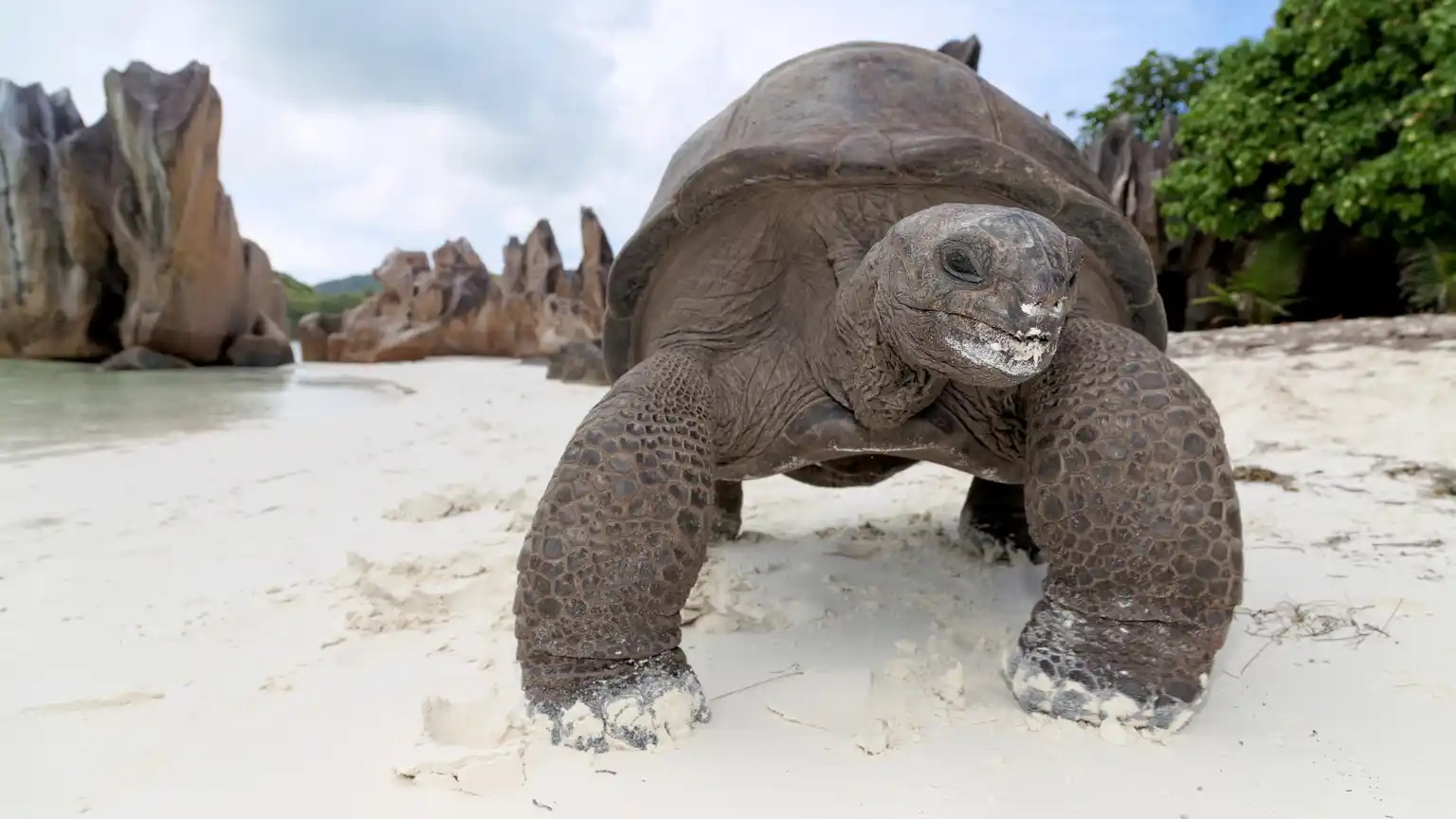
In Sainte-Anne Marine National Park, a short distance from Mahé, lies Moyenne Island, a small island with a story worthy of an adventure novel. In 1962, British man Brendon Grimshaw bought it and began restoring its vegetation, planting trees and helping to create a refuge for local wildlife. Year after year, his work transformed the island into a natural sanctuary, now known for the giant tortoises roaming freely among the vegetation. A visit is more than a tropical excursion. Along the paths are remnants of old settlements, a small chapel and graves traditionally associated with pirates, while the vegetation tells a story of rebirth and conservation. A walking route offers a sense of the island's compact scale and its distinctive relationship with the sea. Moyenne can be reached on boat excursions organised by local operators. It is an option for those who want to begin the new year with a different story to tell, bringing together nature, memory and the tangible value of environmental protection.
Around twenty minutes by boat from Praslin, Curieuse Island offers a more varied nature experience than a simple boat trip. The marine park is home to numerous Aldabra giant tortoises, an emblematic Seychelles species, as well as endemic vegetation of considerable interest. One of its surprises is the mangrove forest, crossed by a raised boardwalk that allows visitors to observe this environment closely without stepping on its soil. Mangroves play a fundamental role in coastal ecosystems: they provide shelter for numerous species and help protect the coastline.
Between October and early March, there is also the possibility, depending on conditions and park regulations, of joining guided walks along the trail dedicated to sea turtle nesting. This is a particularly interesting opportunity for those travelling during the festive season, always respecting observation rules and the animals' tranquillity. Curieuse also offers viewpoints, birdwatching and granite formations sculpted by millions of years of erosion. For sea lovers, the nearby islet of Saint-Pierre is another stop to consider for snorkelling when conditions are favourable.
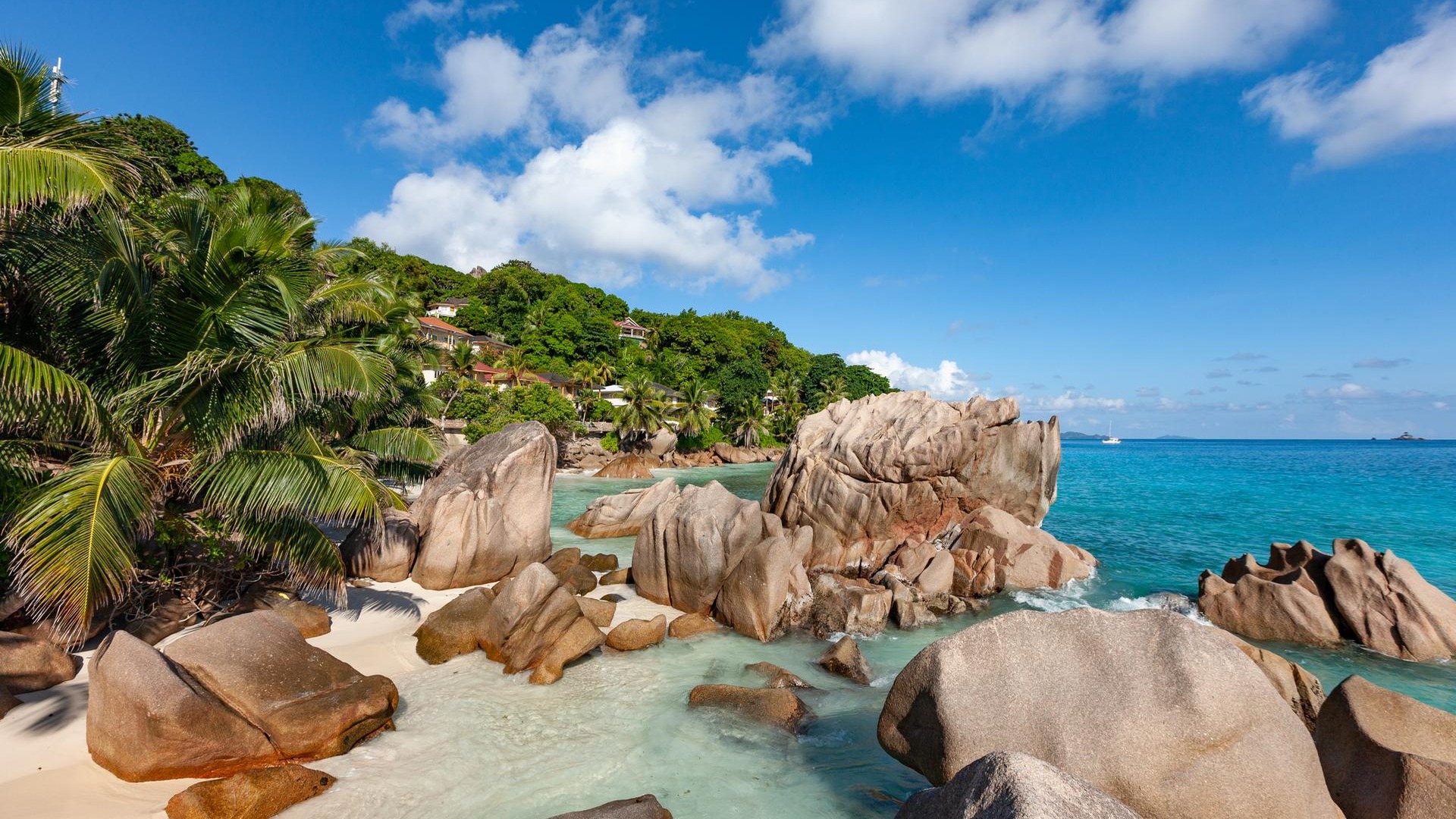
The Seychelles are geologically different from many other tropical archipelagos. The inner islands, including Mahé, Praslin and La Digue, are characterised by ancient granite rocks, while other islands in the archipelago are coral in origin. This contrast contributes to the extraordinary variety of landscapes.
On Praslin, the Vallée de Mai is one of the most emblematic places: a UNESCO World Heritage forest where the Coco de Mer grows naturally and produces the largest seed in the plant kingdom. Its unusual shape has inspired stories and legends for centuries, including the tale that the palms come to life on stormy nights.
The Coco de Mer is an endemic species, closely linked to the Seychelles' identity, whose survival depends on protecting its habitat. A guided visit offers a better understanding of the forest's balance and the role of conservation in an archipelago where many species exist nowhere else on the planet. For those wishing to explore beyond the most popular routes, Praslin offers trails and viewpoints to discover with authorised guides.
To understand a place, you also need to taste it. On Mahé, the historic La Plaine St. André estate houses the Takamaka distillery, one of the leading names in Seychellois rum. A visit introduces the production process, the estate's history and the culture of rum, a drink intertwined with local traditions on the islands of the Indian Ocean. The complex includes a museum, a medicinal plant garden, historic remains and spaces devoted to the distillery. Guided tours and tastings reveal how ingredients, production techniques and cultural influences help define the character of local spirits.
La Digue has also developed a distinctive connection with this tradition. At the historic L'Union Estate, the Takamaka La Digue project highlights a production dedicated to the island, with flavours inspired by local ingredients such as vanilla, coconut and lemongrass. It is a way to connect culinary discovery with the area's history and the creativity of Seychellois communities. Those who prefer an alcohol-free experience can instead explore Creole cuisine, joining a workshop to learn to prepare dishes based on fish, coconut and spices. Gastronomy thus becomes a key to understanding the archipelago's multicultural identity.
On La Digue, the journey changes pace. The island is known for travel by bicycle and a landscape in which enormous granite boulders, tropical vegetation and small villages alternate along the coast. It is a destination to explore without rushing, leaving room for detours and spontaneous stops. Beyond the celebrated Anse Source d'Argent, the Veuve Special Reserve also deserves attention: a protected area devoted to conserving the Seychelles paradise flycatcher, a rare endemic bird recognisable by the male's long tail. A guided visit reveals the efforts required to protect this species and its habitat. La Digue also offers an opportunity to observe everyday life in the archipelago at close quarters: traditional boats, fishermen, Creole houses and small craft businesses. An itinerary that invites you to slow down and experience the place beyond its most familiar images.
In the Seychelles, the festive season is experienced not only through beaches and tropical landscapes: it also has a strong community and religious dimension. Most of the population is Catholic and, on the evening of 24 December, the Cathedral in the capital, Victoria, comes alive for traditional midnight Mass, in an atmosphere made even more evocative by Christmas decorations and lights. It is an opportunity to discover an authentic aspect of local life and observe how Christian celebrations intertwine with the archipelago's Creole identity.
For those who prefer to bid farewell to 2026 to the rhythm of music, the event announced on Praslin for New Year's Eve is the Beach Party organised by Café des Arts on Côte d'Or beach, starting at 7 pm on 31 December. The evening is advertised with music, DJ sets, local food and drinks: an informal way to await the new year with your feet in the sand and the ocean as a backdrop. Before travelling, it is advisable to check directly with the organisers for any updates, admission arrangements and reservations.
Mahé also offers various ways to continue the evening, from sunset drinks with live music along Beau Vallon beach to bars and nightclubs also frequented by local residents. Among the venues mentioned by the official tourist guide are Beach Shak and Boathouse in the Beau Vallon area, the Barrel Bar & Nightclub in Victoria, a long-standing reference point for reggae, dancehall and Creole music, and places such as Boardwalk and Eden Island for those seeking DJ sets and entertainment. Special programmes for 24 and 31 December may change, and some venues may require reservations or charge admission: it is therefore advisable to check for updates before the evening.
The beauty is that there is no single way to celebrate: you can choose the intimate atmosphere of a religious celebration, a dinner of Creole specialities or a night of music and dancing on the coast. In every case, the festivities become an opportunity to meet the local community and discover an archipelago where conviviality is part of everyday life.
For those wishing to extend their holiday beyond New Year's Eve, January is traditionally also associated with sailing events in the Seychelles. Private boat trips and excursions among the inner islands can also be arranged, choosing itineraries that combine sailing, swimming stops and observation of marine wildlife.
In the Seychelles, the Christmas festivities can become the beginning of a journey of discovery: learning the story of an island saved from abandonment, observing giant tortoises at close quarters, walking through a primeval forest, discovering the secrets of Creole rum or cycling through a village overlooking the ocean.
This is what makes the archipelago distinctive, because behind the beauty of its beaches lies a world of stories, traditions and rare species that deserve to be discovered. A different way to welcome the new year, choosing not only a tropical destination, but an experience capable of leaving memories that reach far beyond the festive season.
Sources and images: Seychelles Tourism Board / Alessandra Amati, ITA Strategy press release. Complete editorial text in English translation; photographs supplied with the release.