I arrive at Los Cabos International Airport on a Condor flight, the German airline recognisable for aircraft painted in broad, colourful vertical stripes, almost like deckchairs suspended in the sky. When the plane touches down in the intense light of Baja California Sur, the first feeling is of having arrived at the edge of the continent.
The air is warm but dry, almost sharp. The landscape around the airport is spare: cacti, rocks and arid hills. This is my first encounter with Baja California Sur, in the southern part of the Baja California Peninsula, a strip of land more than a thousand kilometres long separating the Pacific Ocean from the Sea of Cortez. It immediately becomes clear that this journey is more than a destination: above all, it is a road. Here everything is discovered on the road, following the long Federal Highway 1 that runs the peninsula from south to north, crossing deserts, fishing villages and towns that seem to have sprung up almost by chance along the coast.
The first stop is San José del Cabo, a small town retaining the atmosphere of a traditional Mexican village. Its historic centre revolves around the square and the church of the Misión San José del Cabo Añuití, founded in the eighteenth century. The streets are quiet, art galleries alternate with little restaurants, and bougainvillea colours the houses’ white walls. Walking through these streets, you feel that the most authentic Baja still survives behind the region’s tourist image.
But this is only a brief respite, because between San José and Cabo San Lucas the traffic is remarkable, as are the crowds of holidaymakers swarming among beaches, resorts and an endless array of restaurants and attractions. Cabo San Lucas is Baja’s other face: marinas full of yachts, gigantic hotels and nightlife attracting visitors from around the world. It is no coincidence that Los Cabos is now one of Mexico’s most important tourism engines, receiving millions of visitors each year.
The natural symbol of this coast is “El Arco de Cabo San Lucas”, a rock arch sculpted by the waves where the Pacific meets the Sea of Cortez. Seen from the water, it resembles a gateway opening onto the horizon. Fishermen say that on calm days you can hear water rumbling among the rocks like a deep breath. At sunset, the procession of launches, known here as pangas, yachts and every kind of tourist boat is almost incessant. Everyone wants to see the arch, everyone wants a souvenir photograph, everyone wants to have fun. After this sensory overload of people and deafening music, it is time to rediscover Baja’s truer, more authentic soul. We follow Federal Highway 1 northwards, close to the Pacific Ocean. Kilometres of desert pass outside the window: gigantic cacti and jagged mountain peaks beneath an immense sky. In this space, rich with life, you truly feel the meaning of a journey through Baja: great distances, silences and a dominant natural world.
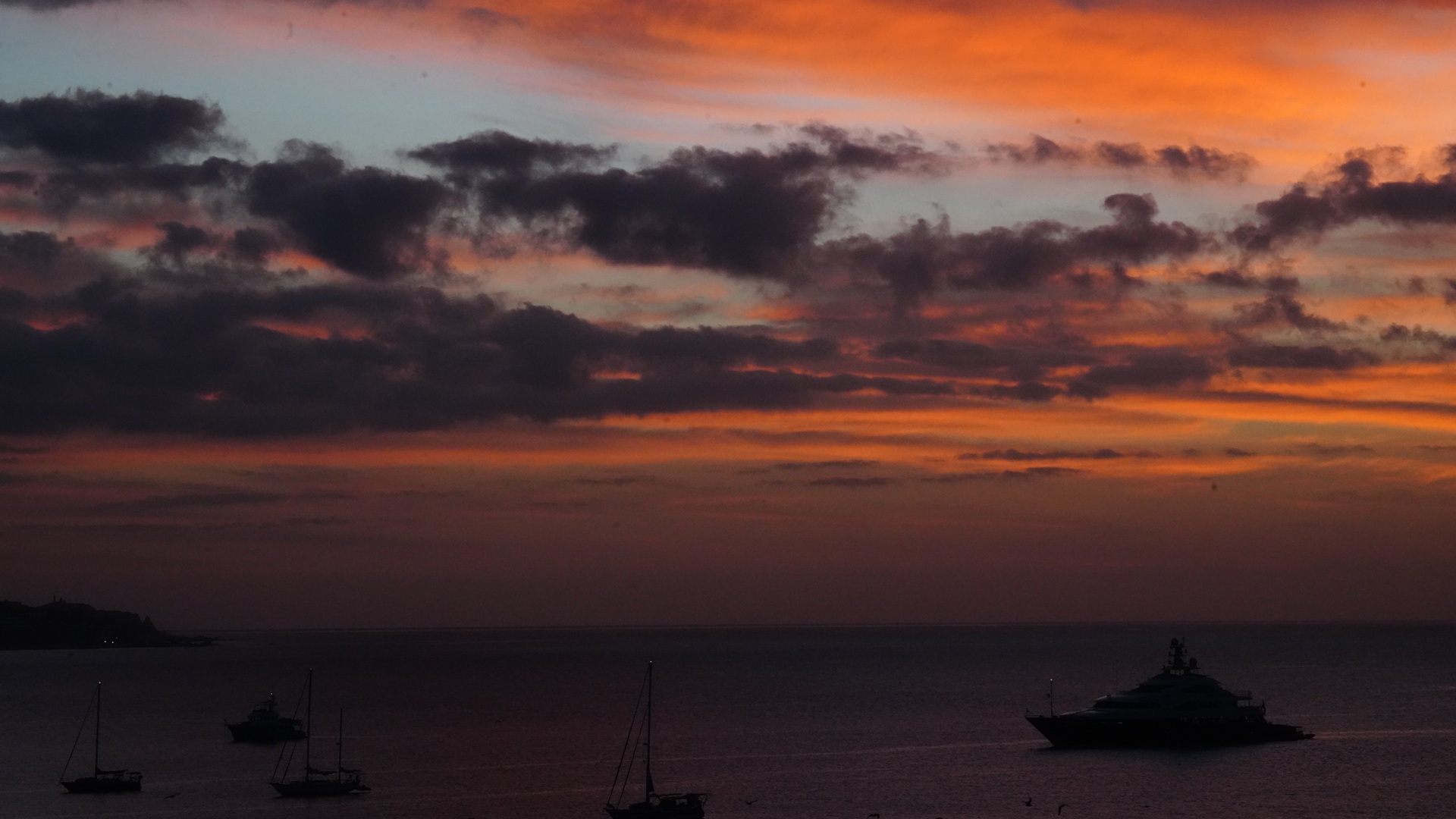
On the road north
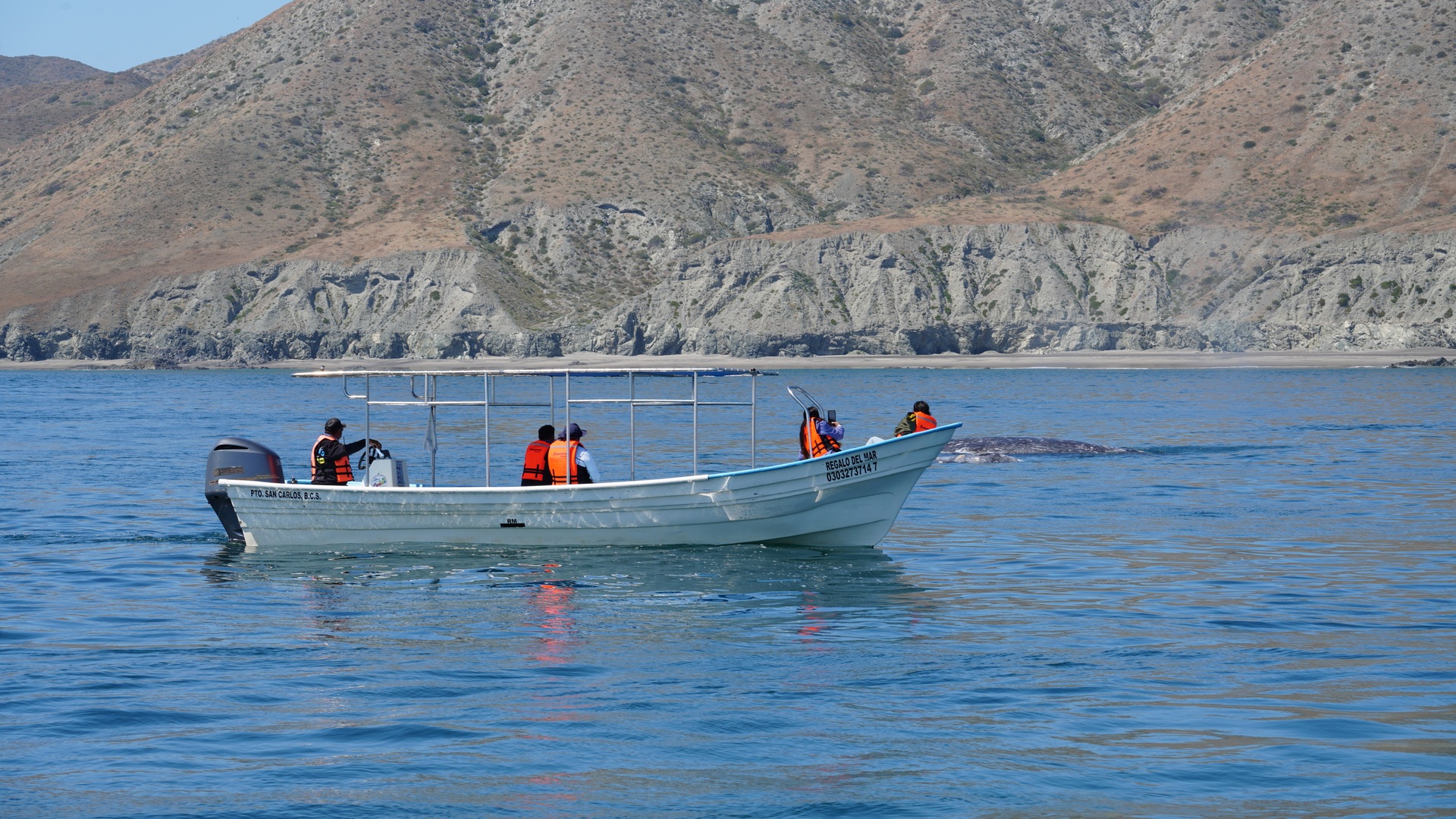
Our first stop is Todos Santos, a “Pueblo Mágico” suspended between desert and ocean. It owes its fame to the iconic Hotel California, which many associate with the Eagles song, although the link is unofficial and legal disputes between the Eagles and the hotel’s owners continue. In the 1960s and 1970s, the pueblo became a refuge for artists, surfers and free spirits. Today it combines art galleries, colonial missions and wild beaches such as Playa Cerritos. Further north, after almost four hours of gentle driving, we reach Puerto Chale, a small fishing port that in recent years has become one of the best places to observe grey whales. From January to March, grey whales travel thousands of kilometres from Alaska to give birth and mate here.
Fishermen become boatmen, launches glide slowly over flat water. It is not unusual for a whale to approach the boat of its own accord. Sometimes it is the mother, sometimes the calf, pushed to the surface as though seeking attention. Some people reach out a hand; others remain motionless, incredulous. Nobody speaks. In these suspended minutes, tourism disappears, leaving only the encounter between two species. Watching a whale emerge slowly just a few metres from the boat is an experience that leaves you silent: fifteen metres of animal, thousands of years of evolution, and the sudden impression of being merely guests in a world far older than our own.
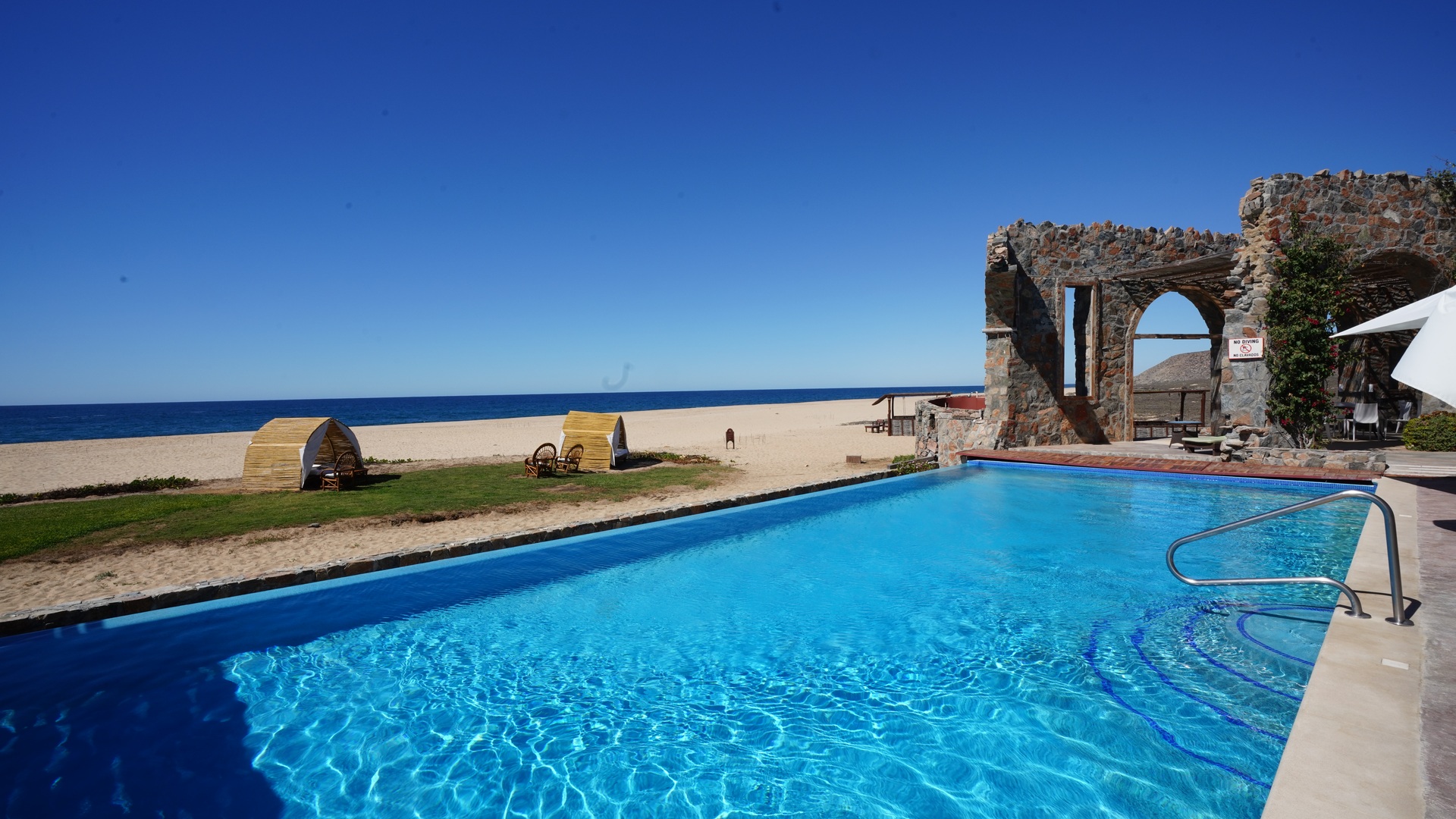
Ultimately, Baja California Sur offers no easy attractions. It requires time, distance and patience. Travel becomes an exercise in listening to the sea, the desert and a natural world that is no backdrop, but the absolute protagonist, offering stories that cannot be consumed quickly. The road winds like an unfulfilled promise, cutting the desert in two. On either side, colossal cacti stand against a seemingly endless sky. Baja California Sur is not simply crossed: it must be faced. A rugged, magnetic land, a sliver of Mexico where geography dictates the rhythm and silence still has something to say.
The mission of Loreto
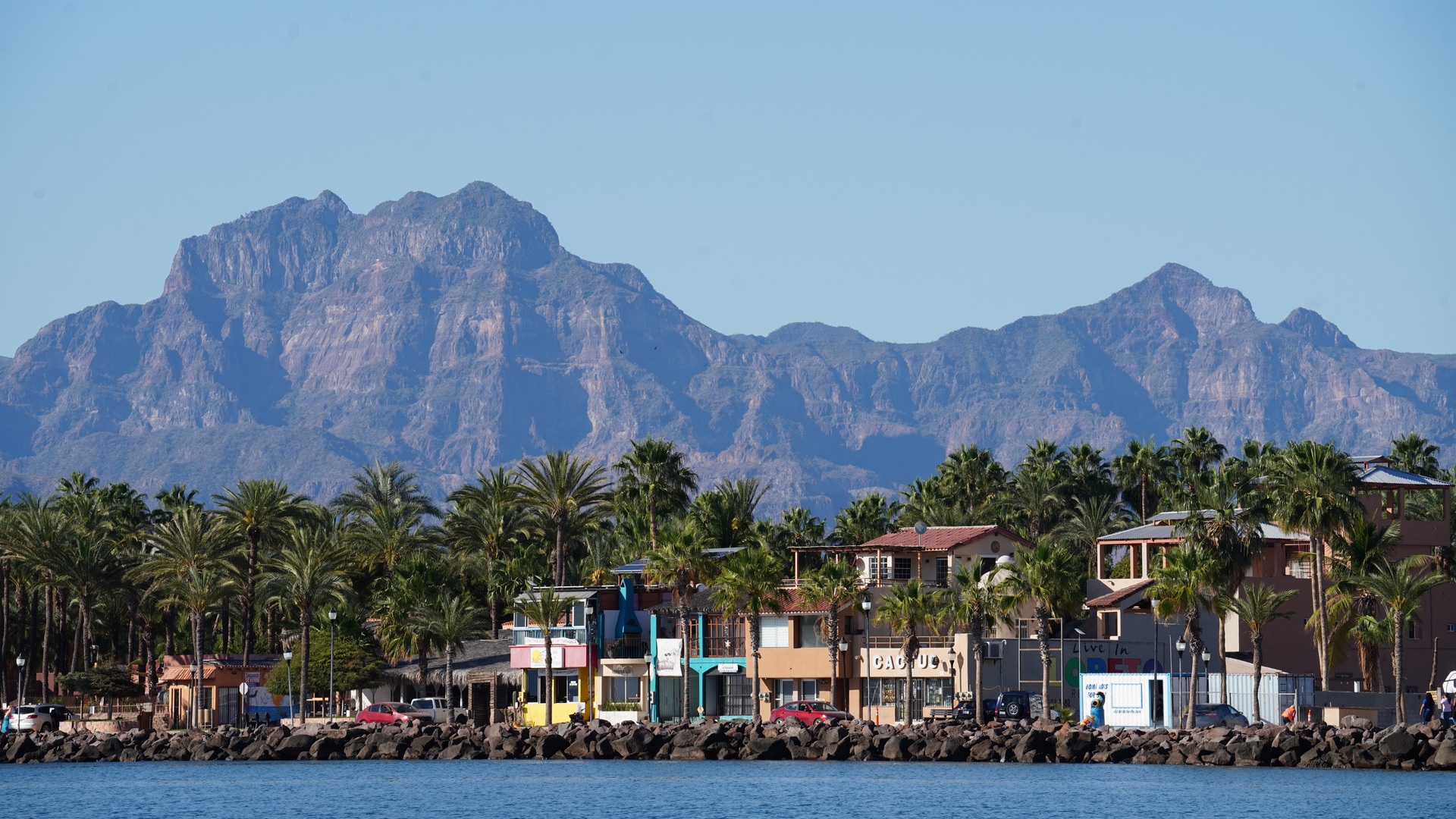
Our destination now is the pueblo of Loreto, on the Sea of Cortez. A symphony of luxuriant palms announces one of historic California’s oldest towns. Founded in 1697 as the first Jesuit mission, it was the capital of the Californias. Loreto retains a quiet, almost timeless air. The Misión de Nuestra Señora de Loreto still dominates the central square, bearing witness to a colonial past that has never become a spectacle. In the evening, restaurant tables fill slowly, and someone tells of a time when the sea was more generous, or perhaps only memory was.
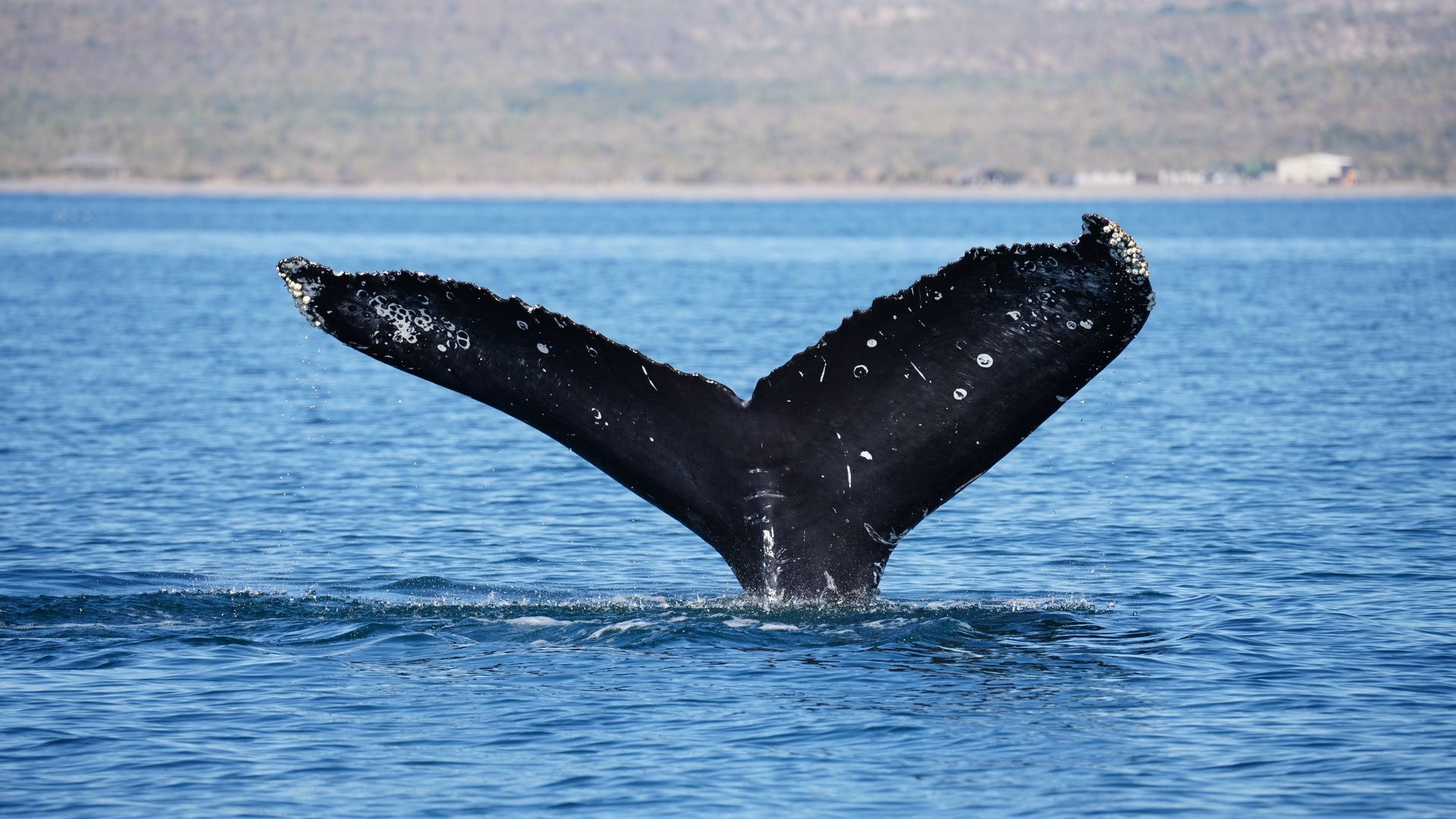
Loreto also provides access to Bahía de Loreto Marine National Park, a natural sanctuary, an archipelago of uninhabited islands where the water is so clear it seems unreal. Local fishermen speak of the currents as though they were people; they respect and fear them. It is ancient knowledge, passed down without maps or manuals. Aureliano, the fisherman taking us out in his panga, tells me that the sea “gives only if it understands that you know how to wait”. This lesson proves useful later, in the heart of the desert. In the great bay, as we speed towards Coronado Island, a group of grey whales blows in the water, huge tails rising skywards before they dive.
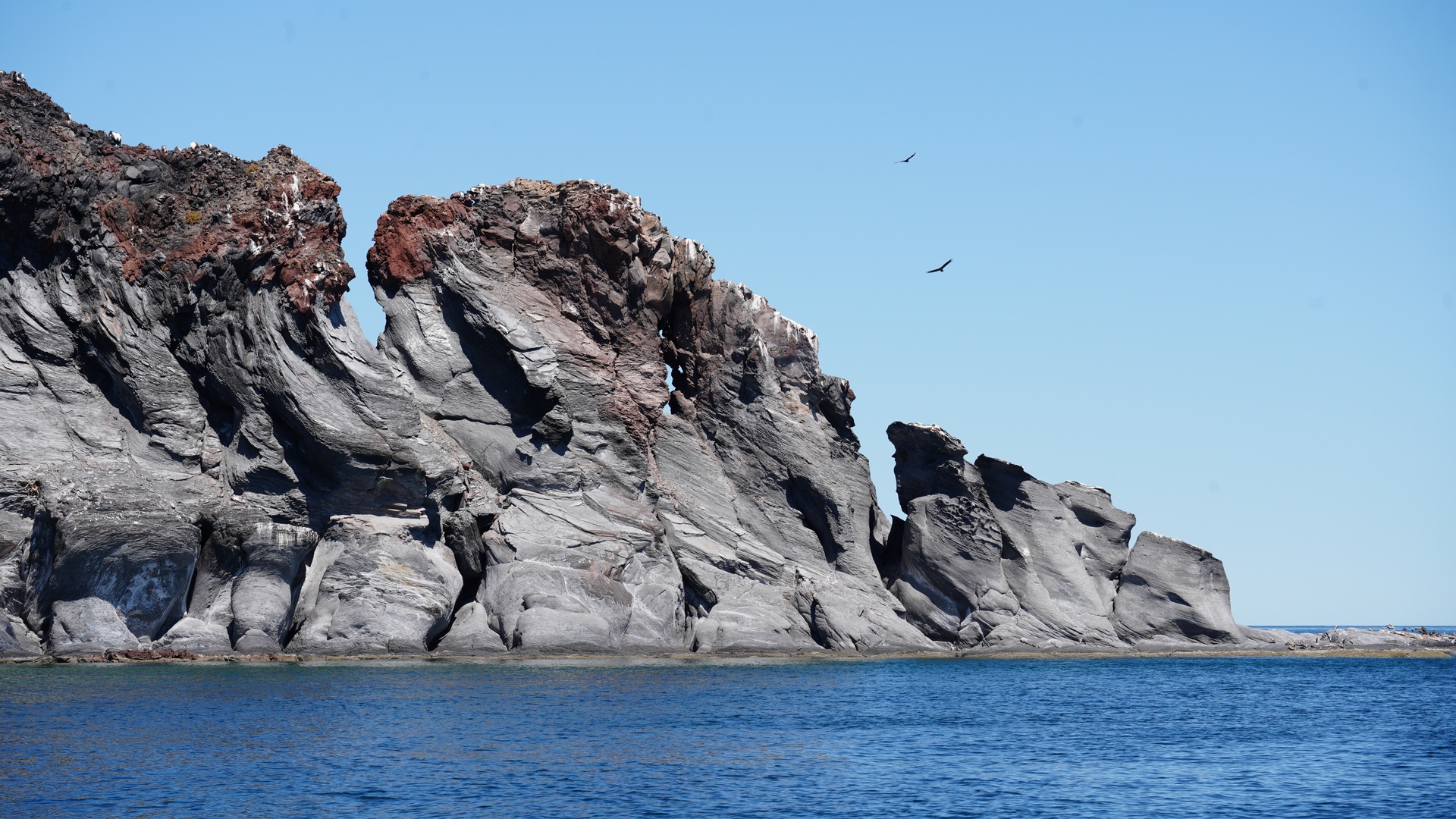
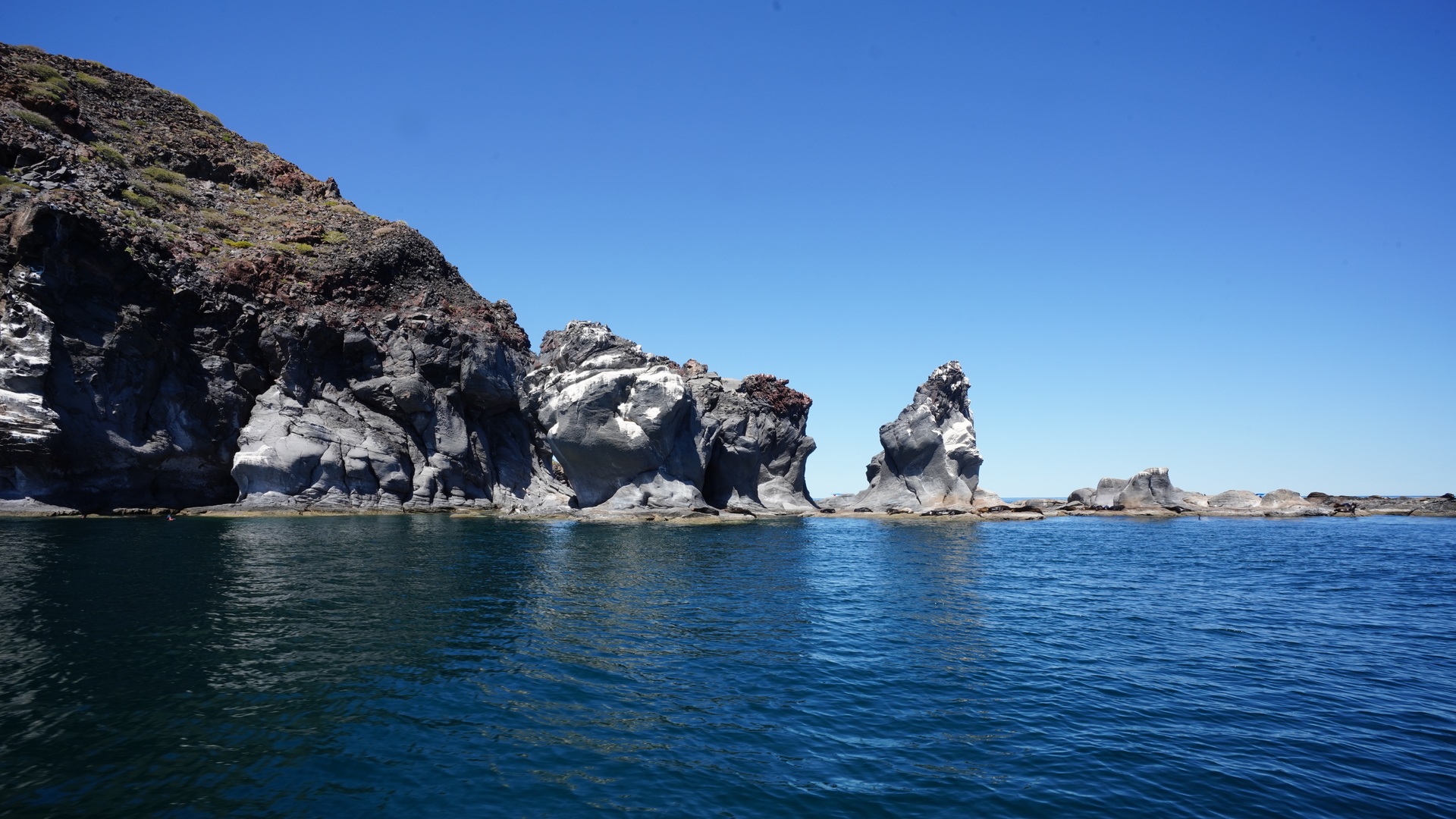
More spectacular still, we witness the manoeuvres and leaps of two enormous blue whales. At that moment I recall Cousteau’s words: “We protect what we love, we love what we understand”. Here understanding comes through silence and simple observation. Then comes volcanic Coronado Island, with beautiful white-sand beaches and a sea lion colony conspicuously piled together. The water is extraordinarily transparent, so spotting rays and turtles directly from the boat is not unusual. On calm days, the sea around the island becomes a perfect mirror reflecting the arid outline of the Sierra de la Giganta mountains. Local fishermen say that on moonless nights, bioluminescent plankton lights up the boats’ wakes.
Baja California Sur is a land that refuses to be consumed in haste. It is a journey that forces you to slow down, endure distances and relinquish the superfluous. Bruce Chatwin wrote that “man’s true home is not a house, it is the road”. In Baja that road is long and often empty, but leads to encounters that leave a deeper impression than any panorama.
As we leave, with desert behind and sea ahead, we have the clear feeling that we are not in a mere geographical location, but in a natural symphony with which to converse: from the desert’s ancient silence to the sea’s cobalt blue. Those with the patience to listen to it rarely return home unchanged.
The capital of Baja California Sur
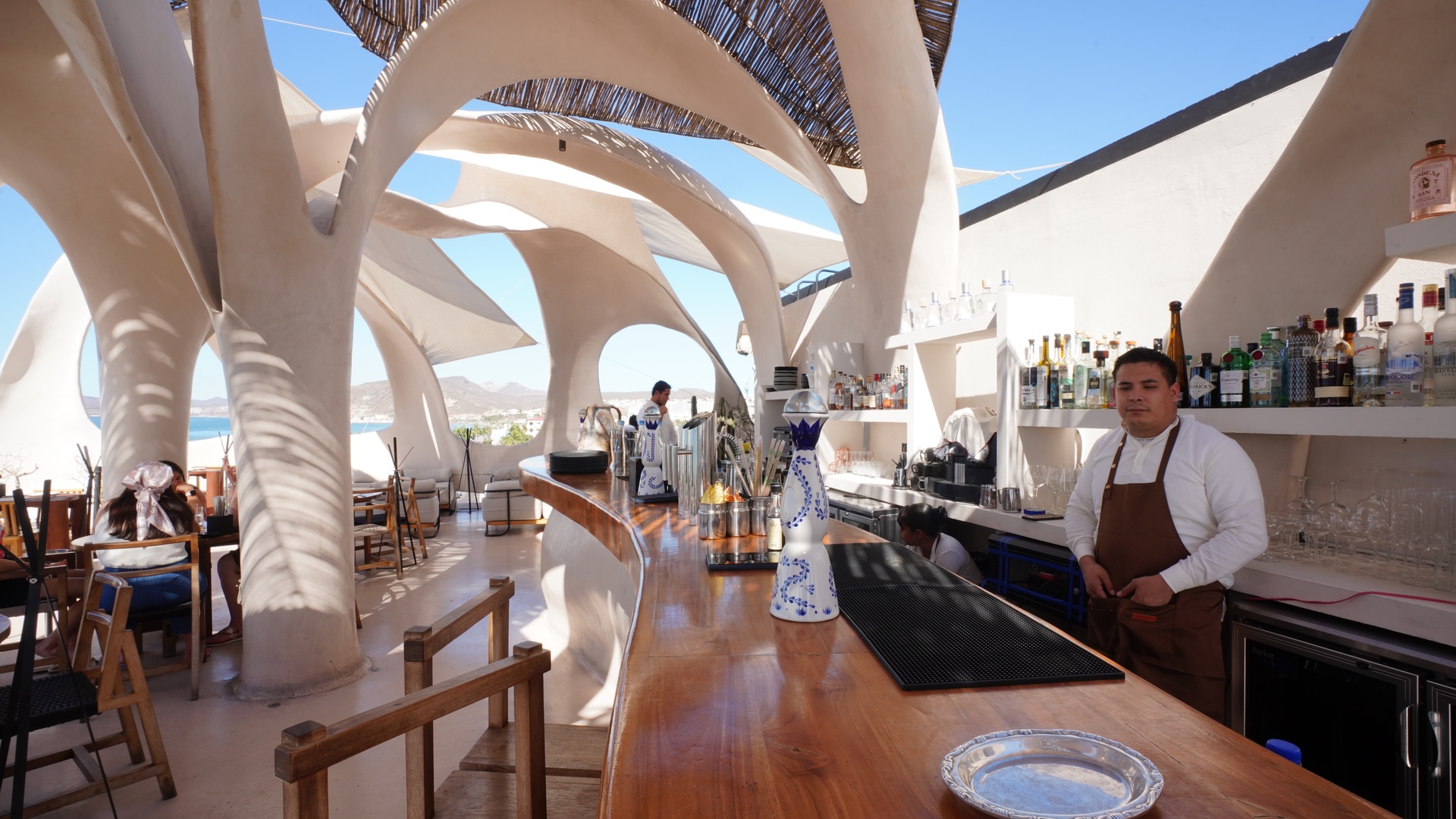
We arrive in La Paz without fanfare. No skyscrapers, no frantic traffic. Just a clear light falling onto the Malecón, the waterfront where families stroll at sunset, fishermen tend their nets and street vendors grill corn and fish. Our hotel is wonderfully eccentric, both in its name, República Pagana, and its splendid rooftop, from which the sunset is magical. In the evening the Malecón becomes a distinctive parade of restaurants, bars and art galleries. A table at Biskmarcito is essential for an unforgettable dinner of shellfish and fresh fish: do not miss the delicious giant scallop-like shellfish known here as chocolate. It is immediately clear that Baja California Sur’s capital has chosen a different pace. “Nothing happens here”, a corn seller tells me with a smile. It is his way of saying that here the essential things happen. La Paz lives from the sea. The Sea of Cortez, “the aquarium of the world”, as Jacques-Yves Cousteau called it, is not a tourist slogan but a daily reality. You need only board a launch at dawn to understand. The destination is Espíritu Santo Island, around an hour away by boat. Its name dates back to the Spanish conquistadors of the sixteenth century. For centuries it sheltered pirates and pearl fishermen.
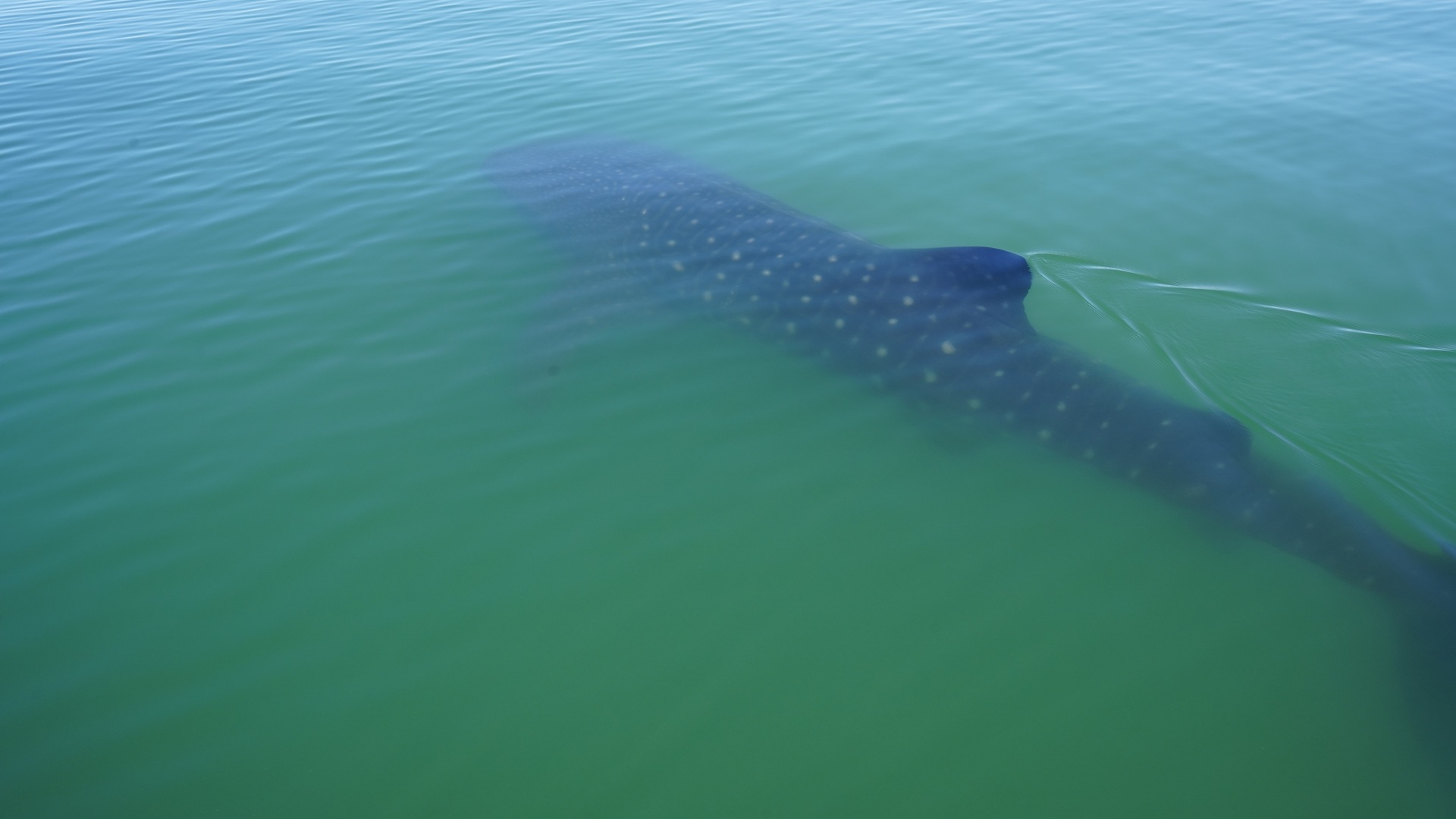
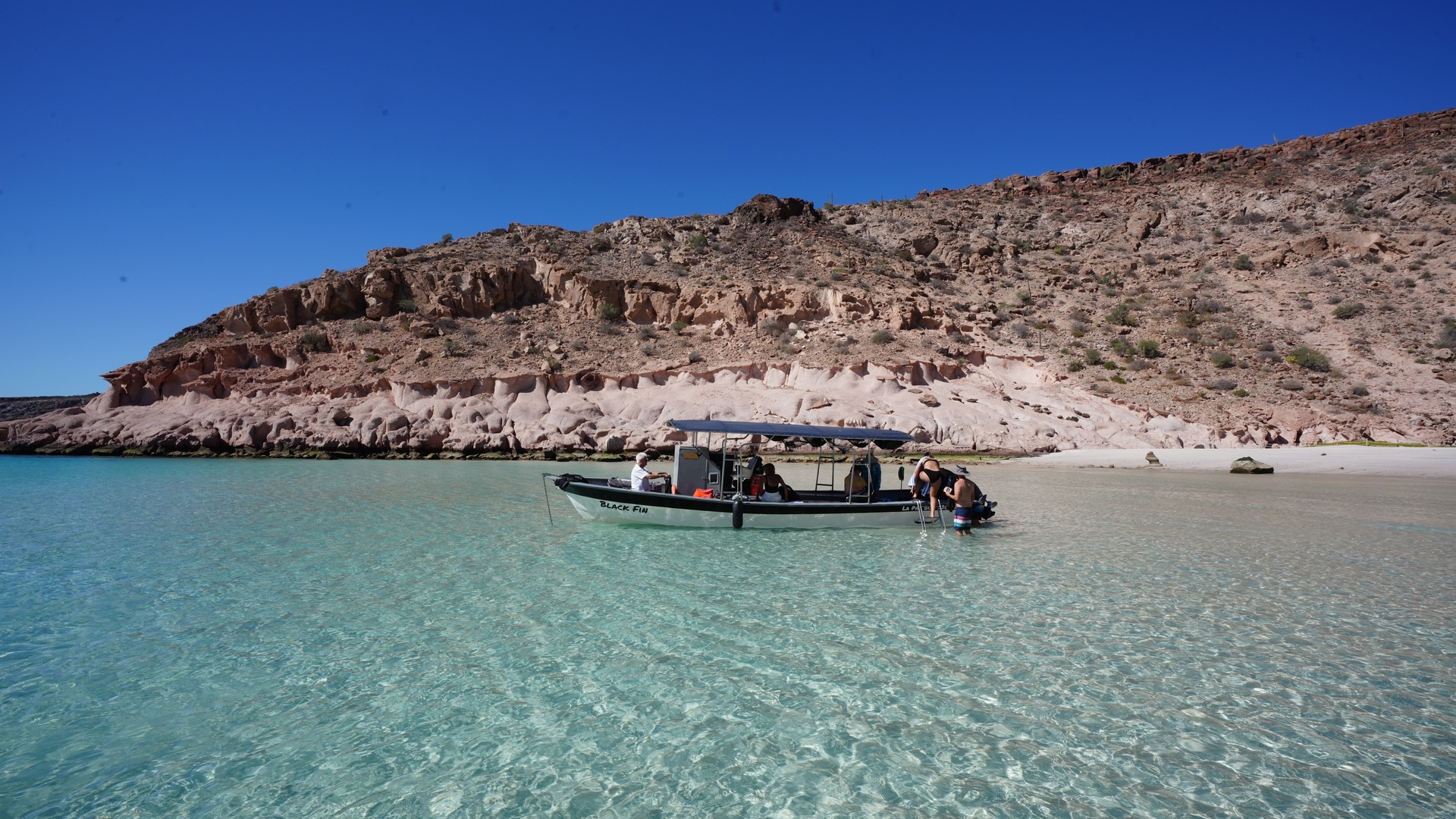
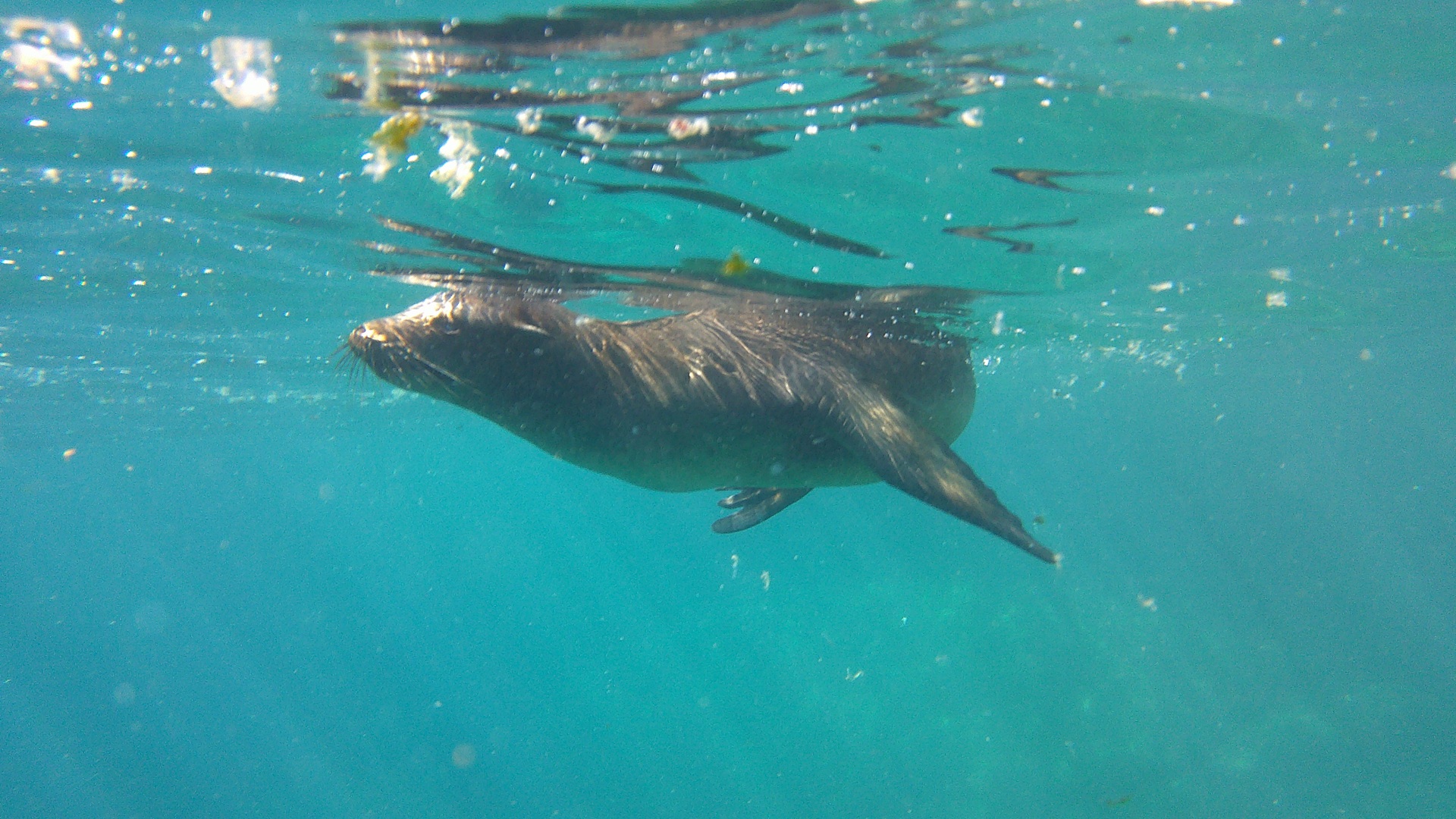
Remains of old camps can still be found. Above all, however, the island is a UNESCO-listed nature reserve. Landing at the Los Islotes rocks allows you to admire a substantial sea lion colony. In fact, you hear them before you see them: a mixture of barks, snorts and calls echoing from the volcanic rocks. In the water, pups swim curiously around visitors, nibbling fins and masks with disarming familiarity. Guides recommend not touching them: the animals approach and determine the distance. This encounter reverses the hierarchy: here people do not observe, they are observed. Here “you do not look at the sea, you listen to it”. In La Paz Bay we experience our most moving encounter. In less than three metres of water, we swim peacefully alongside a pair of whale sharks. Visits to these majestic fish are carefully supervised, with only two or three boats at a time for a maximum of a couple of hours. Be careful: approaching too closely is forbidden, and touching them even more so. A microlight frequently flies overhead to check that we follow the instructions. A few kilometres from the city lie some of the peninsula’s most spectacular beaches. Playa Balandra looks almost unreal: very shallow, transparent water, pale sand and a sheltered bay where the sea resembles a tropical lagoon. It is also home to El Hongo de Balandra, a wind-sculpted rock that has become the beach’s photographic symbol.
The magic of Cabo Pulmo
At dawn, Baja California Sur’s eastern coast seems suspended between two silences: the desert’s and the sea’s. Before the small village of Cabo Pulmo, the water changes with the light, from deep blue to milky turquoise. It is difficult to imagine that beneath this quiet surface lies one of the eastern Pacific’s oldest coral reefs, formed around twenty thousand years ago when warm currents and rocky seabeds allowed corals to colonise this arid coast.
During the great era of marine exploration, Jacques-Yves Cousteau was also struck by its biological richness. Among underwater canyons and sandy bottoms, a remarkable ecosystem thrives: more than two hundred fish species, sea turtles, rays and reef sharks. For generations, Cabo Pulmo’s inhabitants lived from artisanal fishing. Then, in the 1990s, the sea began to empty. The community made a radical decision: stop fishing and protect the reef. Parque Nacional Cabo Pulmo was established in 1995.
The result is visible just beneath the surface: immense clouds of silvery jacks move in dense formations like marine storms, while groupers, moray eels and sharks patrol the reef. Cabo Pulmo is more than a paradise for divers and biologists: it is concrete proof that an exploited sea can recover when those who inhabit it choose to defend it. Today Baja California Sur also lives from this natural heritage. Tourism grows every year, and more travellers come not only for beaches but for ecotourism, diving and encounters with a still-powerful natural world. Baja is a thin line between desert and sea, silence and movement, our fast lives and nature’s slow time. Perhaps this is the peninsula’s deepest charm: driving hundreds of kilometres between cacti and ocean, stopping before an immense sunset, and discovering that in such a remote place the world suddenly seems simpler and more truthful.
The desert and the giant cacti
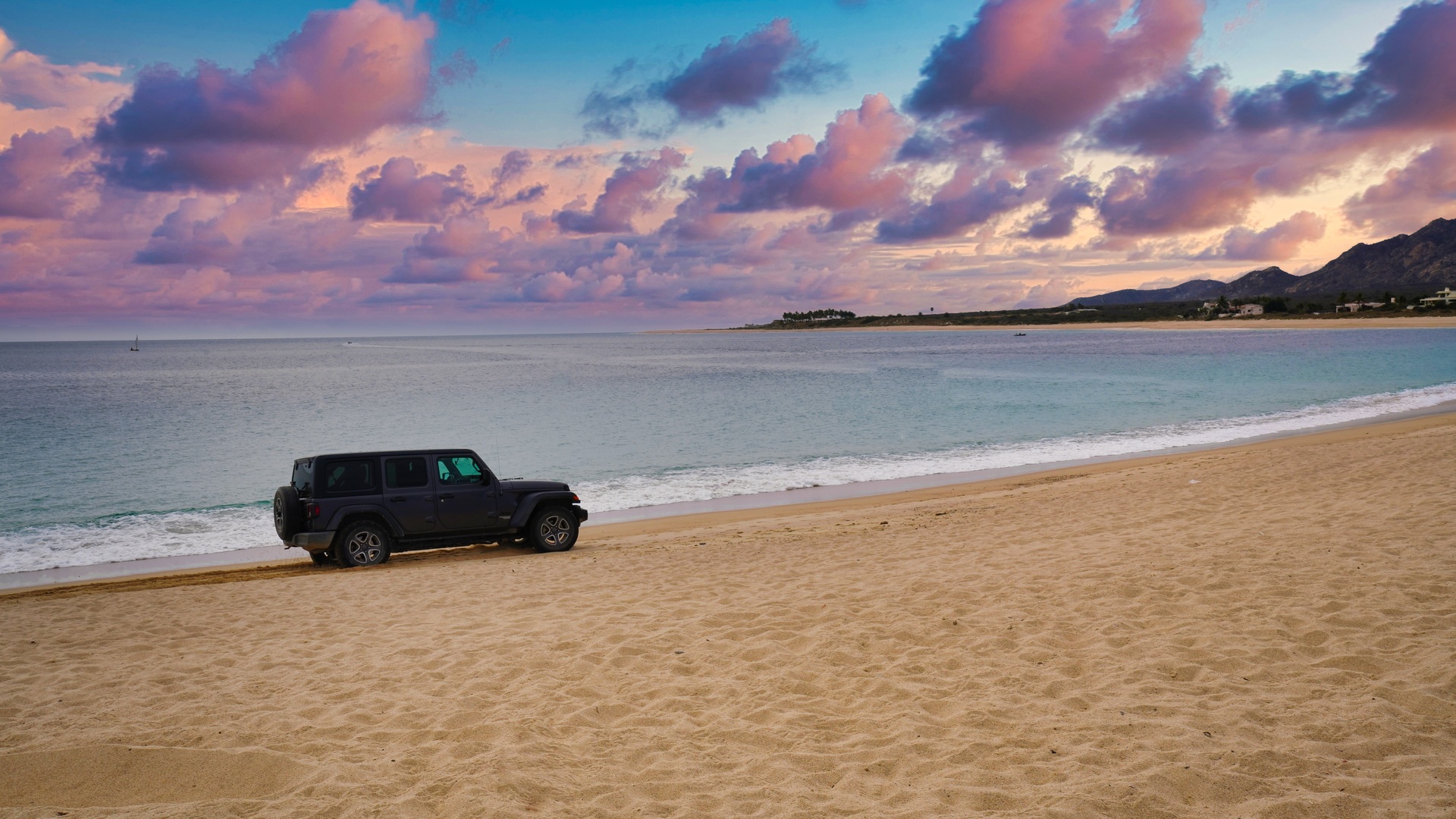
An emblematic presence in Baja California Sur’s desert is the cardón (Pachycereus pringlei), distinct from the saguaro (Carnegiea gigantea), native to mainland Sonora and Arizona. Saguaros can exceed twelve metres in height and live for more than 150 years. A saguaro takes up to ten years to grow just two or three centimetres. Its “arms” begin to grow only after sixty to seventy years. The Seri, or Comcáac as they call themselves in their language, an Indigenous people of mainland Sonora, consider the saguaro almost an ancestral creature: when the wind blows among its spines, the desert seems to whisper. At sunset, the cacti’s long shadows create a theatrical effect that has provided the backdrop to countless Western films.
Grey whales
Eschrichtius robustus undertakes one of the planet’s longest migrations: more than 15,000 kilometres from the Arctic to Baja’s lagoons, such as Ojo de Liebre and San Ignacio, to give birth. Something unique happens here: the whales approach boats voluntarily. Locals call them “friendly”. Mothers seem to “introduce” their calves to fishermen. Following its recovery from industrial whaling, the eastern Pacific population was long considered a conservation success story. However, NOAA’s latest surveys indicate another steep population decline and very low reproduction: a historic recovery that does not mean the threats to the species have been resolved.
Getting there
Condor flies from Milan Malpensa via Frankfurt, and in summer also from Rome, Palermo and Venice. Long-haul services use the latest Airbus A330neo aircraft, offering three classes. The aircraft livery is instantly recognisable for its vertical coloured stripes, yellow, red, blue, green and beige, evoking joy and diversity, based on the idea of the “holiday flight” (condor.com).
Where to find information
Hospitality
Restaurants
Swimming with whale sharks
The Cortex Club
Sources and images: Text by Mauro Parmesani. Photo credits in the captions. All image rights are reserved by their respective rights holders.