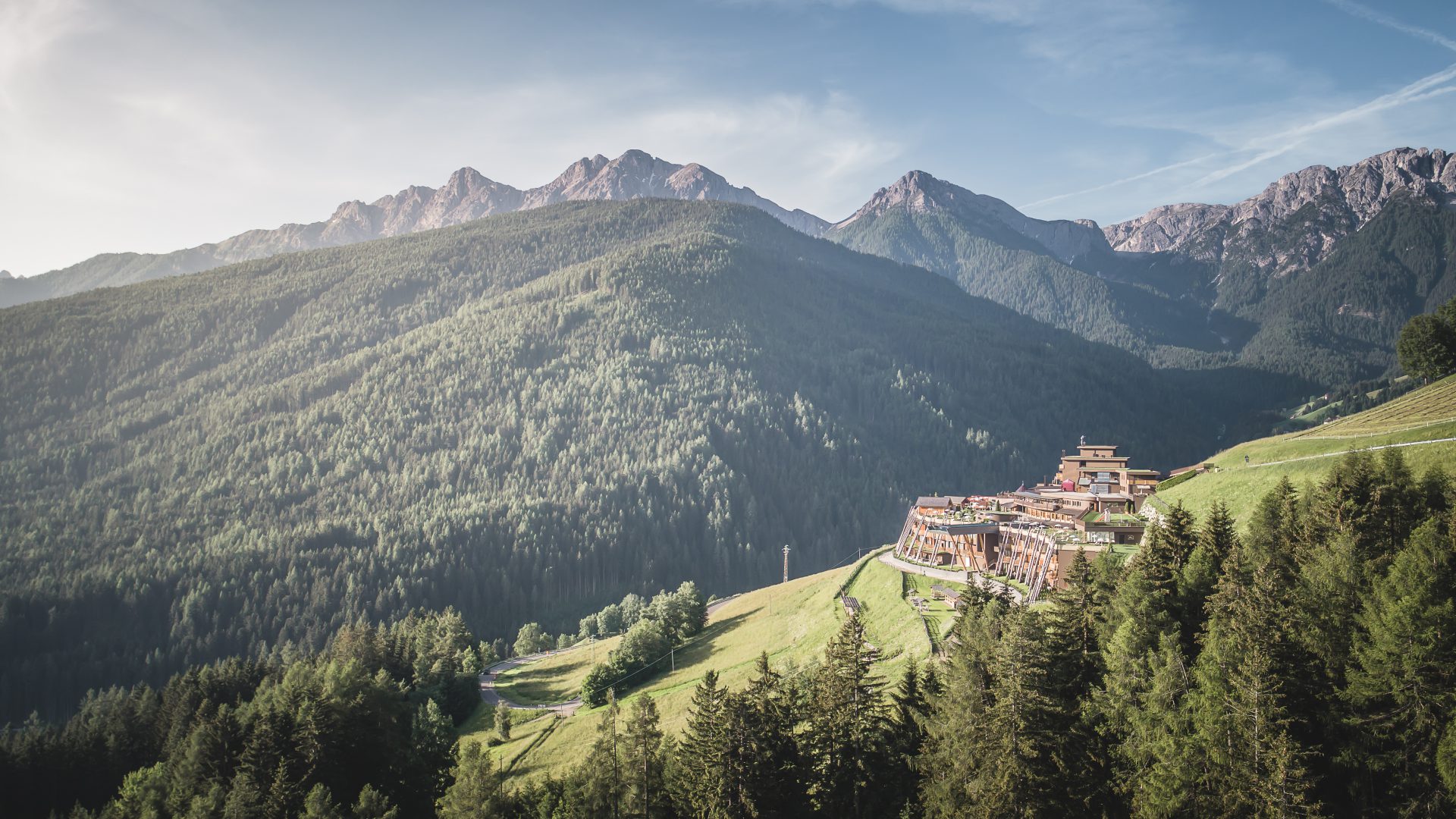
From a distance, it looks almost new. It is one of the first impressions made by Hotel Hubertus, in Sorafurcia, Valdaora, at an altitude of 1,256 metres, overlooking the landscape of the Upper Puster Valley. Yet behind the contemporary geometries, the great expanses of glass and the structures that seem to reach out into empty space lies a family history stretching back more than half a century. Christian Gasser tells it without embellishment: around 55 years ago, his father, a Fiat dealer and keen hunter, bought a small inn then called Gasthof Hohenrein. He initially entrusted its management to others; when things did not go as hoped, it fell to his eldest son to take over. Christian had wanted to become an architect. In a way, that vocation would accompany him nonetheless.
The name Hubertus came early, chosen in honour of Saint Hubert, the patron saint of hunters. Then began an almost relentless process of growth: from an inn to a two-star hotel, then three stars, four, four-star superior and finally five. Not through a single grand project, but through successive transformations, one after another.
Christian sums up that journey with a striking figure: “In 39 years, I have obtained 36 building permits.” A sentence that explains the character of Hubertus better than any chronology: a hotel conceived as a continually evolving organism.
Architecture as destiny
Even now, when he describes himself, with a certain irony, as “retired”, Christian continues to oversee the building work personally. The latest project, completed in spring 2026, redesigned the entrance, lobby and bar and introduced new saunas. It is another chapter in a property where architecture is not decoration, but an integral part of the experience.
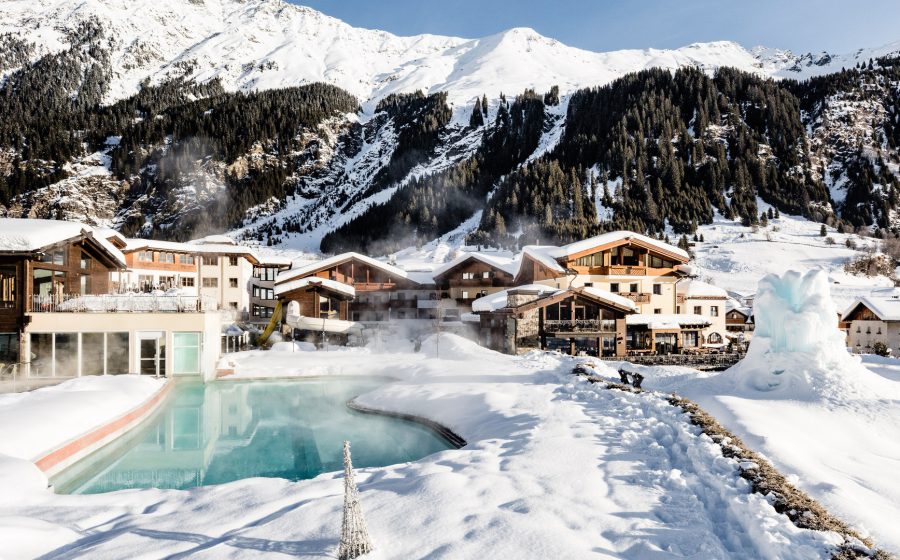
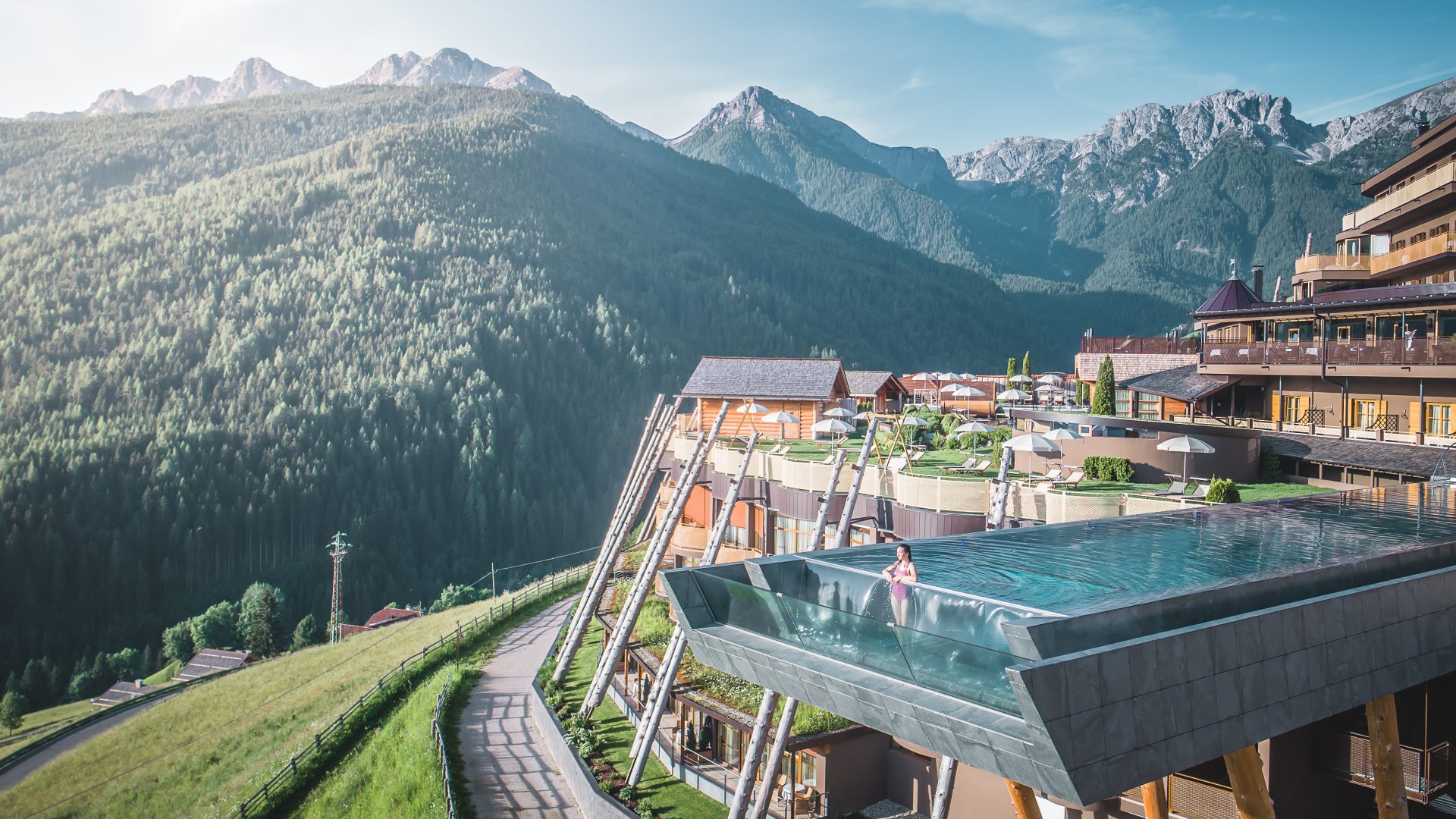
The most spectacular feature remains the Sky Pool: a 25-metre infinity pool, heated to 33°C and suspended 12 metres above the ground, with a glass bottom that heightens the sensation of floating above the landscape. A short distance away, the Sky Spa Heaven & Hell, designed by Bolzano-based studio NOA, takes the interplay of solid and void even further: a platform suspended above the hotel where panoramic whirlpools, saunas and a cold room create a sequence of contrasts. Heaven above, hell below: a bold architectural gesture, yet one surprisingly in tune with the mountains around it.
The philosophy behind these spaces, however, is less spectacular and perhaps more interesting. Hubertus now accommodates around 150 guests, and Christian insists on one point: even when the hotel is full, guests should never feel crowded. Pools, relaxation areas, lounges, the restaurant and wellness spaces are spread out precisely to disperse the people using them. Luxury here also means the possibility of finding a space of one's own.
Seven thousand square metres of wellbeing
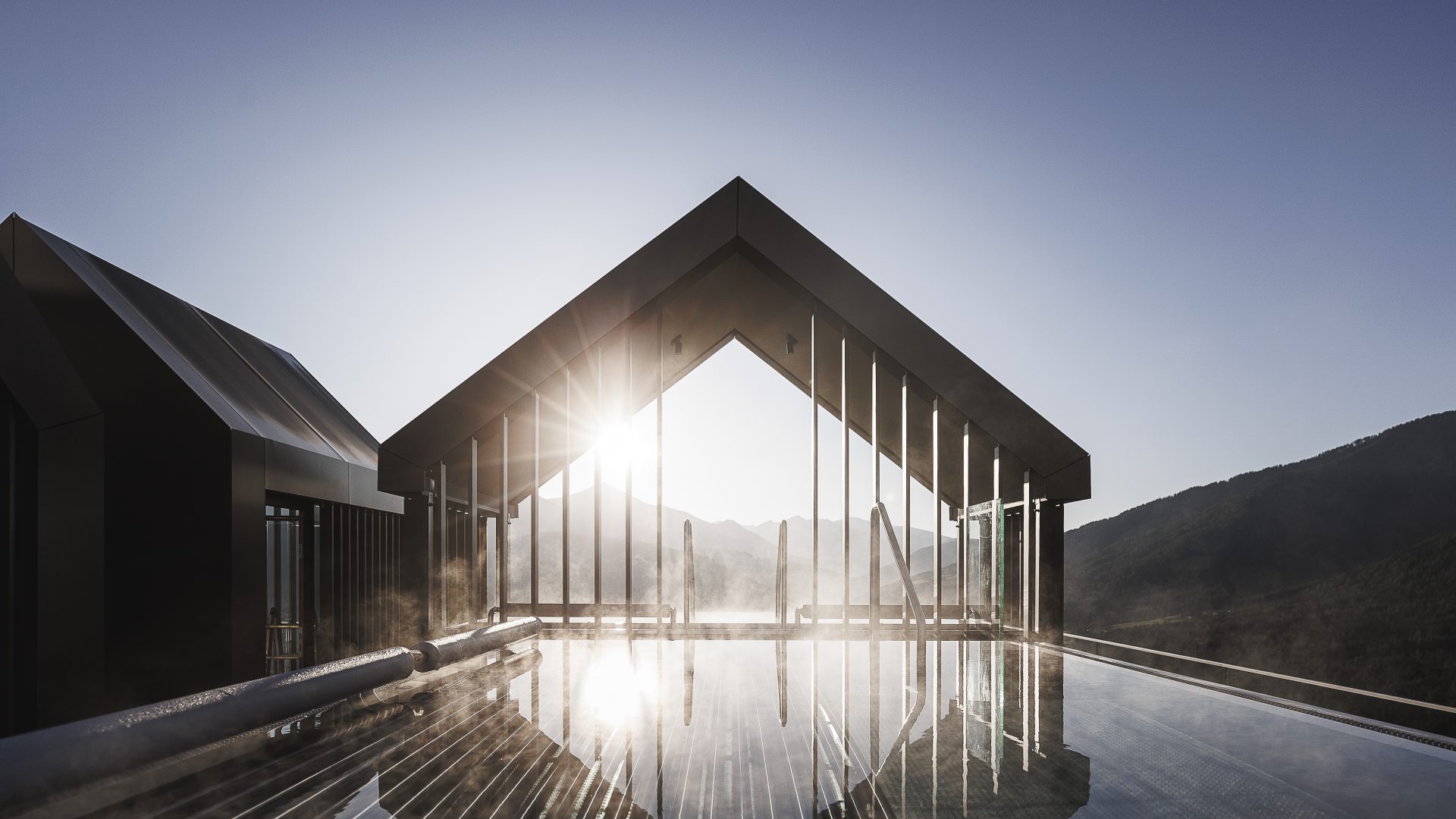
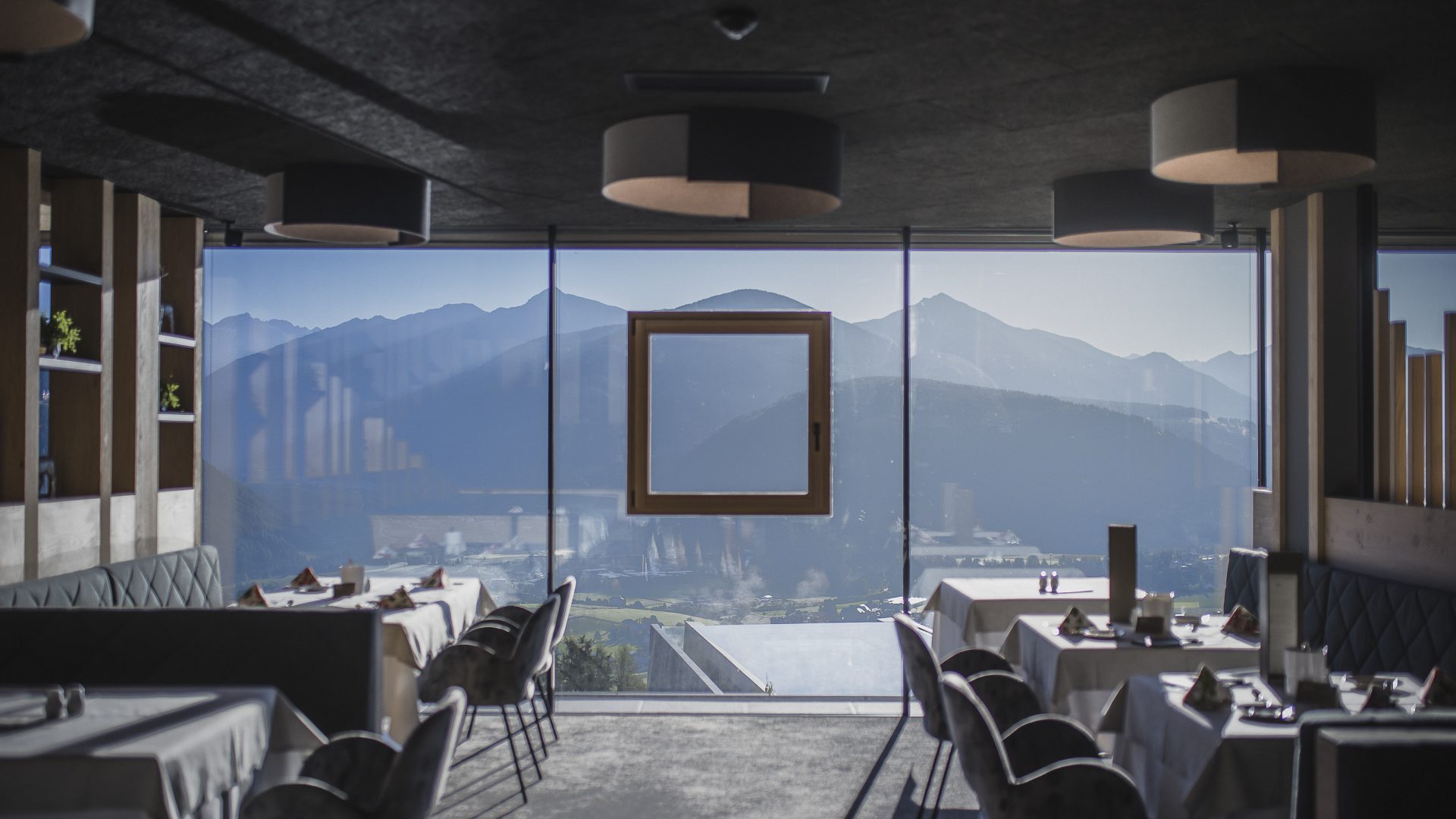
The Alpenreych Spa covers 7,000 square metres and brings together nine pools and nine saunas. More compelling than the numbers, however, is the way these settings relate to the outside world: water, warmth and panorama become materials of design. The 2026 refurbishment added a panoramic Event Sauna at 82°C, also used for daily Aufguss rituals, a bio sauna at 55°C, a new steam room and a meditation room. The new Panorama Bar lounge, meanwhile, uses a large expanse of glass to draw the gaze back towards the mountains once again.
It is precisely this opportunity to enjoy two holidays in the same place that Christian considers one of Hubertus's strengths: almost seaside-style relaxation on a lounger, between pools and lawn, and the real mountains, to be explored on foot or by bicycle. Trails lead from the hotel into the woods and up to higher ground; the weekly programme includes guided hikes and tours, while Plan de Corones is the natural focal point for many outdoor activities.
A family within the hotel
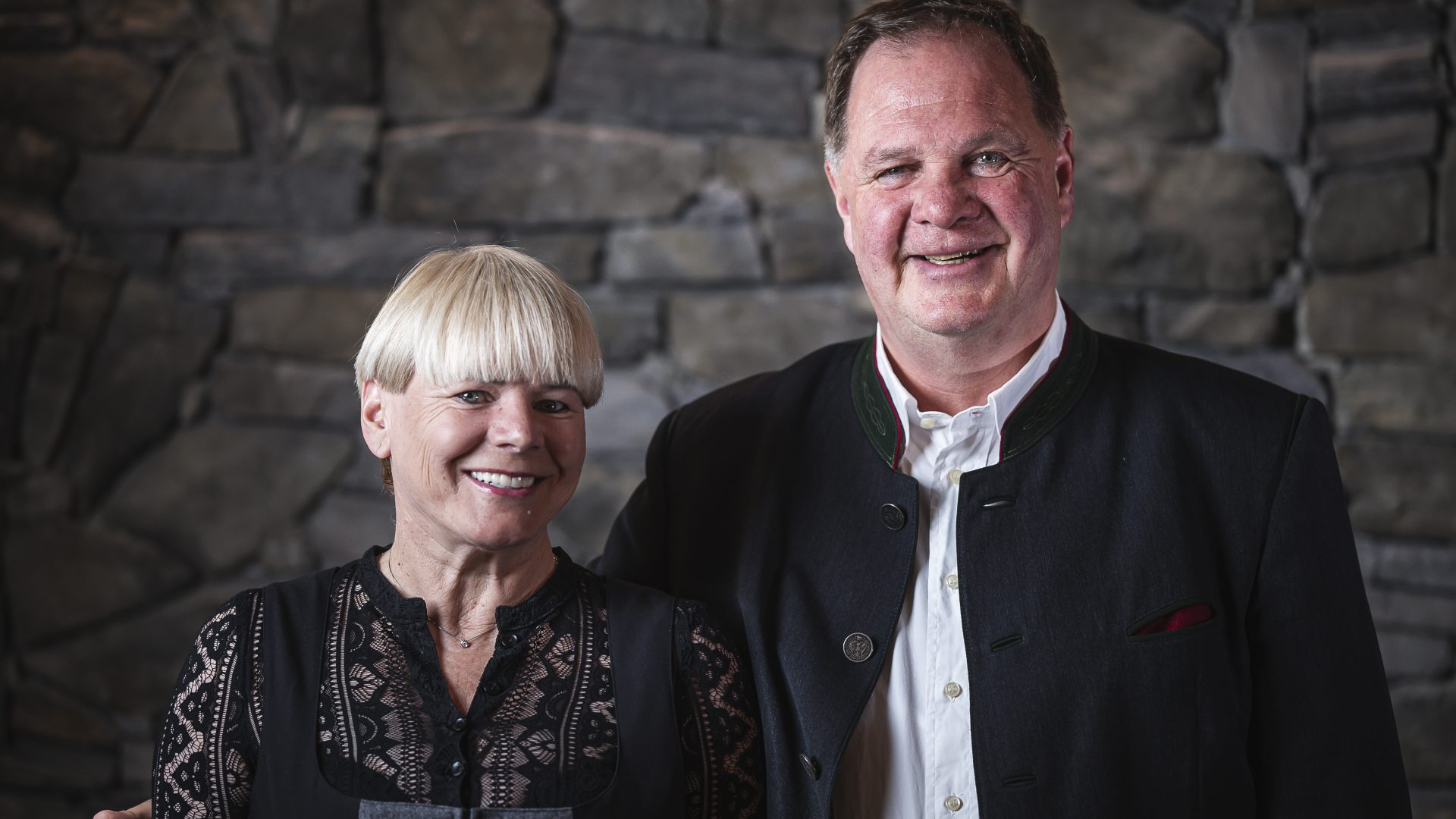
The most important transformation, however, has nothing to do with concrete, steel or glass. Management has now passed to Christian's children: they run the hotel, while their father continues to focus mainly on construction and improvements to the property. This family continuity explains much of the resort's identity. Christian implicitly contrasts it with hospitality treated solely as an investment: here, he says, those who run the hotel “live their lives inside it”.
The relationship between capacity and staffing is also significant: around a hundred people work here to accommodate 150 guests. The property is reserved for hotel guests and was not conceived as a family resort, although children are naturally welcome. Its clientele is international — Italians, Germans, Swiss, Americans and guests from many other countries — but its character remains that of a home that has grown around a family.
Investing, giving back
Then there is another form of continuity, less immediately visible. For around twenty-five years, the heat required for heating, hot water and pools has been produced by a wood-chip system. Supply has gradually been concentrated on a Valdaora operator using timber sourced from within the municipality. At the same time, the family finances the planting of around 1,200 trees a year in the villages of the municipality, envisaging a cycle that, over 25 to 30 years, can replenish the material consumed.
The photovoltaic panels installed on the roofs and in the car park cover, according to Christian, around a quarter to a third of the electricity required. The car park also provides 32 electric vehicle charging points for 64 spaces. These are different measures, united by a very practical logic: reducing distances, consumption and waste without turning sustainability into a purely narrative device.
At the table
The kitchen is entrusted to Antonio Triscari and a sizeable brigade, with a predominantly Italian and South Tyrolean offering. Regional ingredients — from trout to cheeses — sit alongside Mediterranean influences, while the cellar pairs South Tyrolean labels with wines from Italy and abroad. This is far from a secondary consideration in a resort where the experience is designed to accompany the whole day, and where the quality of hospitality cannot stop at the dining table.
Then there is a small room that, amid suspended pools and thousands of square metres devoted to wellness, perhaps says more than others about attention to detail: the cigar lounge. It certainly does not define Hubertus, but it is one of those increasingly rare touches that show how the idea of comfort can take different forms for different guests.
Ultimately, the story of Hubertus comes down to this: never considering the destination reached. Every time the hotel seemed complete, the Gasser family began imagining it anew. Christian describes it in almost domestic terms: whatever comes in is reinvested in the property, often before the previous investment has even finished producing its effects. That is how a small mountain inn became what we see today. Not by erasing what it once was, but by continuing, stubbornly, to build upon it.
Sources and images: English translation of the complete article from James issue 32. Photo credits in the captions.