The volcano and the gulf
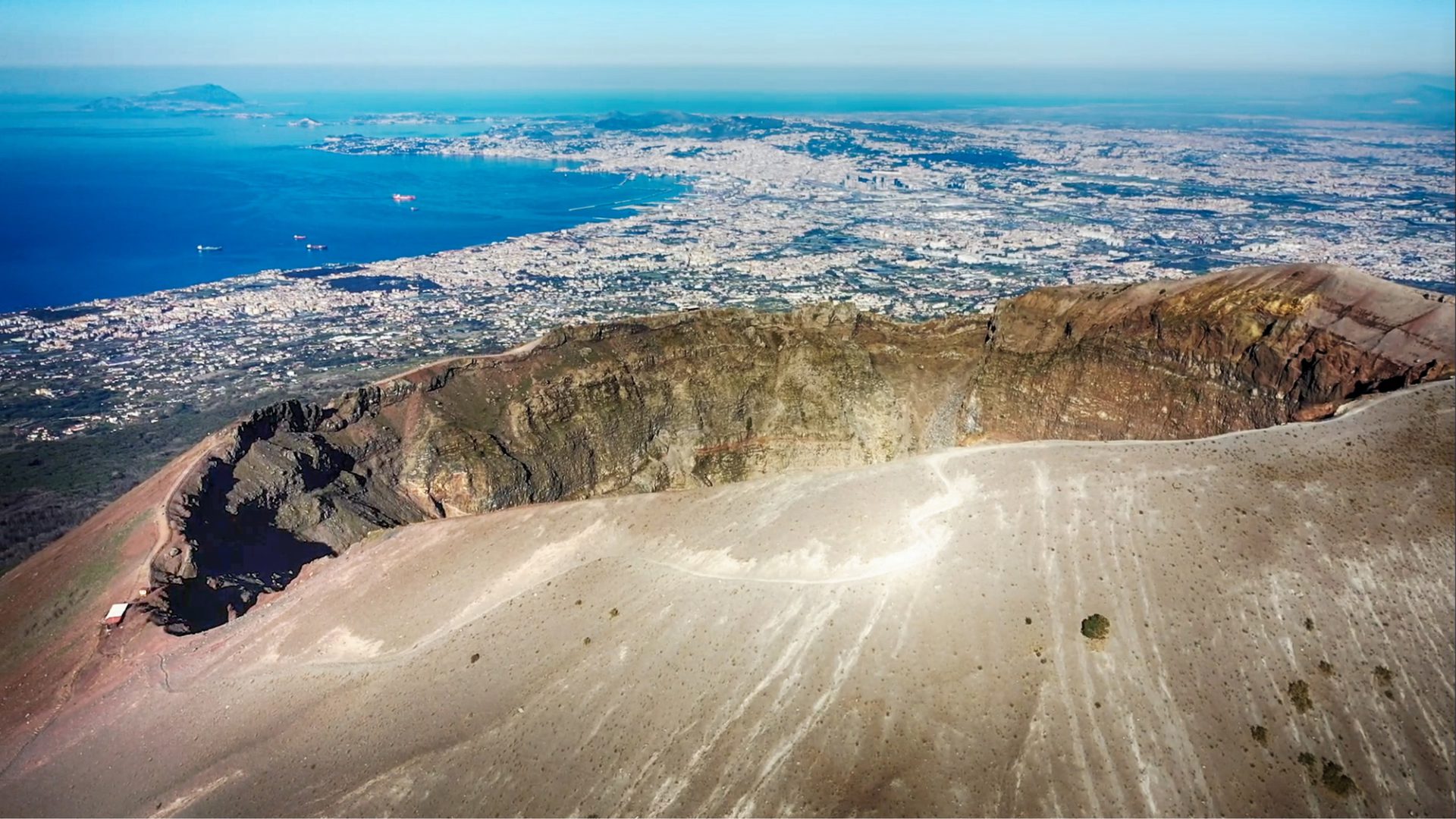
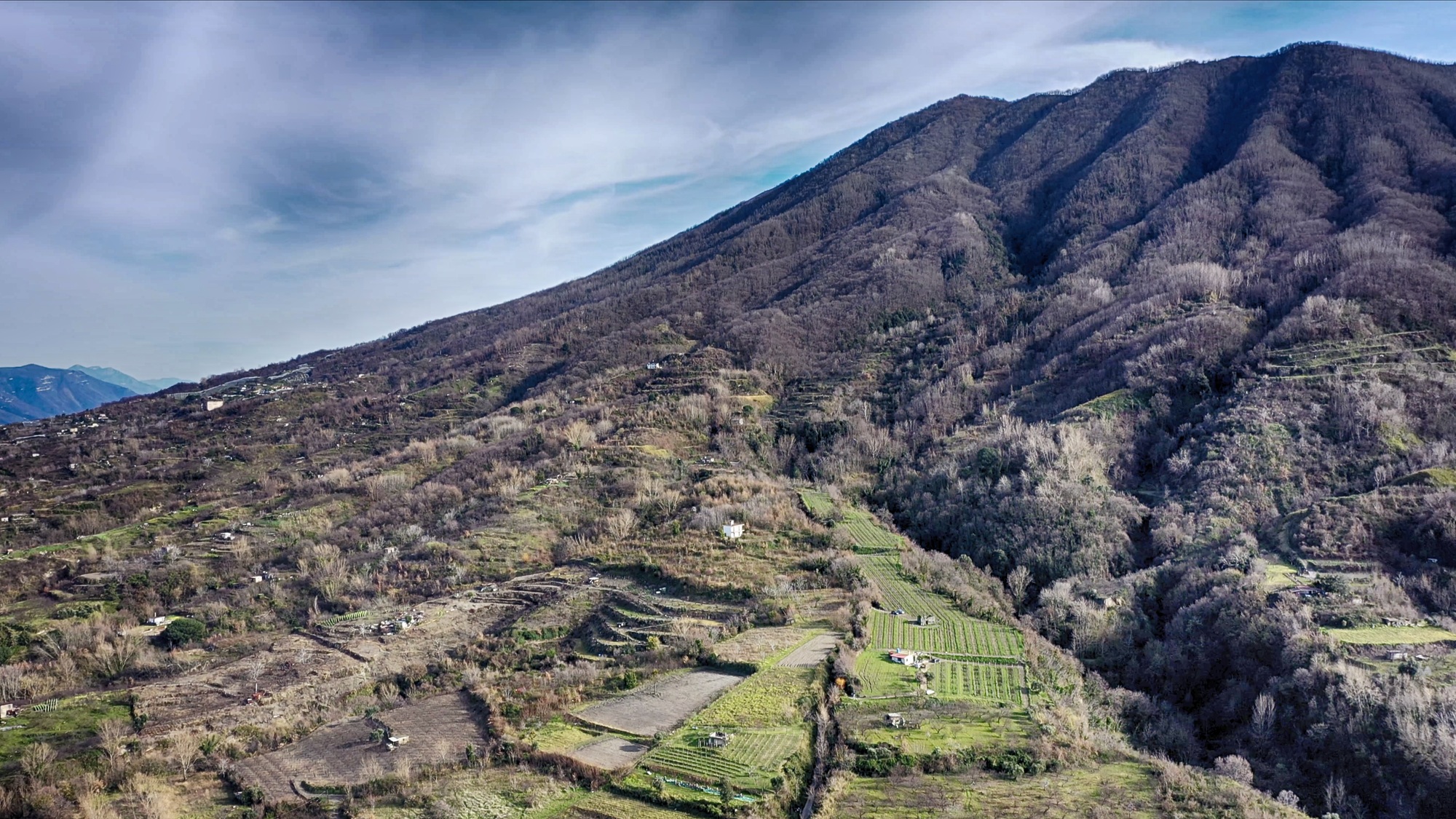
At the heart of one of the most densely inhabited areas on the planet rises the cone of Vesuvius. A mountain standing 1,200 metres high dominates the Gulf of Naples, its summit offering a view that stretches across the islands of Ischia, Procida and Capri to the Sorrento Peninsula. Around it, on the lower slopes and linked by the Circumvesuviana railway, buildings form an uninterrupted urban expanse.
In this setting, the fascinating landscape of the volcano exerts a timeless pull.
Our itinerary begins at the very top of the volcano. After leaving the car parked along the road and walking uphill for a good half-hour, we finally reach the summit of Vesuvius, where a path follows much of the crater’s rim. Just a few wisps of steam betray activity that has lain dormant for decades, a negligible interval in geological time.
The documented eruption that most profoundly transformed the area, and remains etched in history books, was that of AD 79. It tragically destroyed Pompeii and Herculaneum, yet did not break the industrious spirit of the Romans, who soon resumed their activities on the side opposite the worst devastation. Only imagination can give us a picture of the volcano as it was then, far larger than what remains today and encompassing what is now known as Monte Somma.
Vines on the slopes
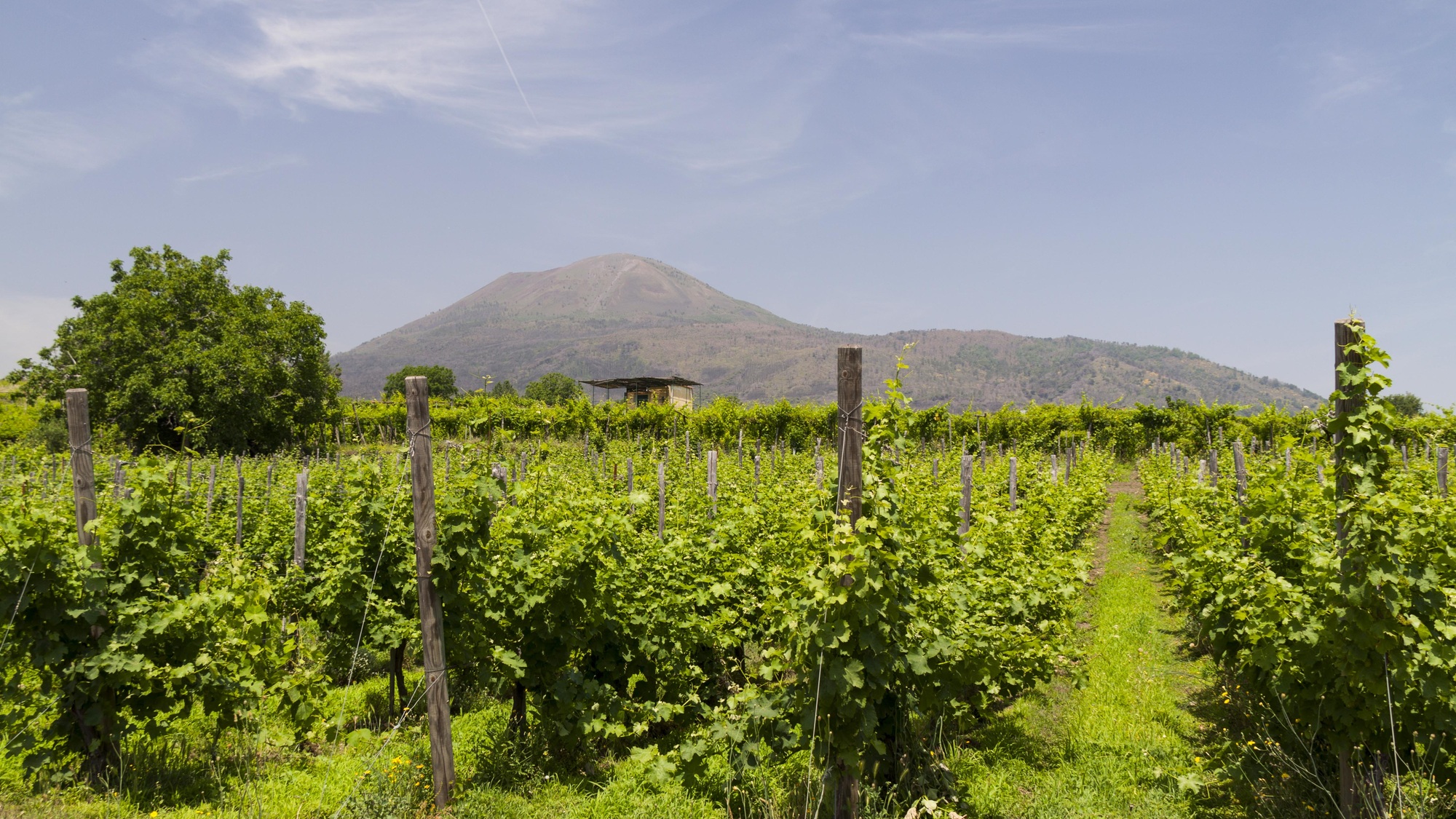
Despite the excessive, uncontrolled development around its lower slopes, Vesuvius still accommodates around 400 hectares of vineyards, planted mainly with indigenous grape varieties that have shaped the history of this area. The vines draw nourishment from volcanic soils that lend their wines characteristic mineral and savoury notes. Alongside promoting and protecting wine production, the Consorzio Tutela Vini Vesuvio works to connect other local stakeholders, creating the conditions for the economic sustainability of the entire Vesuvian tourism sector.
At the table, between land and sea
As throughout Campania and beyond, good food plays a fundamental role in the lives of both residents and the many visitors to these slopes.
This varied cuisine extends far beyond seafood, revealing notable meat and inland dishes alongside the traditional pizza that traces its origins to this area. Pizza has evolved into a base for sophisticated toppings, combining traditional flavours with new ingredients and unexpected pairings.
For years, the pizzerias of brothers Salvatore and Francesco Salvo, in Naples and San Giorgio a Cremano respectively, have sought the finest balance and doughs. They combine local preparations with dishes whose reach extends at least across Italy, while the thin layer of dough remains the common thread linking tradition and contemporary cooking.
La Bettola del Gusto in Pompeii reinterprets seafood cooking: fried pizza is served with an octopus reduction; anchovies stuffed with provola cheese are paired with anchovy-sauce mayonnaise; and the papaccella napoletana, a particularly fleshy, flavoursome pepper, becomes a salad with stockfish and escarole. Then there is pasta, strictly a mixture of shapes from Gragnano, dressed with dente di morto beans from Acerra, seafood-style, with raw red prawn and squid.
It may seem surprising that preserved fish is eaten so close to the sea, yet Somma Vesuviana can be considered southern Italy’s capital of salt cod and stockfish.
It has been eaten here for 500 years, since the Catholic Counter-Reformation of the sixteenth and seventeenth centuries prohibited meat during certain periods of the year. As elsewhere in Italy, the resulting need for an alternative was met by fish from northern Europe, dried and easy to preserve. The monks of the Madonna dell’Arco convent in Sant’Anastasia introduced large-scale processing, using their cisterns and water from Monte Somma. Luigi Russo’s restaurant La Lanterna is the place to try typical dishes, from salt cod with a Genovese-style onion sauce to stockfish cooked in a casserole with cherry tomatoes — piennolo tomatoes, of course — and fried salt cod.
Another Vesuvian delicacy is the Pellecchiella del Vesuvio apricot, an ancient variety that is particularly sweet, with velvety skin, perhaps best enjoyed as a preserve alongside a delicious panna cotta.
For the cooking of the Vesuvian hinterland, a stop at ’e Curti in Sant’Anastasia is essential. The restaurant’s dishes still draw on old Neapolitan recipe books. Begin with the irresistible, indispensable fried dishes, ricotta di fuscella made from whole milk, and ’o per e ’o muss, meaning pig’s foot and calf’s muzzle. For a first course, there is ’o sicchio d’a munnezza, a recipe devised to avoid wasting the dried fruit and nuts left over after the festive season.
The wines of Vesuvius
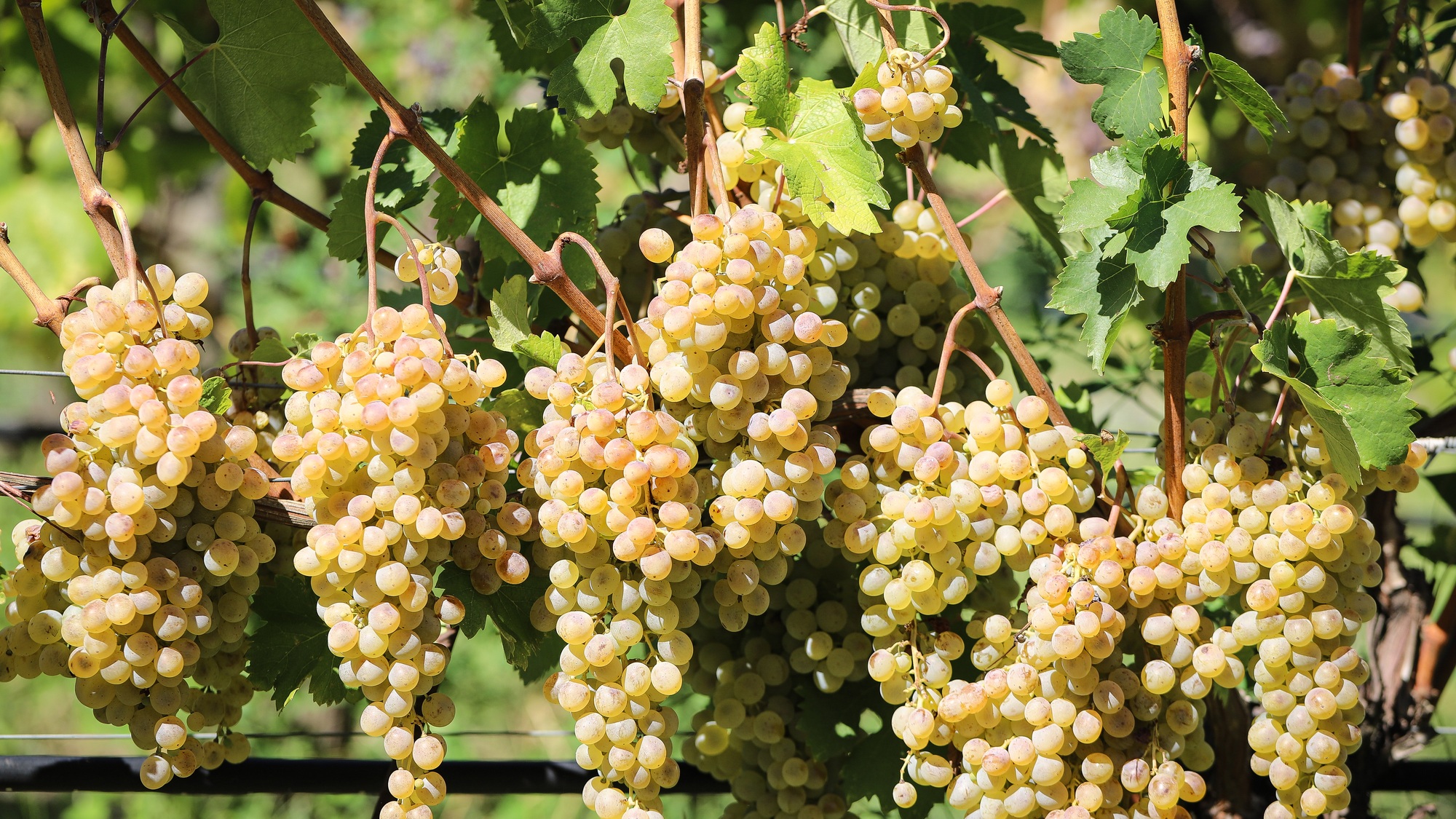
All these dishes, whether from land or sea, find a fitting accompaniment in the wines of Vesuvius. White wines made from caprettone, a local grape whose name refers to the resemblance between its bunch and a goat’s beard, are elegant, with intense fruit aromas and a pronounced savoury quality that prolongs the finish. Also of particular interest is catalanesca, which produces wines with broom-flower aromas and marked minerality. Among the reds, wines made from piedirosso — a variety easily recognised by its reddish stalk, reminiscent of a pigeon’s foot — have a soft, fruity character, delicate tannins and relatively low acidity.
The memory of Villa Augustea
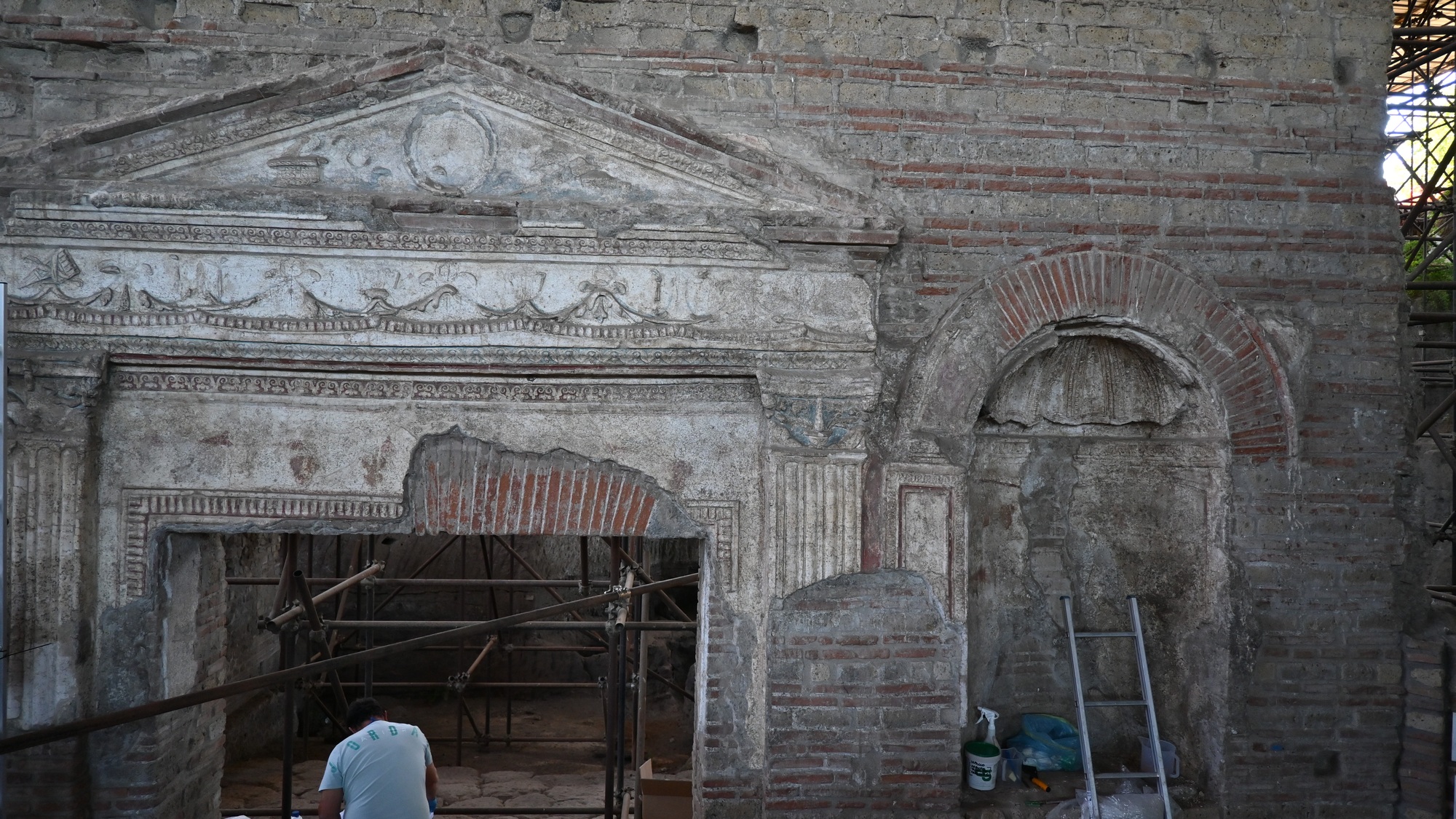
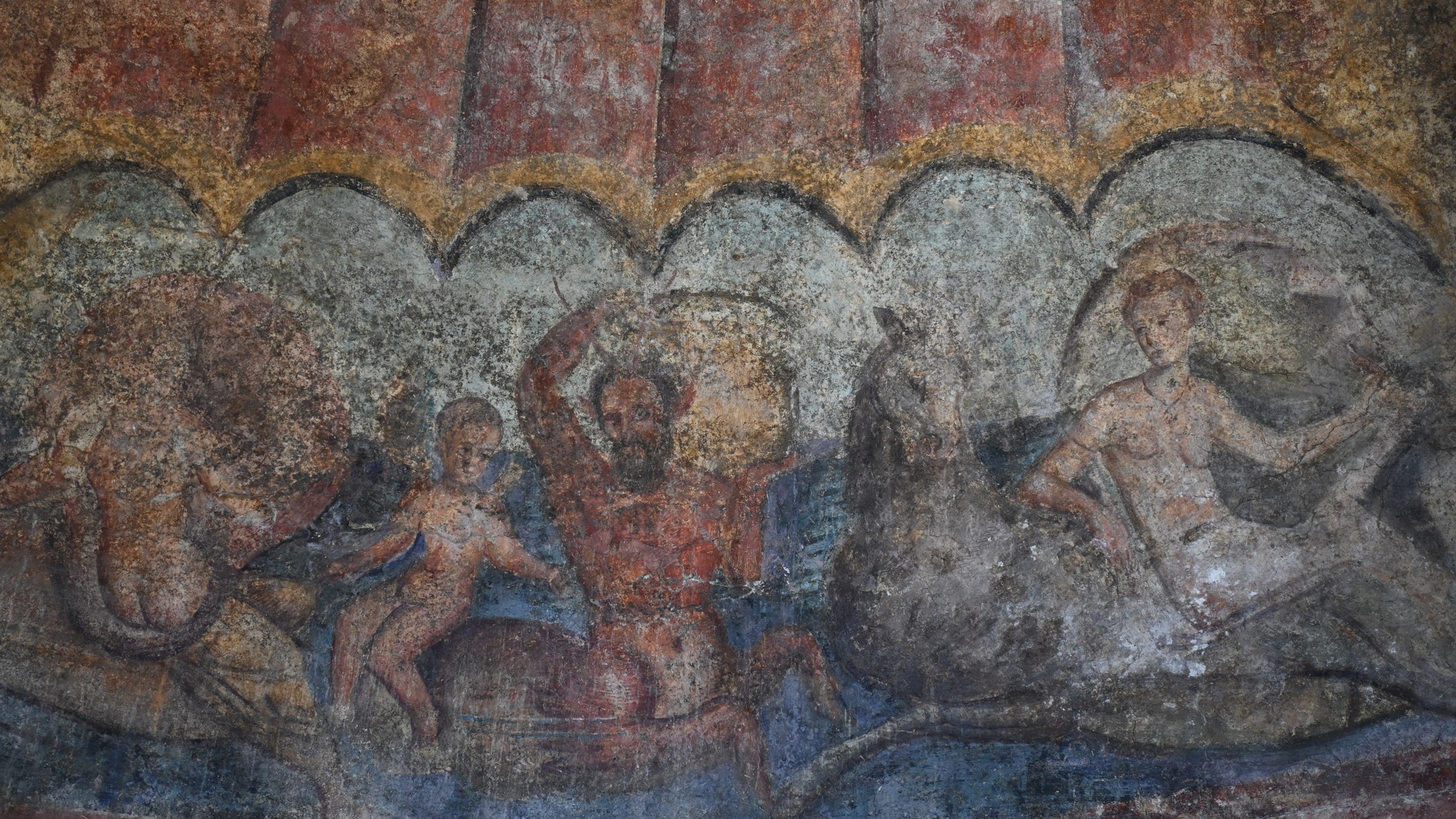
Before leaving this land of strong contrasts, set aside a few hours to visit Villa Augustea in Somma Vesuviana. This extensive Roman building, only partly excavated, was constructed at the beginning of the third century and remained in use until the eruption of AD 472, which partially buried it. Excavations ongoing since 2002, supported by the University of Tokyo and private Japanese companies, are uncovering finely decorated rooms with walls clad in painted plaster and stucco, and mosaic floors, offering a glimpse of life on the slopes of Vesuvius in the centuries following the great, destructive eruption of AD 79.
Sources and images: Text by Paolo Valente; images supplied with the article. All image rights are reserved by their respective rights holders.