Tangier, a city of thresholds
Tangier at last. Every time I arrive, I feel as though I have never visited before. This time I came from Bergamo, on a direct Ryanair flight that makes you forget Europe in two and a half hours and welcomes you to African soil like a child returning home. Tangier at last, the city suspended like a mirage between two worlds that have never stopped seeking each other. A city of ambiguous freedom that escapes definition. As Paul Bowles wrote: “Tangier is more a dream than a place.”
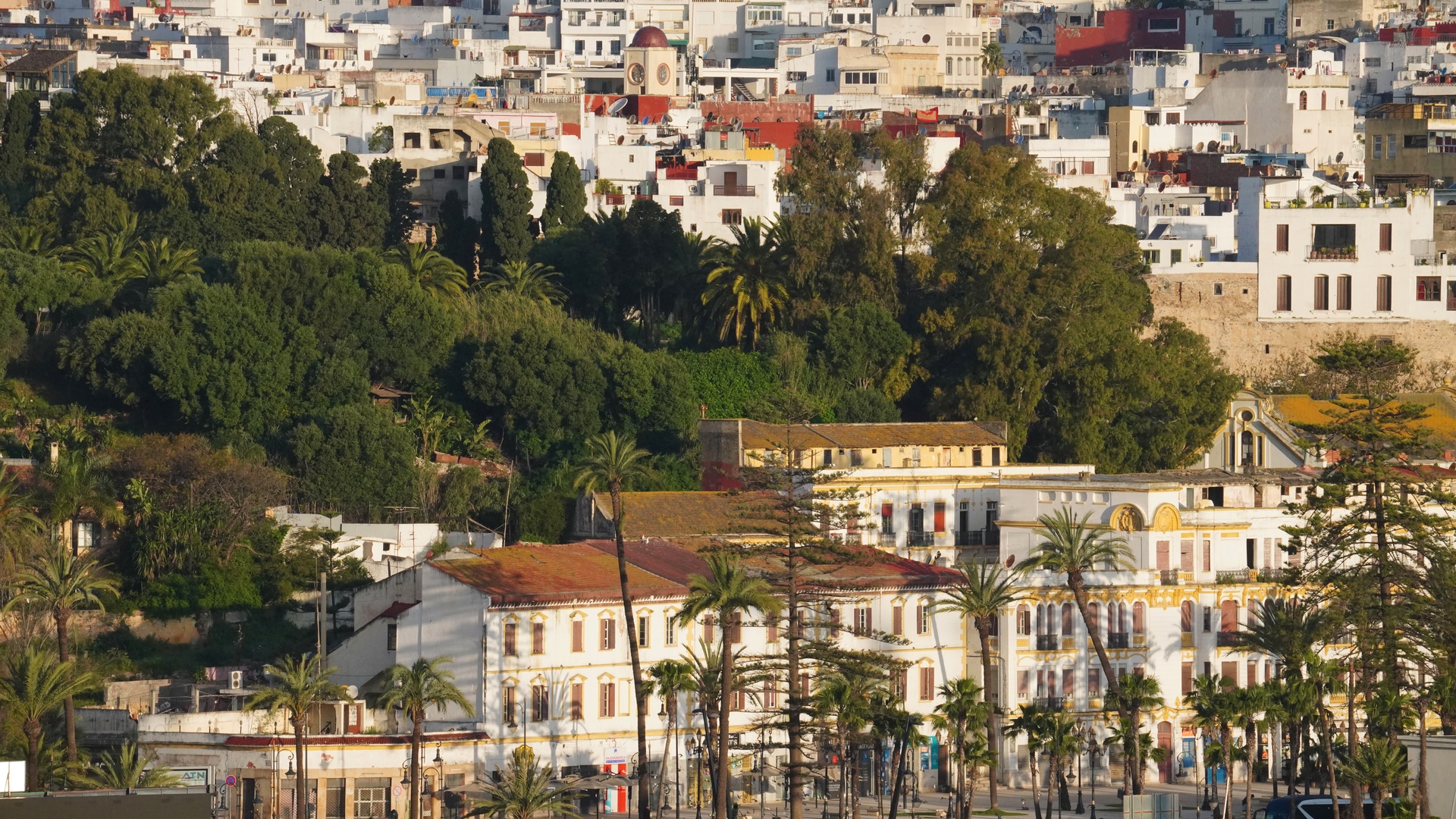
Yet Tangier is not merely a border city. It is a threshold. You understand this as soon as you step into the maze of the medina, where voices chase one another through the alleys and the white houses reflect a light that is no longer European, yet not entirely African either. Tangier has always been this: a place of passage, waiting and transformation. In the 1950s and 1960s, while the world sought new coordinates, writers arrived here fleeing everything, or perhaps seeking something they could not yet name. Jack Kerouac, Allen Ginsberg and above all William S. Burroughs, the Beat Generation’s “Old Bull Lee”, found a freedom here that was impossible elsewhere. Here Burroughs wrote Naked Lunch, a fragmented, visionary work born directly from the ordered chaos that is Tangier.
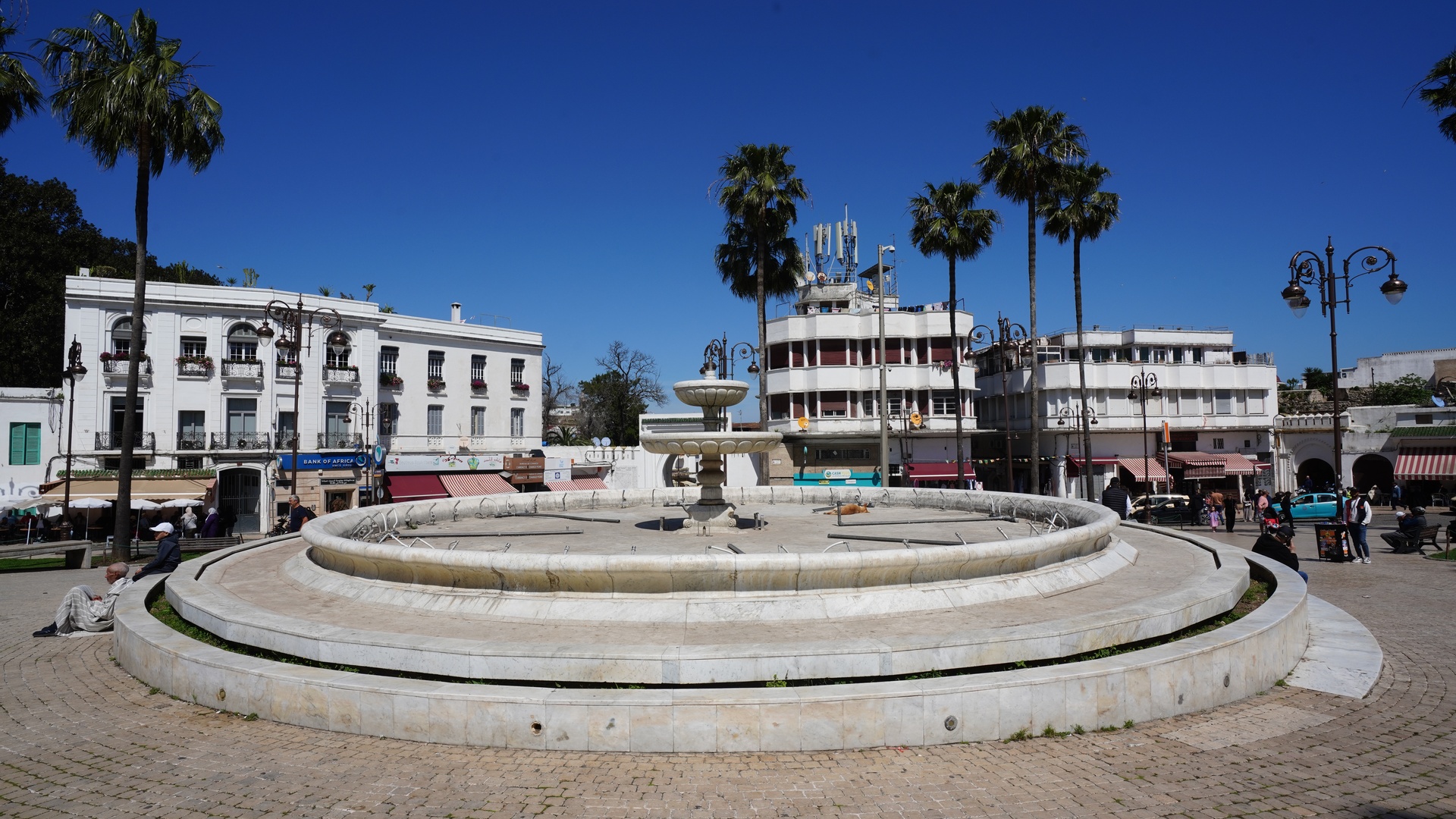
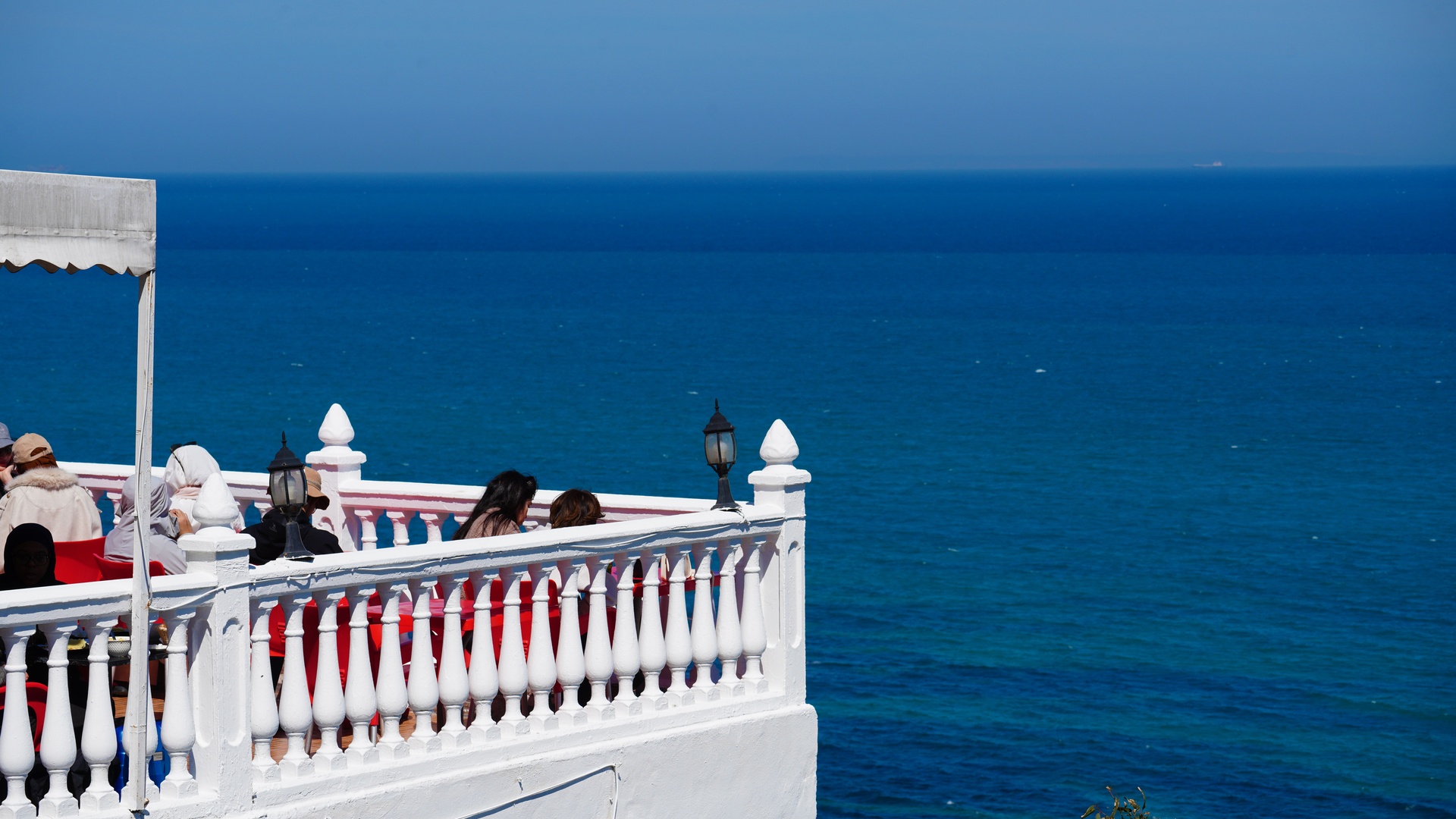
Walking today among the kasbah’s cafés and terraces overlooking the sea, you sense that something of that energy remains. It is neither nostalgia nor mythology, but a subtle vibration, as though the city were still speaking to anyone willing to listen. The first true immersion happens at the Grand Socco, a square that is not simply a place but perpetual movement. Taxis crossing paths, vendors, old men sitting and watching time pass. Here the modern city opens towards the medina, as if hesitating for a moment before entering its own past.
Crossing that threshold means accepting the possibility of losing your way. Tangier’s medina does not impose itself through grand monuments; rather, it reveals itself slowly. Narrow alleys, pale walls, doors worn by time. This is a medina lived in rather than displayed. Every corner has a purpose, every passage an everyday rhythm. It was not built to astonish, but to exist. Then, almost suddenly, you reach the Petit Socco. Smaller, more intimate. Here time seems to have accumulated in layers: cafés that once welcomed writers, spies and figures poised between legality and mystery. Today it is quieter, yet that subtle sense remains of being in a place that has seen too much ever to be truly innocent.
Climb further and the city changes its face. The Kasbah dominates from above, with its walls and openings towards the sea. From here the gaze stretches as far as Europe, visible on clear days. It is a point of control, but also of contemplation. Here Tangier seems to pause and become aware of itself. Below, the port tells another story. Ships, goods, crossings. This has always been a point of contact, but also of tension. Africa and Europe brush against each other without ever fully merging. Tangier lives through this unstable balance.
Tétouan, Andalusian memory
But Tangier does not hold you back. It pushes you onwards. The road towards Tétouan winds between green hills and sudden glimpses of the Mediterranean, eventually reaching a city that seems to preserve a different time. If Tangier is movement, Tétouan is memory. Its UNESCO-listed medina is one of Morocco’s most authentic. This year it has been named Mediterranean Capital of Culture and Dialogue alongside Matera, with a programme intended to strengthen ties between the Mediterranean’s shores.
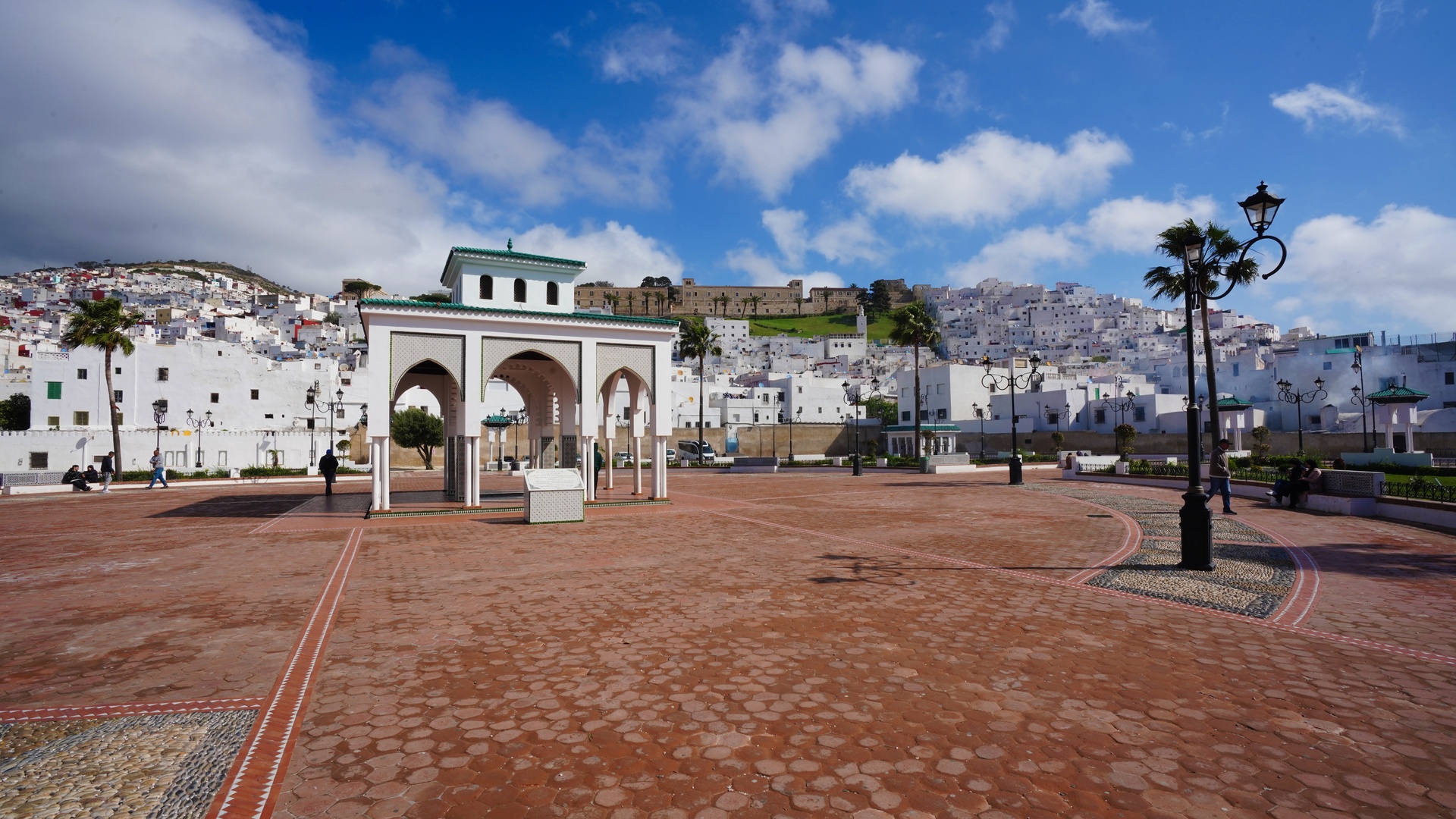
Tétouan does not welcome you with Tangier’s immediate emotional impact, but allows itself to be understood more deeply. Its medina is different. More orderly, almost geometric compared with Tangier’s labyrinth. Another inheritance is palpable: the Andalusian one. After the fall of Muslim Spain, entire communities sought refuge here, bringing architecture, arts and ways of living. The city still preserves that memory, as though it had been carefully safeguarded. Walking through Tétouan’s medina means passing through a cultural continuity. There is no comparable break between past and present: everything seems to belong to a single flow. Then, suddenly, you enter the Spanish quarter. Broad streets, orderly buildings, European façades. Another city within the city. Here time belongs to the twentieth century, to the protectorate and to an idea of modernity imported and adapted. The contrast is clear, but not violent. Rather, it is like reading two different chapters of the same book.
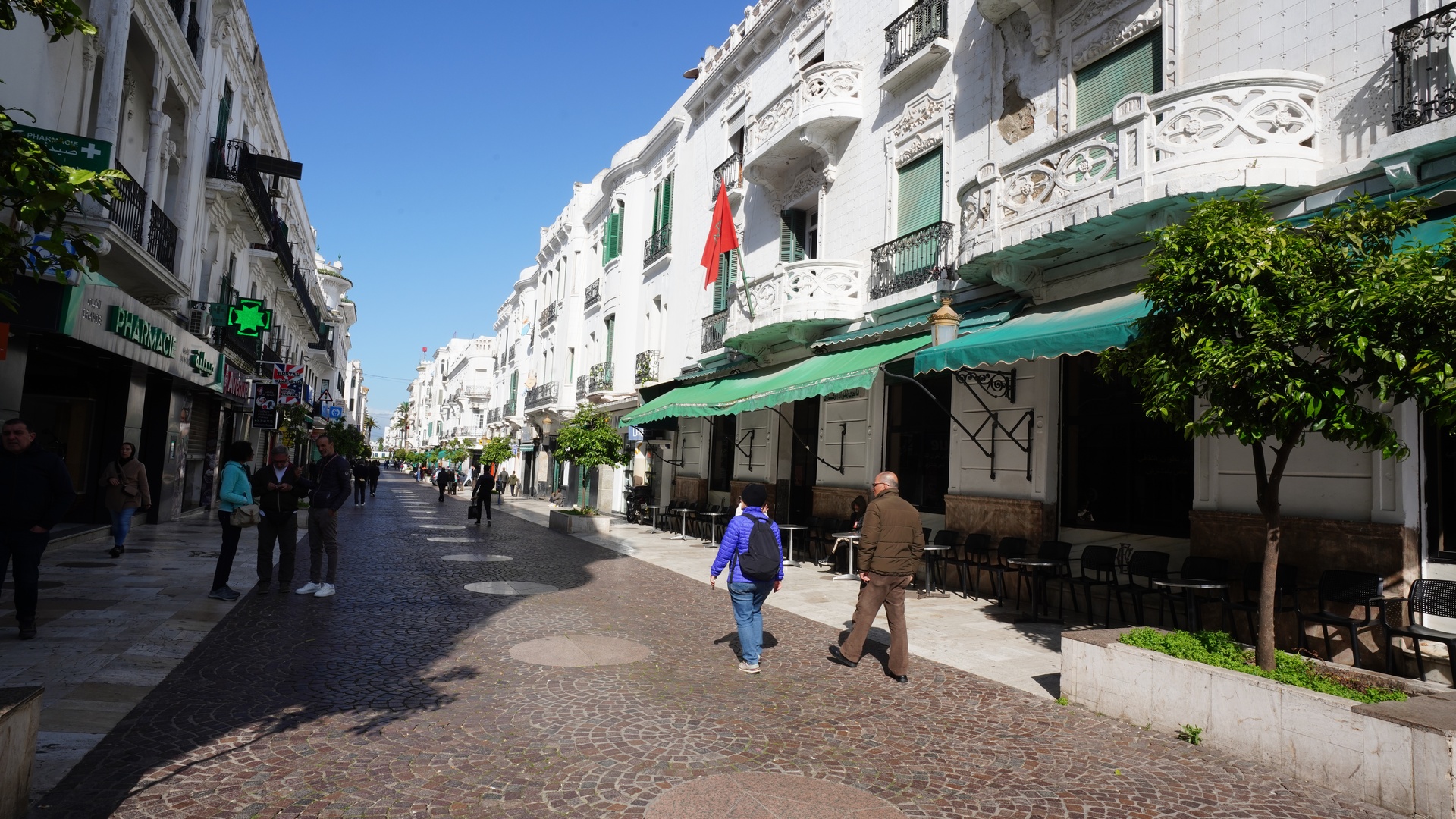
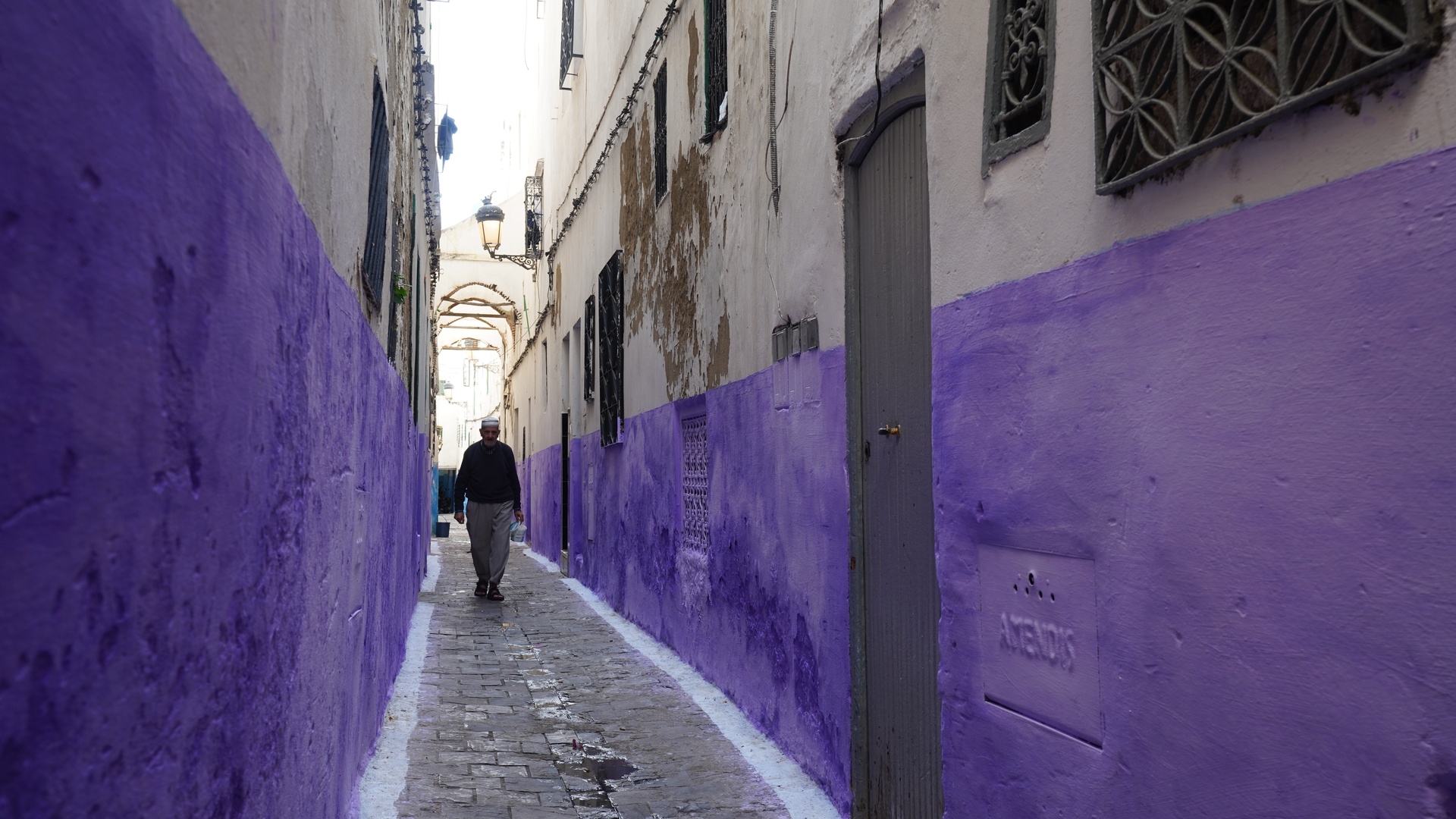
The white does not dazzle; it protects. The streets are more intimate, and every door seems to guard a story layered through the centuries. Tétouan is a city that does not reveal itself immediately: you must slow down, observe and allow the details to emerge. A door opens slowly, as if even the gesture had learned to respect the silence of the place. Inside, light is filtered and restrained. Tétouan still preserves traces of a presence that was part of its daily breathing for centuries, but which now survives in an almost invisible form.
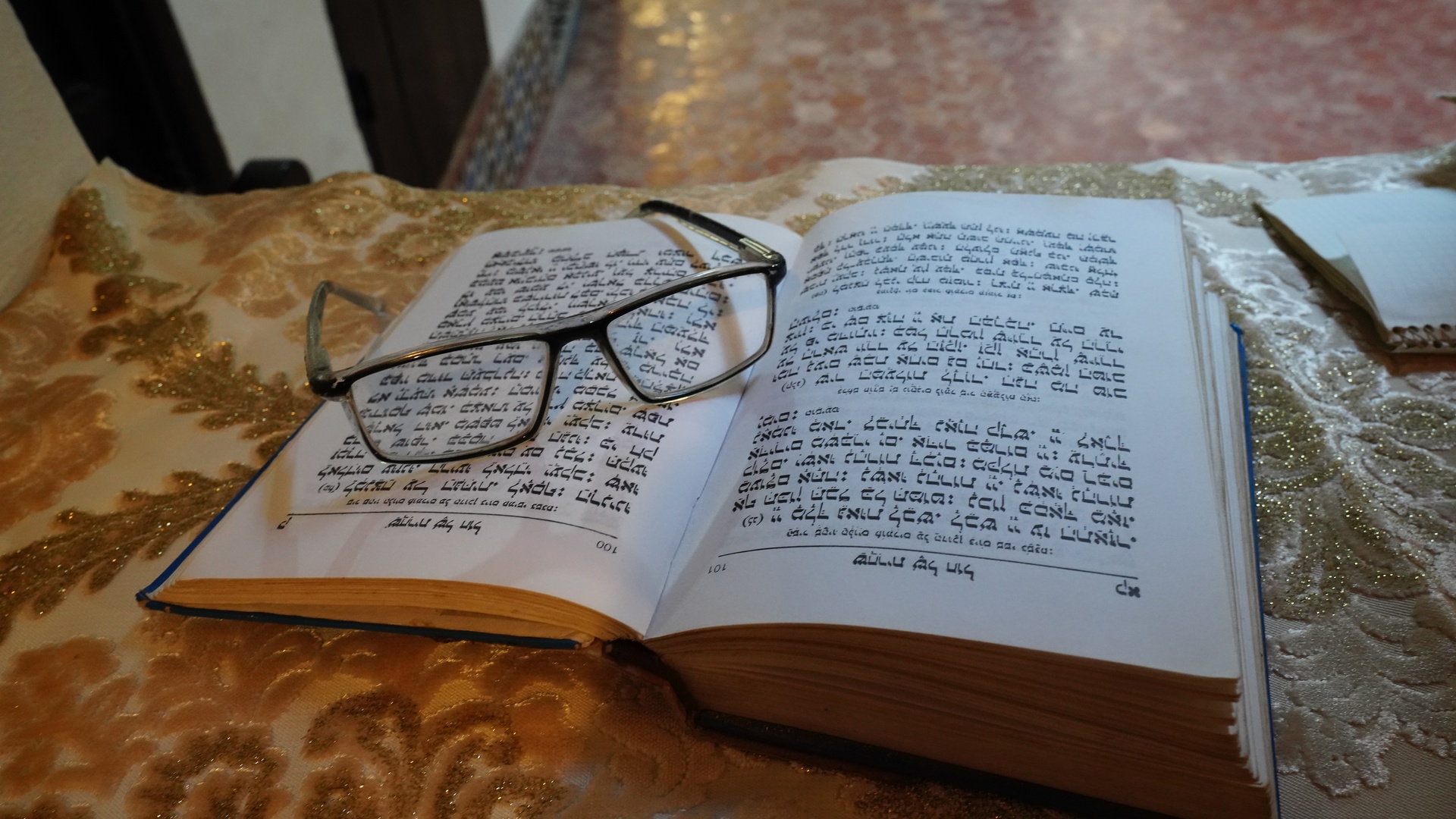
Leon Ventolina is the custodian of the medina’s last synagogue. He need not say so: you sense it from the way he moves, the care with which he touches objects, as though each still had a voice to protect. Only seven Jewish people remain in the entire old city. A number that weighs more heavily than the silence around it. At least ten would be needed for prayer. The minyan, the minimum threshold for the community truly to exist. So the tabot remain hidden, not by choice but through necessity, like words that can no longer be spoken aloud.
Leon does not indulge in nostalgia. Instead, he describes a present made of absences. Younger generations have left for Europe, for Israel, pursuing elsewhere what could no longer be held onto here. His children, too, have followed that route: Málaga, across the sea, so close that on clear days it seems almost within sight. There is something profoundly Mediterranean about this short, definitive distance. He tells me about his son, twenty-four years old, a chiringuito overlooking the water, fresh shellfish and full tables. A life that continues elsewhere. Here, instead, custodianship remains. Not as resistance, but as a form of fidelity.
Crafts and memories of the sea
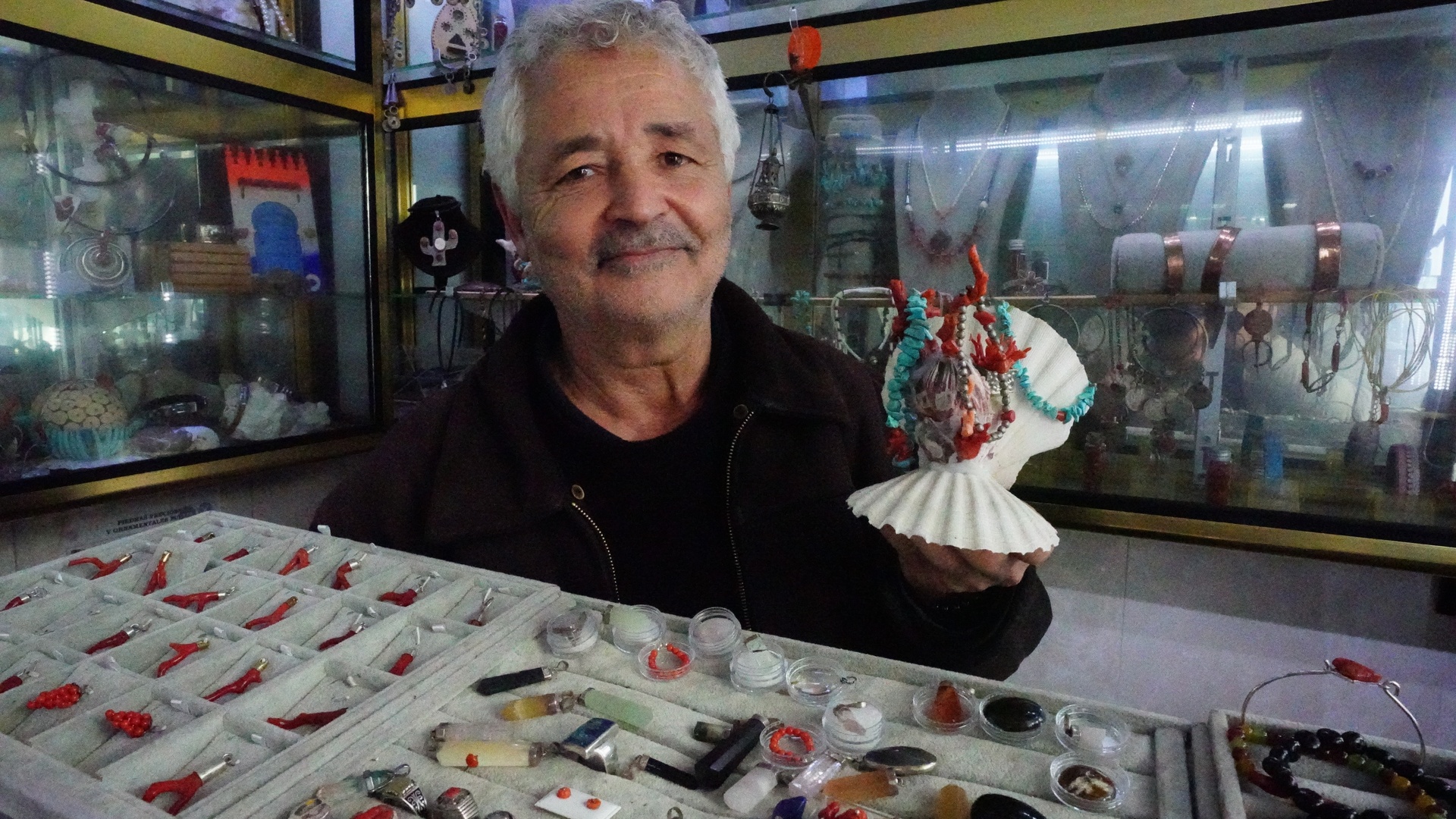
There is a quiet dimension to Tétouan, made of repeated gestures and ancient crafts. It is not immobility, but continuity. Even commerce is different here: less display, more relationship. A little further on, among alleys that seem to fold back on themselves, the sea makes its presence felt again, though it cannot be seen. Hamid works here. Or rather, resurfaces here. He has been a deep-sea diver for more than forty years. He descends along the seabed of Morocco’s Mediterranean coast to eighty or ninety metres, where light thins and time changes its texture. Down there he gathers coral, the red gold, patiently freeing it from the rock in a gesture that feels both ancient and necessary.
There is no heroism in his account. Only habit. His hands, though, reveal everything: marked, precise, accustomed to recognising material even before his eyes do. Once he resurfaces, he uses them to transform coral in the small workshop at home. He washes it, works it and returns it to a form capable of travelling through time. His shop is little more than a room in the heart of Tétouan’s medina. You have to seek it out to find it. Inside, the vivid red of the coral contrasts with the white walls, as though carrying a memory of the sea that refuses to dissolve. As Fernand Braudel wrote, “the Mediterranean is not only a sea, but a space of overlapping civilisations, where time settles.” Hamid, without knowing it, is part of that. Every day he continues to descend through that invisible layering. Not from nostalgia. From necessity.
Among the workshops and hidden courtyards, you sense a rare authenticity, not constructed for visitors but lived every day. Tétouan does not seek to astonish. That is precisely why it stays with you. Tangier and Tétouan are not simply two neighbouring destinations. They are two different ways of telling the story of northern Morocco. One looks towards the world, restless and open. The other looks inward, guarding a more defined memory. Between them, the journey is not made of kilometres but of subtle crossings. Perhaps that is what remains: the sense of having passed through not only places, but identities in continuous dialogue.
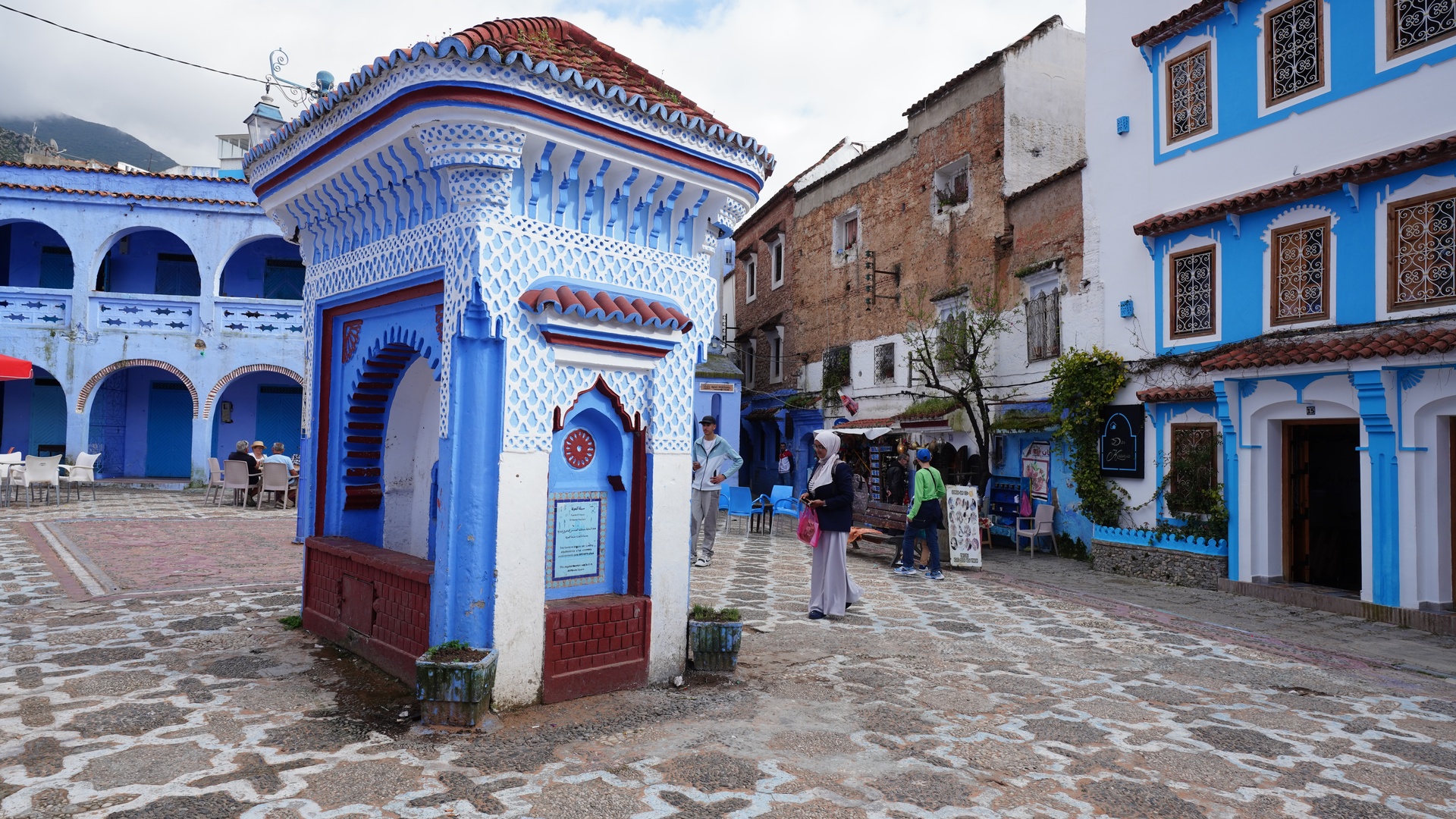
Chefchaouen, variations in blue
Then, almost suddenly, the road climbs. The bends tighten, the air grows cooler and, among the folds of the Rif, Chefchaouen appears, the blue city. Yet to define it this way is reductive. Chefchaouen is not a colour. It is a continual variation of the same colour. Walls, stairways, alleys: everything is immersed in a range of blues that change with the light, from milky sky blue to deep blue. Walking here is like entering a suspended dimension, where time loses substance and your pace slows without your noticing. There is no need to seek anything. Simply let it pass through you.
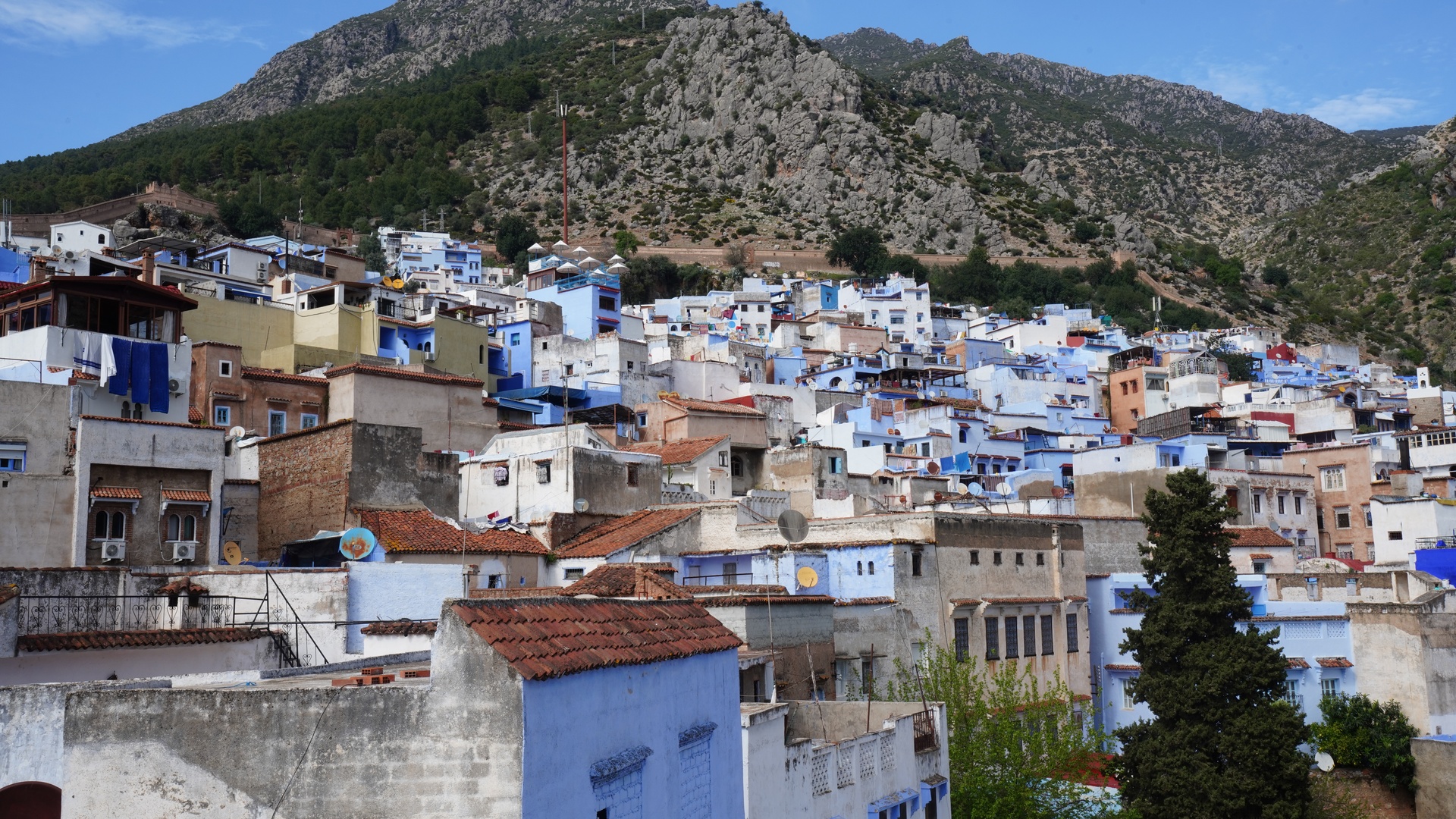
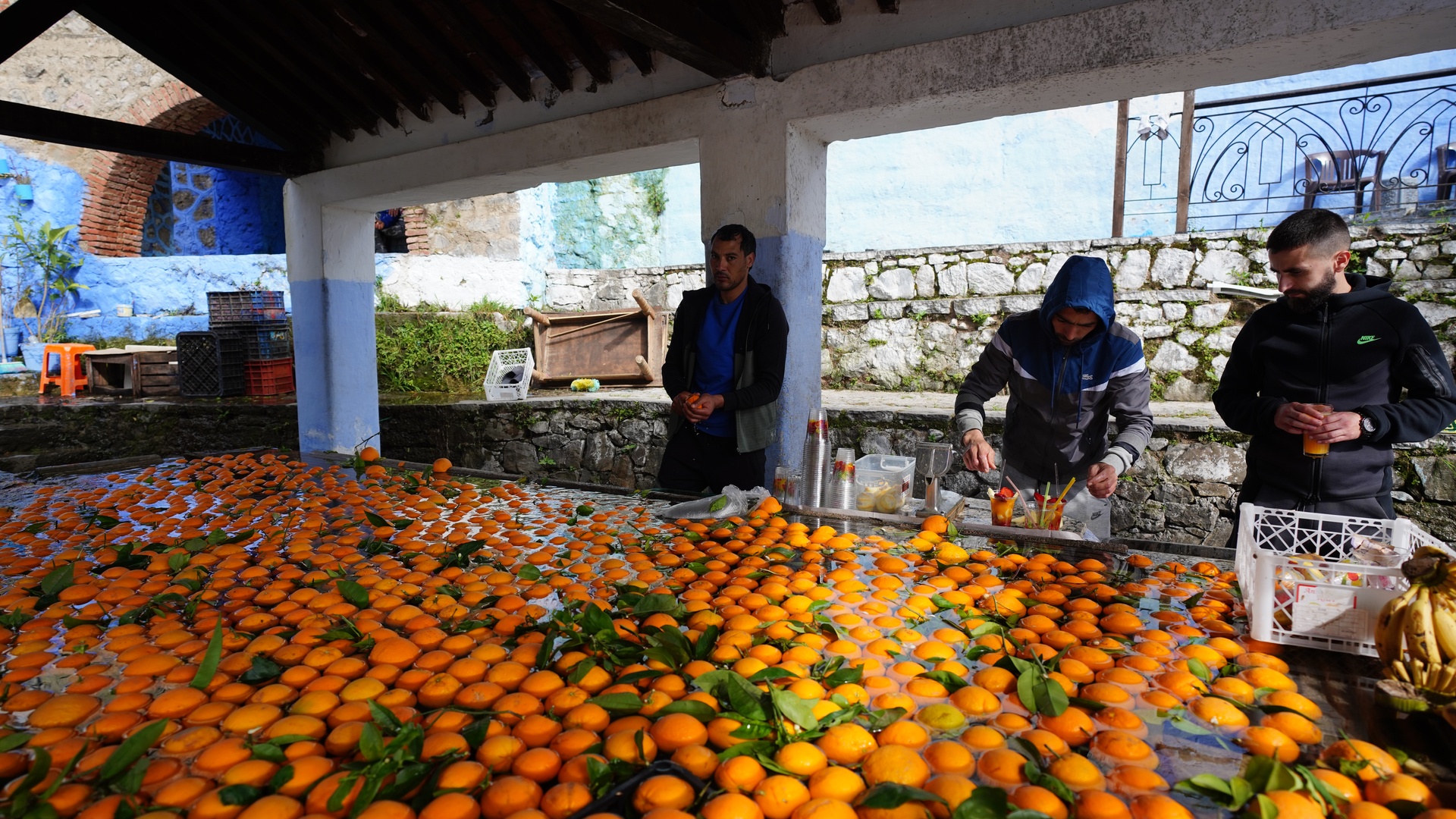
Every corner offers a perfect composition, yet never an artificial one. Half-open doors, pots, fabrics hung out to dry, oranges washed in cool water: everything seems arranged with an unconscious care, as though beauty were a natural consequence rather than an objective. Yet here too, beneath the aesthetic surface, lies a history of refuges and identities. Founded by Andalusian exiles and Sephardic Jews, Chefchaouen carries within itself the very idea of shelter. Perhaps that is why visitors feel, for a moment, that they belong.
The Rif and the Mediterranean
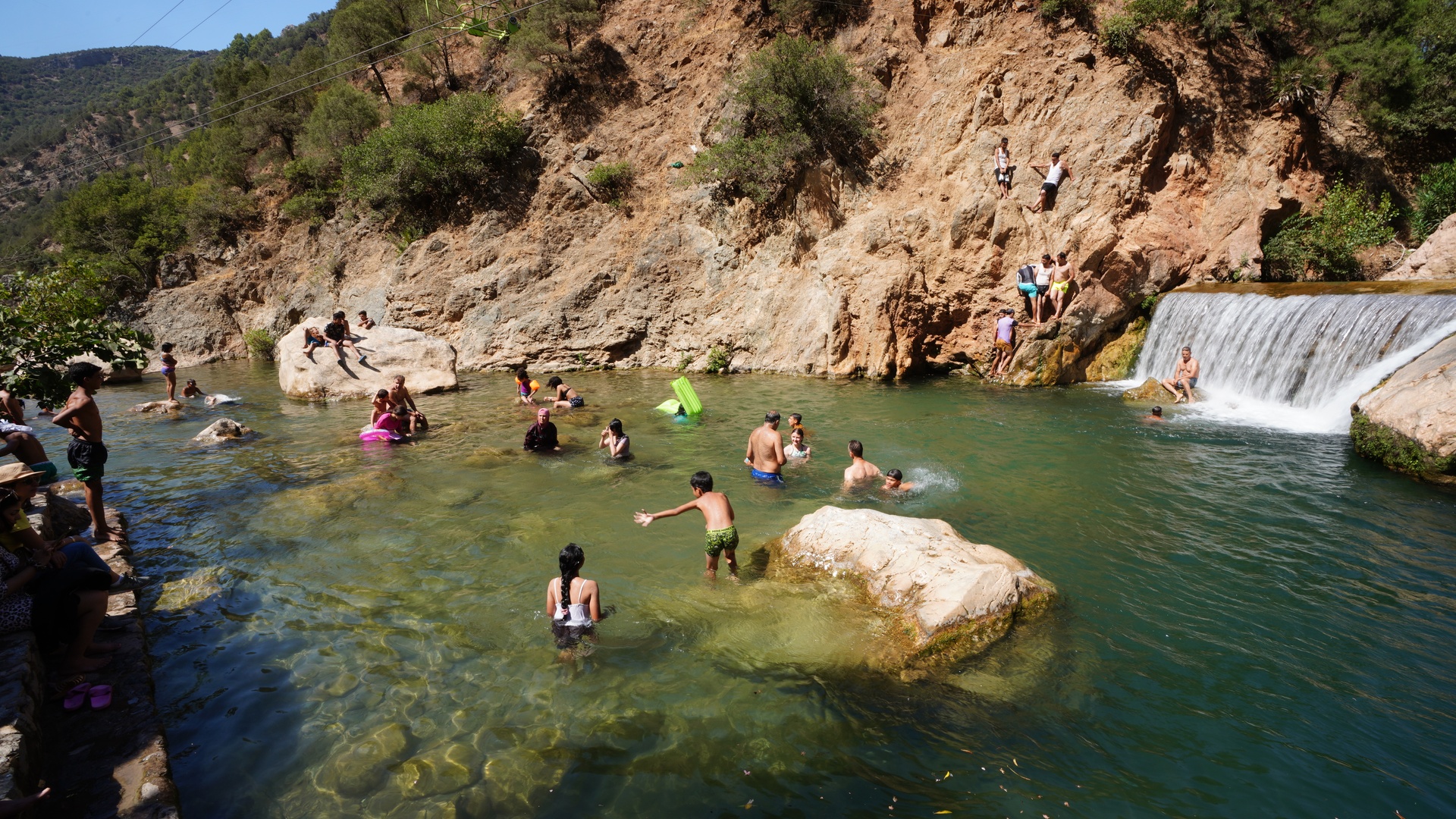
Around it, the landscape expands the story further. At Akchour, nature takes over: waterfalls, paths, water carving into rock. It is a return to an essential rhythm, far from urban layers. On the coast, Cabo Negro and the beaches of Tamuda Bay offer another variation. Here the Mediterranean opens without tension into a more relaxed landscape. It is a dimension of pause, where travel slows and becomes simpler. Then there are places such as Royal Mansour Tamuda Bay, where this simplicity is reinterpreted at the highest level of restraint, elegance and refinement, offering a style of welcome with an ancient flavour and a contemporary sensibility.
Tangier, Tétouan and Chefchaouen are not simply three stops, but three ways of existing. Three different balances between openness, memory and contemplation. Around them, northern Morocco’s landscape continues to transform without ever losing its coherence. In the end, what remains is not a sequence of places but a series of crossings. Almost imperceptible changes that define a territory through its nuances more than through its borders. From Tangier’s restless threshold, where anything can happen, to Tétouan’s layered memory and the almost unreal suspension of Chefchaouen, northern Morocco reveals itself as a place of passage between different states of mind. Perhaps that is what makes it so powerful. It does not ask you to understand. It asks you to let yourself be changed. And when you return, crossing the Strait again, you realise that something has remained there, among those white and blue streets, between the Atlantic wind and the silence of the mountains. You could not say what. But you know it belongs to you.
Royal Mansour Tamuda Bay, the Mediterranean as a breath
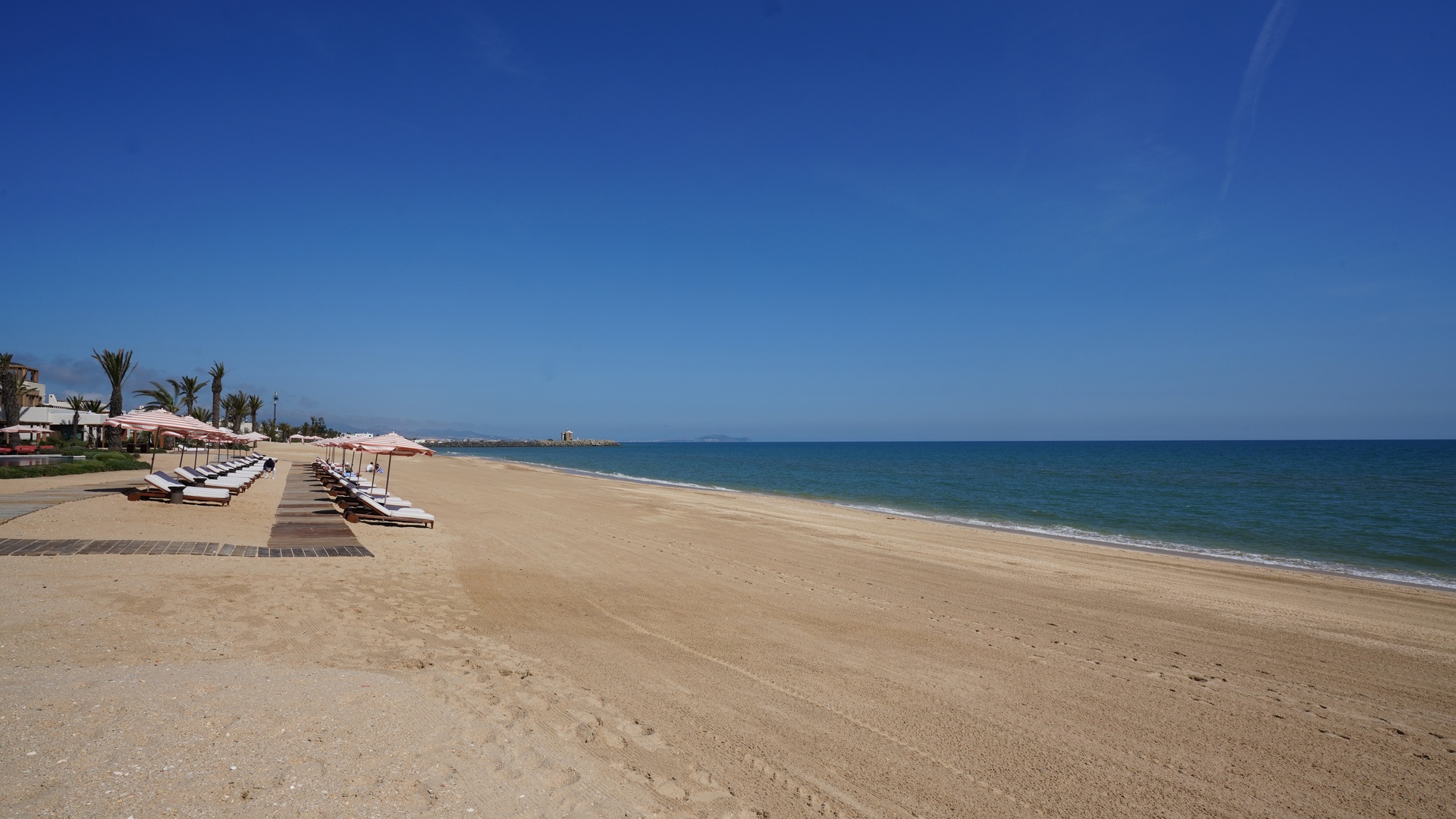
The elegant Royal Mansour Tamuda Bay stands between Tétouan and Tangier, along 650 metres of fine sandy beach on Tamuda Bay. The third address in the Royal Mansour Collection celebrates this western Mediterranean region through the arts of hospitality, fine dining and wellbeing. Refined architecture, scented gardens and a ten-hectare property create an interlude of tranquillity where the scent of sea breezes, the murmur of waves and the Mediterranean sunlight become part of the experience.
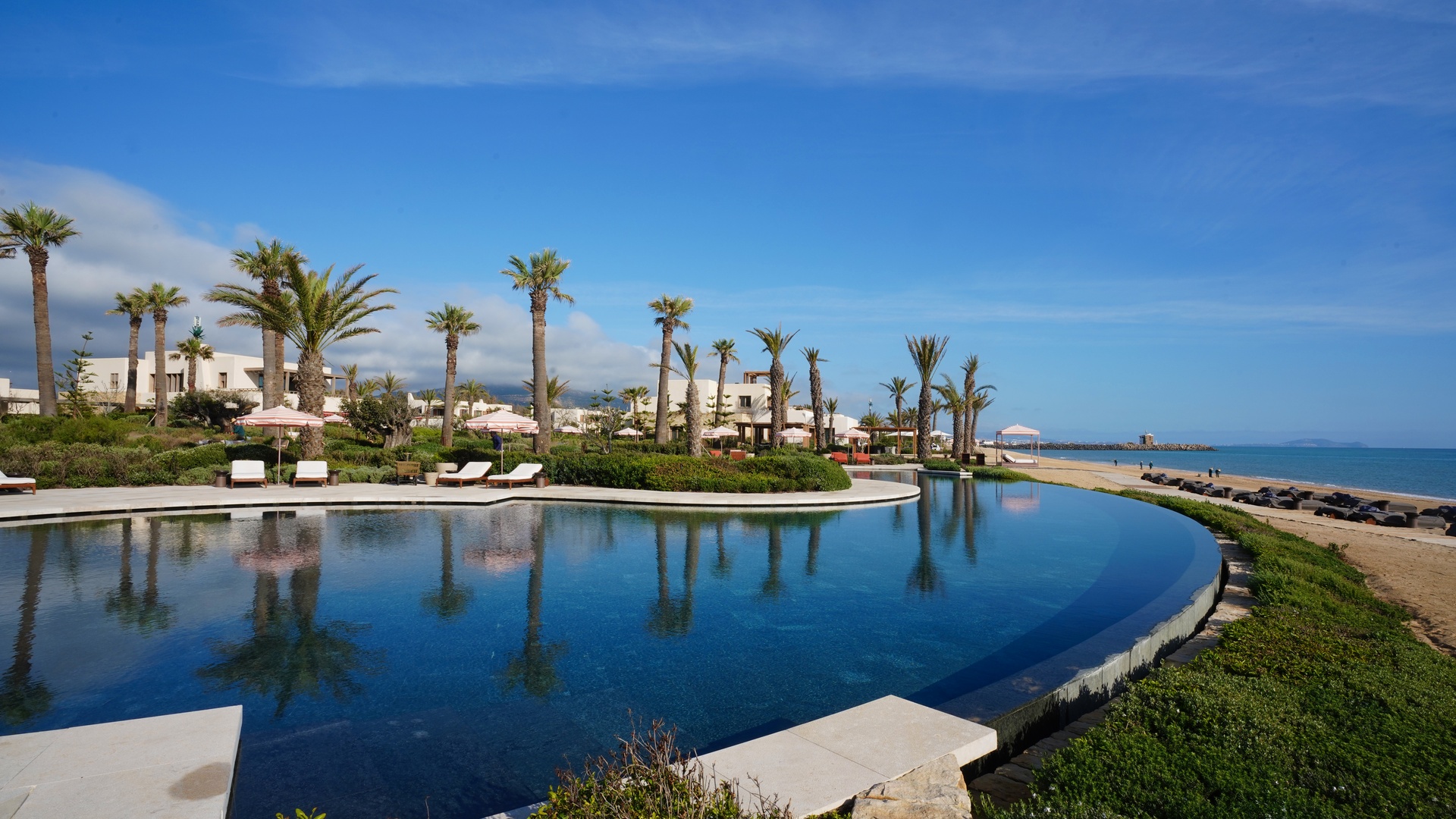
The hall’s shell room stands out, its walls decorated with 95,000 shells reproducing geometric motifs from Amazigh culture. Then come the gardens, across which 55 ultra-luxurious accommodations are distributed, designed in Mediterranean style and harmoniously integrated into the natural magnificence around them. Every space tells of the beauty of the coast with a chic, elegant touch, in an oasis of serenity and impeccable service, between recreational activities and restorative moments in the 4,300-square-metre Medi-Spa, designed to restore physical and mental wellbeing.
Gastronomy is no less central, with a bouquet of flavours entrusted to three international interpreters: Le Méditerranée, devoted to the sea and Spanish cuisine, bears Quique Dacosta’s signature; La Table offers Éric Frechon’s French elegance; and Coccinella, the property’s Italian restaurant, is linked to the world of the Alajmo brothers. Staying in this oasis of comfort means suspending time and savouring the Mediterranean rhythm of life, transported into an interlude of pleasure, freshness and generosity in true Royal Mansour style.
Sources and images: Text and photographs by Mauro Parmesani. Photo credits Mauro Parmesani. All image rights are reserved by their respective rights holders.